
Accessibility Discovery Report
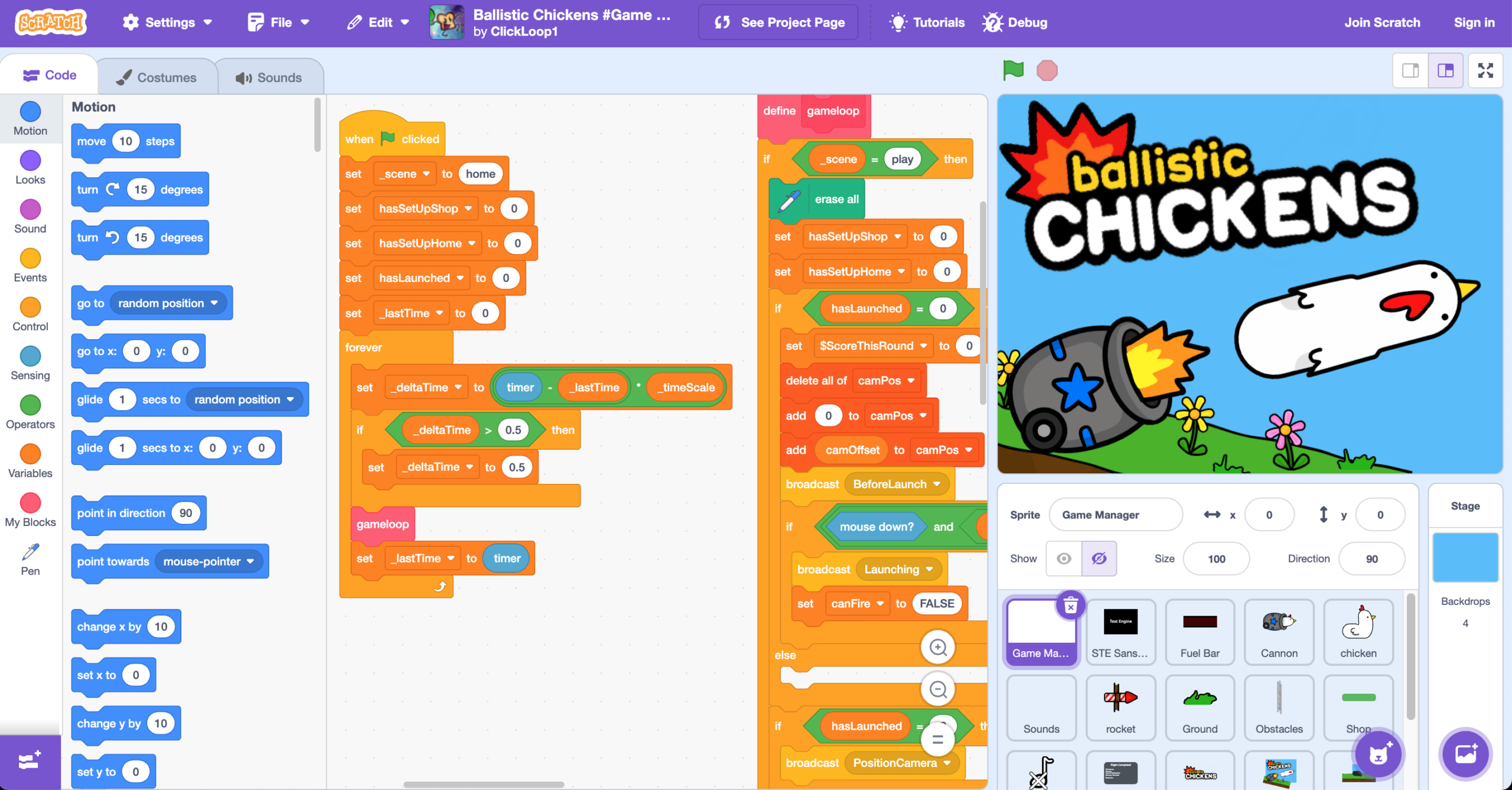
PAC prepared an Accessibility Discovery Report for the Scratch Foundation, reviewing Scratch 3.0’s editor, Blockly infrastructure, and learning resources to identify barriers for disabled learners and deliver a prioritized roadmap for a more accessible creative coding environment.
Project Description
Scratch is a free, browser-based creative coding platform developed by the Scratch Foundation and the MIT Media Lab. Designed to introduce children to programming through a visual, block-based interface, Scratch has become one of the most widely used coding environments in K–12 education worldwide. Its mission is to help young people think creatively, reason systematically, and work collaboratively.
Prime Access Consulting (PAC) was engaged to conduct an in-depth discovery review of Scratch 3.0’s current accessibility. The resulting report examined the full ecosystem a learner encounters, from the Scratch web editor and its underlying Blockly infrastructure to the platform’s external learning resources. Because a learner’s experience extends well beyond the editor itself, each layer of this ecosystem was treated as part of a continuous journey, one that every child should be able to navigate independently, regardless of how they access it.
Discovery Review and Human Impact
The discovery process included office hour sessions with Scratch’s technical team alongside a thorough asynchronous review of the Scratch platform. PAC’s evaluation combined structured technical analysis of the Scratch 3.0 web editor with targeted review of supporting resources, including written guides, tutorial videos, and community events.
Rather than cataloging barriers in isolation, the review traced the pathways a learner actually follows: discovering Scratch online, opening a project, navigating the block toolbox, building a script, and running a program. That workflow orientation surfaced not only individual barriers, but also the ways those barriers compound across a single learning session.
Findings were organized by functional area, including screen reader compatibility, keyboard navigation, focus management, color and contrast, switch control, zoom and scaling, speech recognition, and error recovery. The report also examined third-party and community-led tools such as OctoStudio, Scratch Tactile, Scratch Addons, and GoboScript. Each reflects a real demand for accessible pathways into block-based coding that the core Scratch editor does not yet provide.
At the center of the report was a clear account of how current barriers affect students and teachers in practice. Blind students described being sent to read quietly while their classmates completed Scratch-based projects. Students using screen readers found the editor’s block workspace unintelligible, not because of the subject matter, but because the interface exposed disjointed text fragments without meaningful structure or a navigable hierarchy. Students who rely on switch control or keyboard navigation found no consistent focus model to build on. One student, reflecting on years of exclusion from coding lessons, traced the problem back to a simple fact: Scratch was not accessible.
That distinction matters. In a creative coding environment, access is not only about reaching the platform. It is about being able to build a script, run a program, understand what happened, fix a mistake, and try again. When the interface blocks those actions, it blocks participation in the learning itself, and with it, the creativity, problem-solving, and sense of authorship that Scratch is designed to cultivate.
Roadmap
PAC provided a prioritized roadmap organized into short-, medium-, and long-term phases, each designed to build on the last.
Near-term priorities focused on foundational changes that would give learners a meaningful entry point into the platform. These included adding clear, consistent labels to interactive elements, integrating Google’s experimental Blockly keyboard navigation plugin, completing the Scratch and Blockly unforking process, implementing ARIA landmarks for core page regions, improving the visibility of keyboard focus indicators, and introducing non-color alternatives to supplement color-dependent conventions throughout the editor. Remediation of inaccessible learning resources was also identified as an immediate priority.
Medium-term recommendations addressed the deeper structural work required to make Scratch genuinely operable for screen reader and switch control users. This phase included refining keyboard navigation to align with Scratch’s interface and user expectations, implementing appropriate roles and states for interactive elements including blocks, improving focus management across dynamic content, extending text-to-speech as a core platform feature rather than an optional extension, introducing non-speech sonification for runtime feedback, and building a read-only mode that would allow learners to explore and understand programs without risk of accidental editing.
The long-term vision positioned Scratch as a model for accessible creative coding. This phase emphasized implementing an alternative, linear view of block structures for learners who do not benefit from drag-and-drop interaction, integrating voice input blocks, introducing version history, establishing a community and educator partnership program, and exploring natural language and generative AI integration as ways to further lower barriers. Throughout, the roadmap emphasized diverse user testing and a sustained commitment to embedding accessibility into design and development from the start.
Concluding Thoughts
The discovery report gave the Scratch Foundation a clear account of where the gaps are, why they matter to the children trying to learn through the platform, and how a sustained program of work can close them. The barriers identified are significant, but they are not insurmountable. Community projects like OctoStudio and Scratch Addons already demonstrate that accessible block-based coding is achievable, and the ongoing Scratch and Blockly unforking effort creates a timely opportunity to build accessibility into the platform’s modernized architecture from the ground up.
What comes next is the structured, expert-guided work of turning that opportunity into a more accessible Scratch, one where every child can open the editor, build something, and experience the creative agency the platform was designed to offer. PAC is well positioned to support that work through continued consultation, targeted remediation guidance, and ongoing accessibility review as new features are developed and released.