
Obama Presidential Center
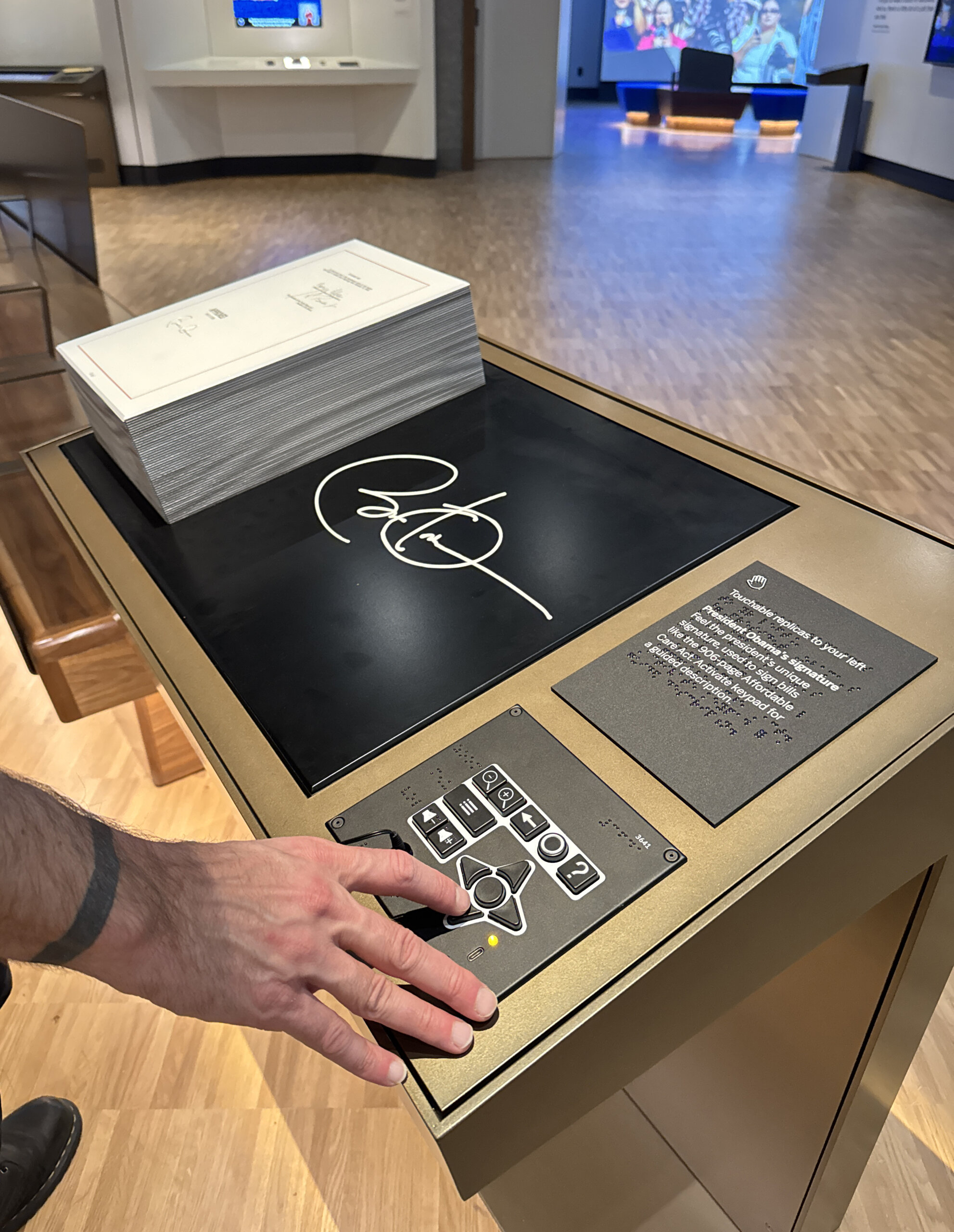
PAC worked with the Barack Obama Foundation on the Obama Presidential Center to embed inclusive design and accessibility across the museum, media, digital systems, and visitor journey, including development of the Universal Experience Point as a shared access layer for complex cultural experiences.
Media
Project Description
In January 2018, PAC was brought onto the Obama Presidential Center project by the Barack Obama Foundation to work across the project ecosystem. This included the campus, building, and construction; exhibition and program design and development; built environment; content design and presentation; time-based media; navigable media; digital systems design; accessibility affordances; community engagement; remote audience engagement; and standards and workflow development.
PAC’s approach considered the entire experiential ecosystem prospective visitors would encounter. The goal was to support deliberate, informed decision-making across each vector of project activity, ensuring that inclusive design and accessibility were considered as integrated design requirements rather than isolated accommodations.
The Experiential Ecosystem
PAC’s work began in earnest during Concept Design, in partnership with the then modestly sized staff of the Obama Presidential Center and various project partners. Across design phases, a key strategy was to establish thoughtful redundancies so that visitors could engage the experience through multiple overlapping channels rather than relying on a single mode of access.
PAC’s early Concept Design work began outside the museum building and addressed the campus at large. This included navigation from public spaces to the museum, as well as the gardens, paths, play areas, and broader campus experience. PAC provided feedback through the design phases and into construction drawings, helping ensure that inclusive design considerations were embedded in both the site strategy and the visitor journey.
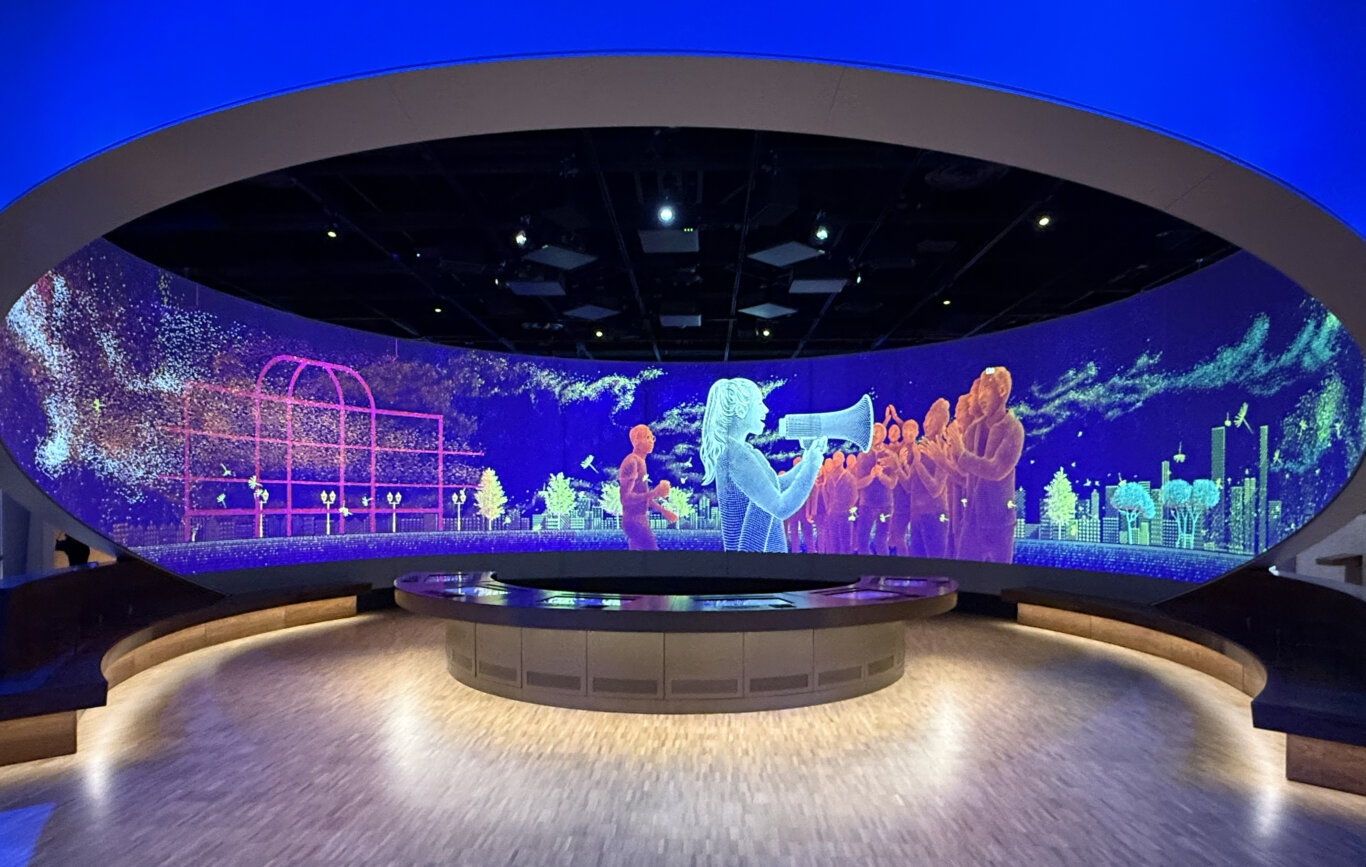
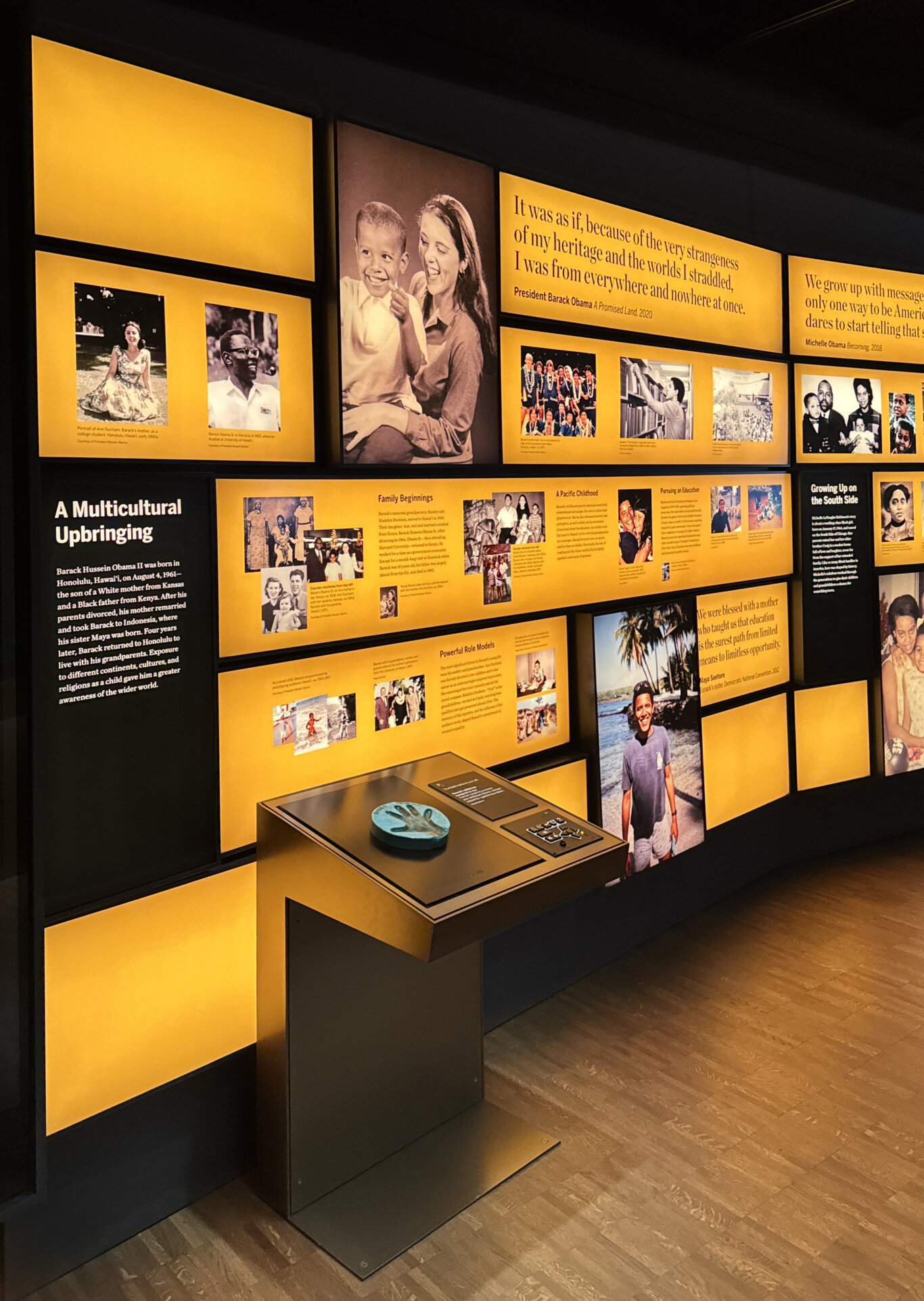
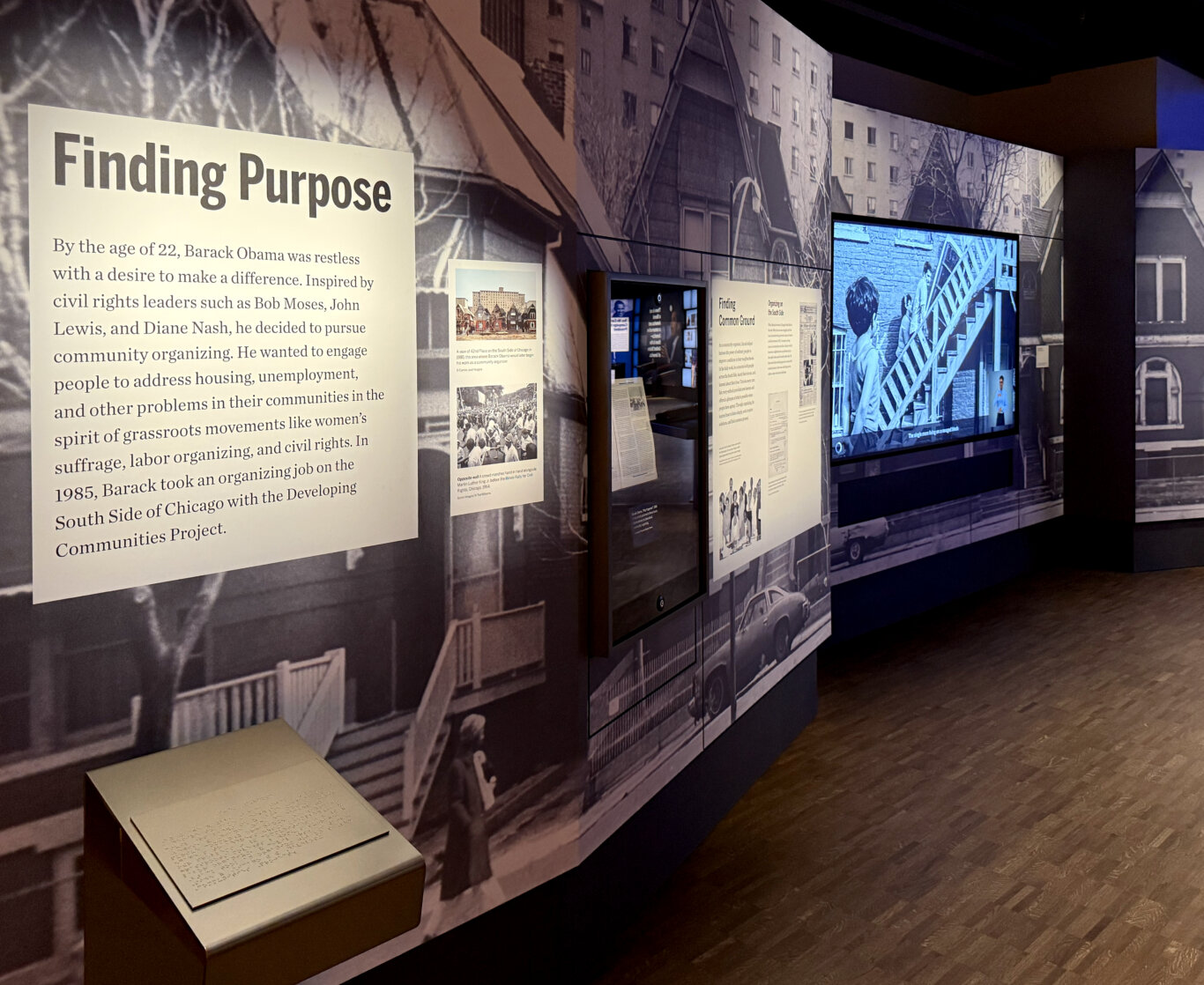
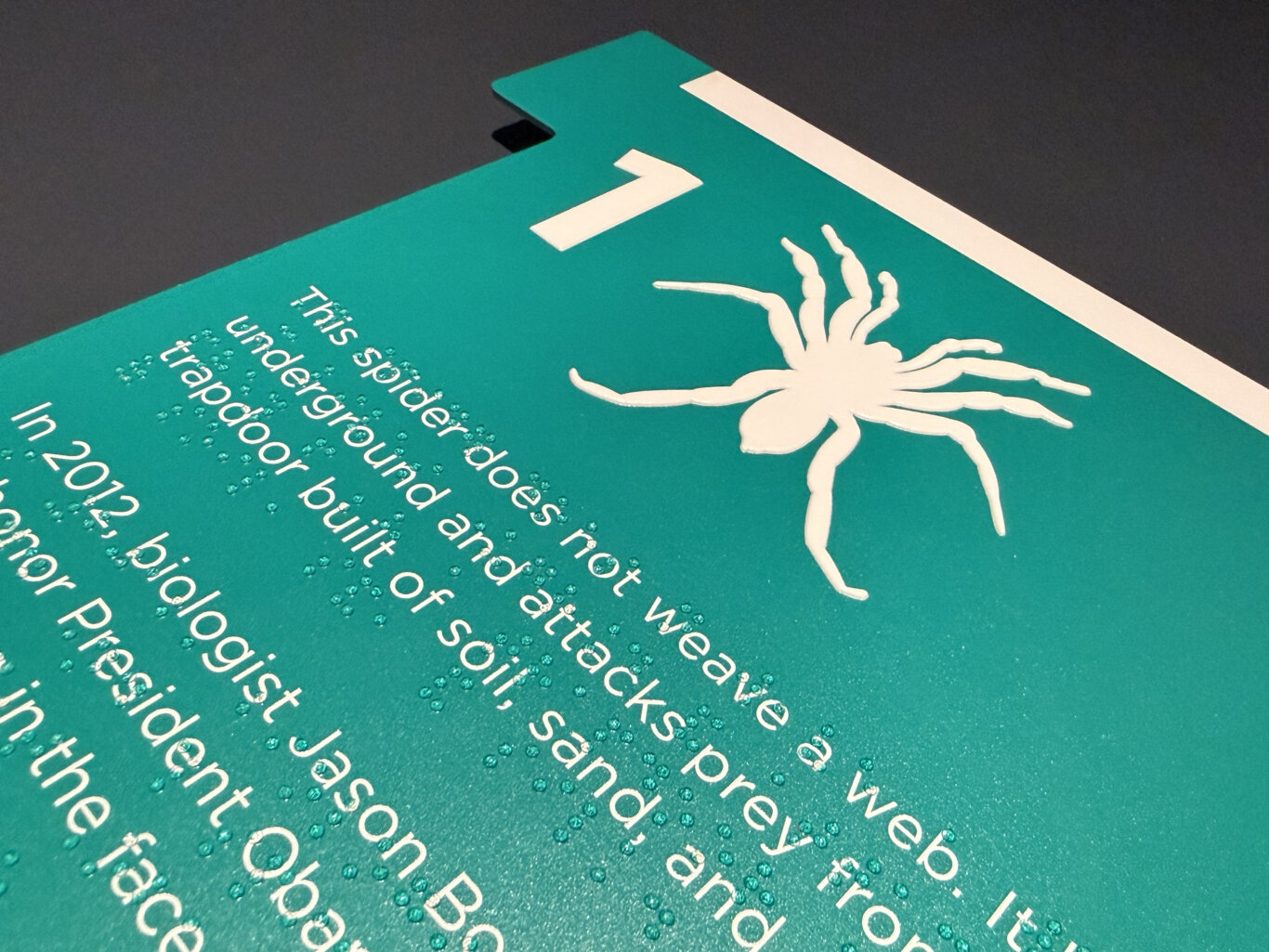
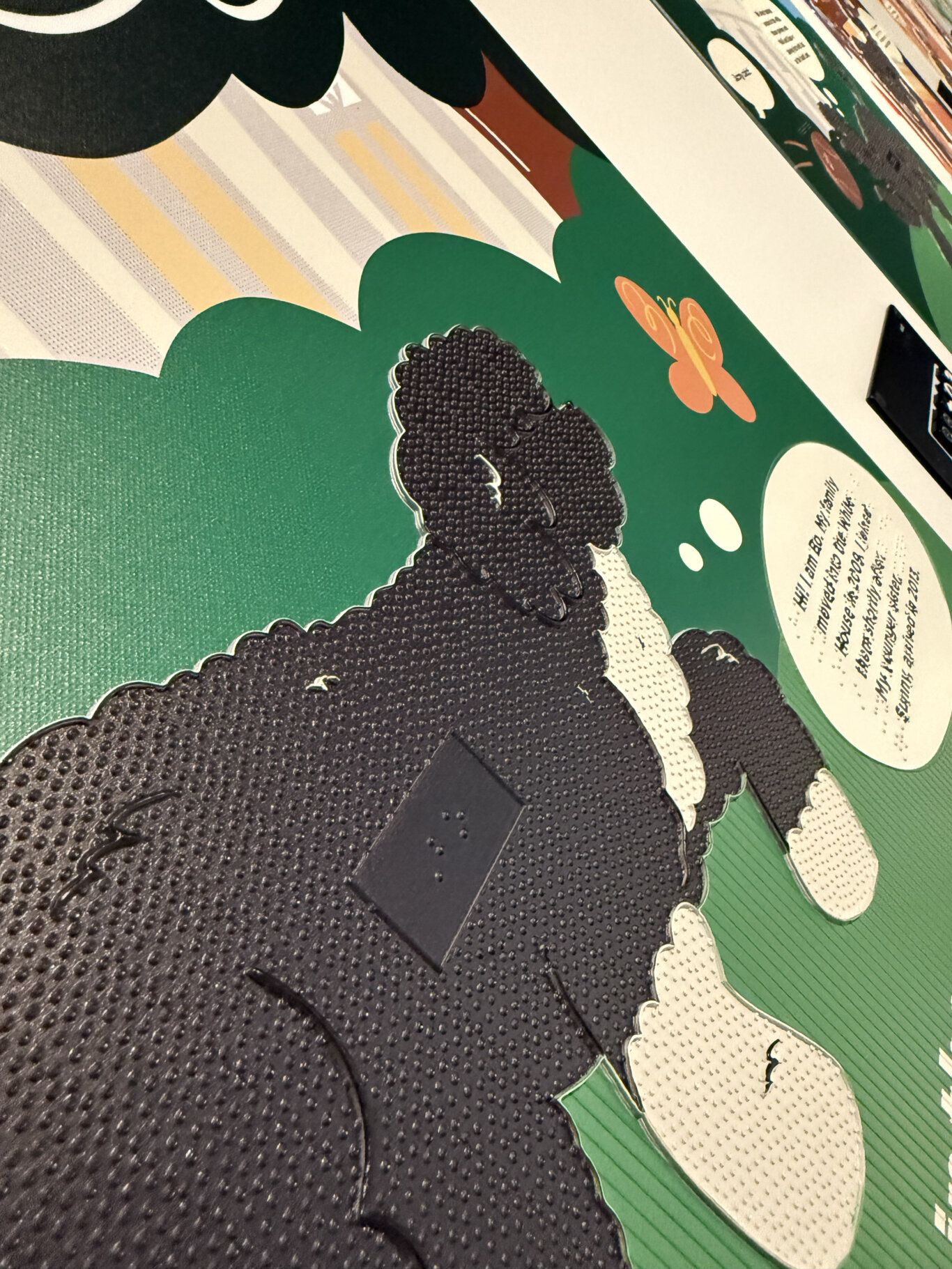
The deepest portion of PAC’s work took place within the core museum. This included the built environment; cases and furniture; content creation and presentation through physical and digital graphic design; immersive and themed environments; time-based media design and production; navigable media; digital systems design; wayfinding; people-moving and circulation strategies; the design and development of accessibility affordances such as visual descriptions; institutional standards; community engagement; and more.
It was critical that these aspects of the project, often designed and developed by different project teams, operate in congruency and synchronicity with one another. The objective was not merely to make individual elements accessible, but to create an inclusive and non-segregating visitor experience in which accessibility was distributed across the full ecosystem.
PAC’s position during the design phases allowed for careful consideration of the whole experience, as well as detailed review of specific systems, interfaces, environments, and interpretive moments. As the project moved further into production and installation, PAC’s day-to-day role tapered and decreased, and later implementation decisions were increasingly carried forward by the project team and its many partners. Even so, during the core design phases, the integration of inclusive design and accessibility into the project’s design activities was unusually deep, ambitious, and far-reaching.
The Universal Experience Point
Based on the success of the Universal Keypad (UKP) and Universal Access Point (UAP) systems developed through the Canadian Museum for Human Rights project, PAC imagined a more advanced system that would combine the functionality of both legacy systems into a more robust and capable device. A co-innovation and licensing agreement with the Barack Obama Foundation enabled PAC to iterate on those earlier systems, applying lessons learned from years of real-world use at CMHR.
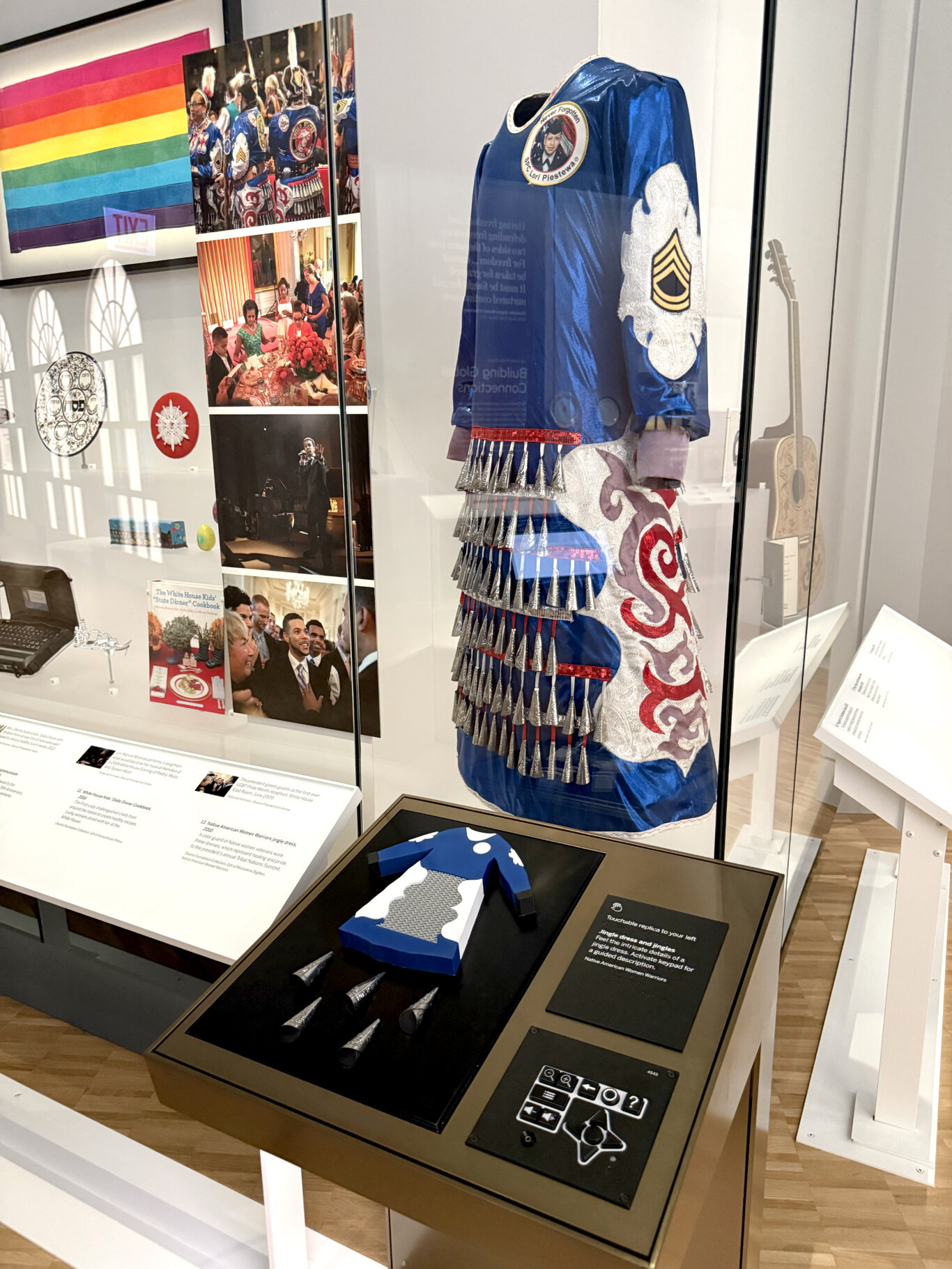
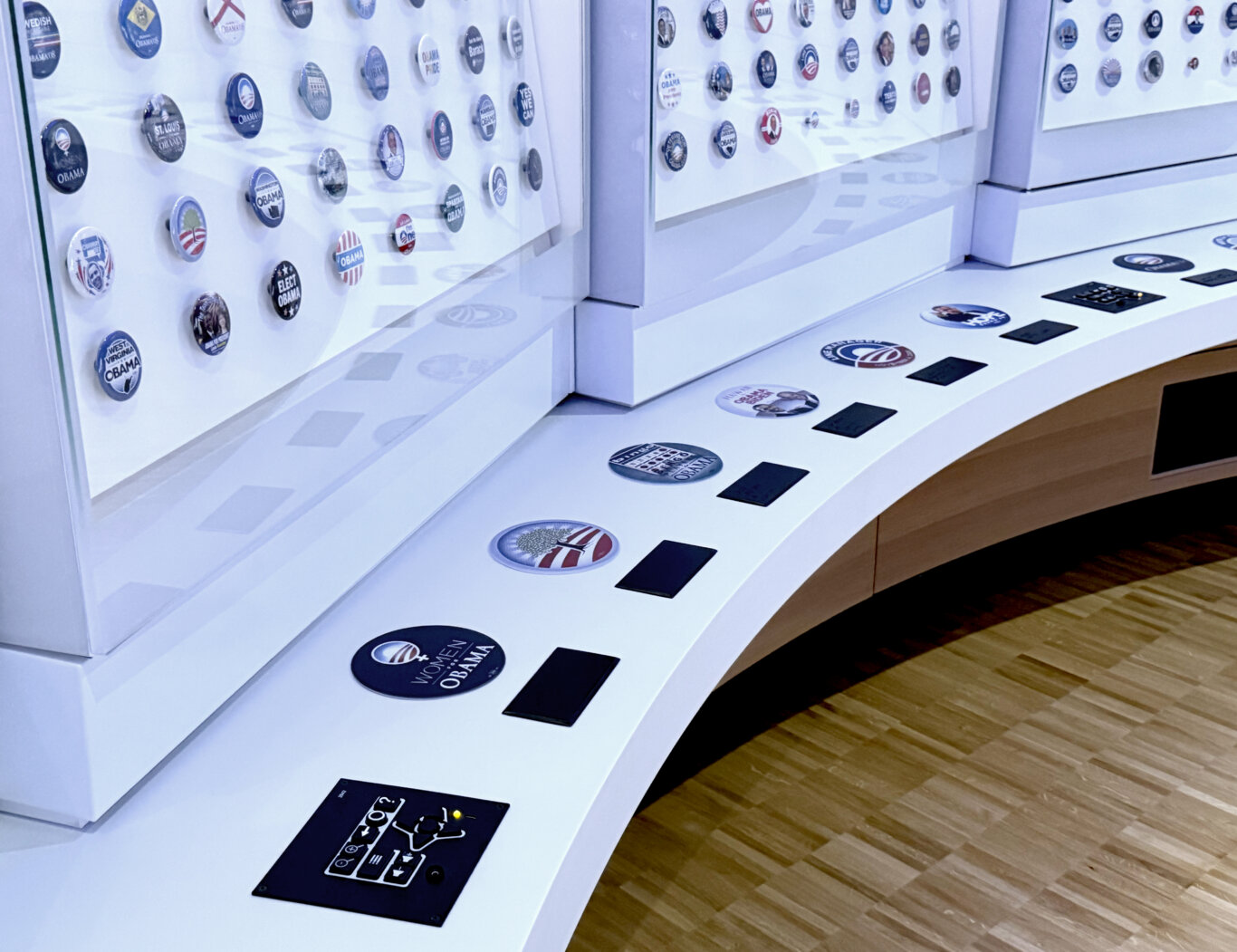
The result was the Universal Experience Point (UXP), a tangible interface designed to support more consistent and flexible access to digital and media-based experiences. The UXP facilitates non-visual navigation of digital systems, serves as a tangible interface for selected installations, surfaces description information, supports screen reading of text, provides volume control, offers wrist support, can be used with a refreshable braille display, includes user customization options, and provides a high-contrast tactile interface for all visitors.
The UXP represents a major evolution in PAC’s approach to inclusive experiential design. Rather than treating accessibility as a set of separate adaptations for separate users, the UXP creates a shared access layer that can support many different kinds of interaction across complex museum environments.
Radical Inclusion
When PAC was onboarded to the Obama Presidential Center project, the explicit ask was to support “radical inclusion” across the visitor experience. This was an ambitious mandate, especially for a project of this size, scale, visibility, and complexity, with many project participants, stakeholders, design teams, operational considerations, and institutional goals.
That ambition required more than isolated accessibility review. It required ecosystem-level thinking, cross-disciplinary coordination, technical fluency, interpretive strategy, and a willingness to make inclusive design part of the project’s core design language. While no project of this scale can be reduced to a single methodology or implementation path, PAC’s work helped establish an unusually expansive foundation for accessibility and inclusive design during the project’s formative design phases.
Ultimately, without letting perfect become the enemy of a job well done, PAC is proud of the work that went into helping position the Obama Presidential Center as a new and meaningful participant in the field of accessible cultural experiences. The project also provided important lessons that continue to inform PAC’s work as our inclusive design methodology evolves across subsequent projects.