
Art In the Park
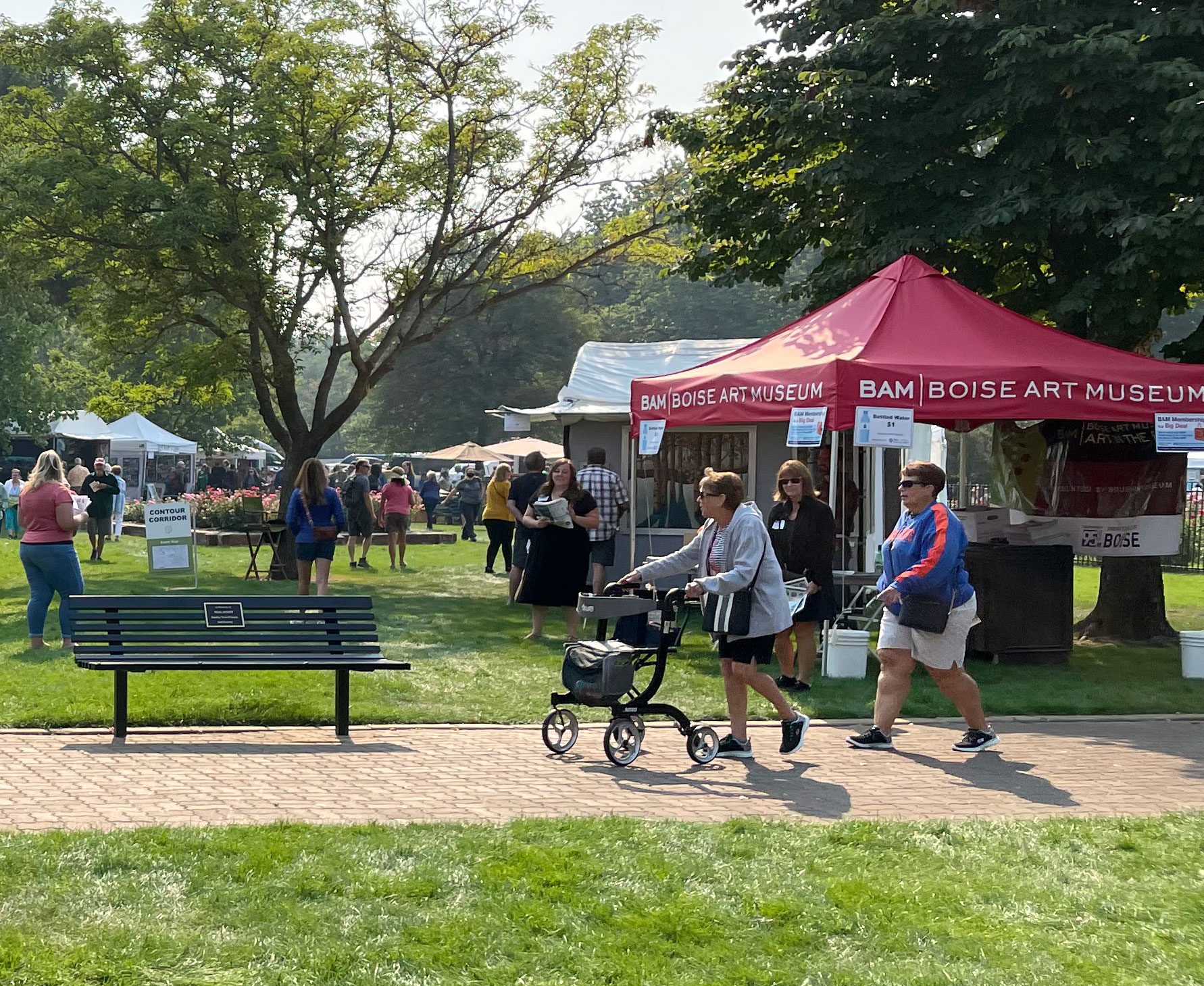
For Boise Art Museum’s Art in the Park, PAC embedded inclusive design across the festival ecosystem—auditing wayfinding, creating an accessible map with a long description, refining parking/drop-off and wheelchair lending, training sighted guides, and onboarding vendors with accessibility guidance—so access became core to planning rather than an add-on.
Media
Project Description
Inclusive design does not stop at the museum door. For the Boise Art Museum (BAM), one of the most complex opportunities to put its growing inclusive design practice into action was also its largest event.
Art in the Park is BAM’s annual three-day outdoor arts festival in Julia Davis Park and its largest community event and fundraiser drawing roughly 250,000 attendees. The festival brings together hundreds of artists, food vendors, performers, volunteers, and a massive public audience in an environment fundamentally different from a museum gallery.
As part of PAC’s broader capacity-building work with BAM [insert Many Wests link when it’s live], Art in the Park offered a chance to apply inclusive design at a much larger and dynamic scale. Unlike an exhibition, BAM did not control every pathway, booth, interaction, or environmental condition. The experience stretched across a public park, temporary infrastructure, independent vendors, changing crowds, live performances, digital information, transportation, parking, and hundreds of individual touchpoints.
PAC worked with BAM to consider that entire ecosystem.
The goal was not to create a separate accessible experience within Art in the Park. It was to identify where disabled visitors encountered barriers before and during the festival, then change the event itself to make participation more equitable.
Designing the Journey Before Arrival
For a large outdoor event, access begins long before someone reaches the first artist booth.
PAC worked with BAM to examine the information visitors needed to make informed decisions about attending: where accessible parking and restrooms were located, what the terrain was like, how to find services, where to request assistance, and what environmental conditions they could expect.
The event map became an important part of that work. PAC developed a detailed visual description that translated the spatial information of the map into text for blind and low vision visitors. Rather than simply naming amenities, the description established the overall shape and scale of the festival, explained its major roads and eight temporary pathways, and located Welcome Centers, artist booths, food vendors, first aid, restrooms, ATMs, water, and other landmarks in relation to one another. It also identified where visitors could request sighted guides.
PAC’s post-event evaluation pushed this work further. The team recommended creating a dedicated online map page where the visual map, downloadable PDF, and long description could live together, allowing visitors to choose the format that worked for them while giving BAM a single place to maintain current wayfinding information.
That approach is apparent in how BAM communicates access today. Art in the Park now maintains dedicated accessibility information alongside its event map, parking, shuttle, food, and entertainment information rather than burying access details elsewhere on the museum website.
Making a Temporary City More Navigable
Art in the Park effectively creates a temporary city inside Julia Davis Park. Making that city more accessible meant looking beyond ADA compliance toward the actual experience of moving through it.
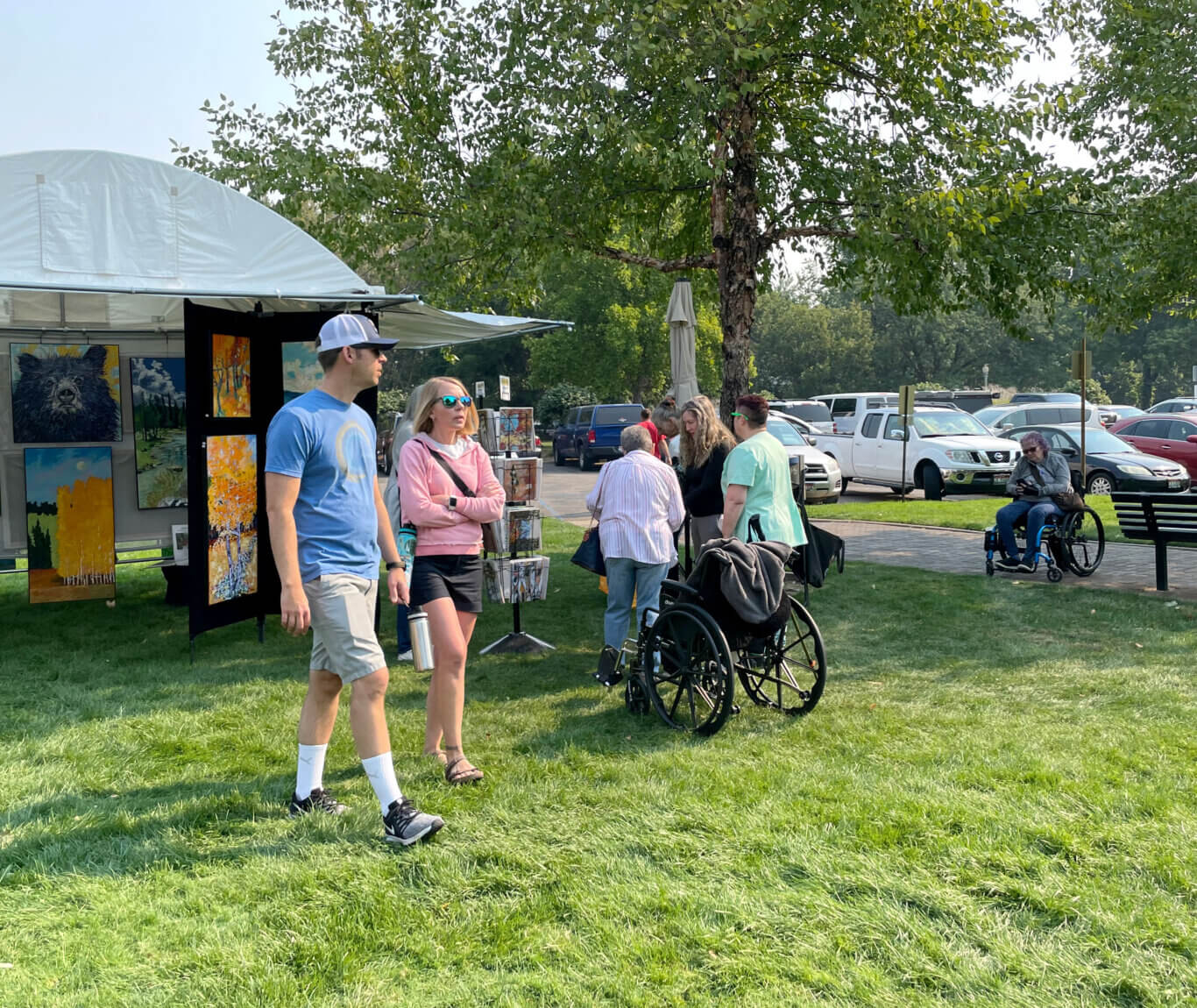
PAC evaluated pathways, accessible parking, drop-off experiences, booth circulation, restrooms, Welcome Centers, seating, wheelchairs, and wayfinding. Wide pathways generally supported large crowds and mobility devices well, but the meandering arrangement of some artist rows made orientation difficult. Pathway signage could also be hard to locate, creating challenges not only for blind and low vision visitors but for anyone trying to understand where they had already been and where they wanted to go next.
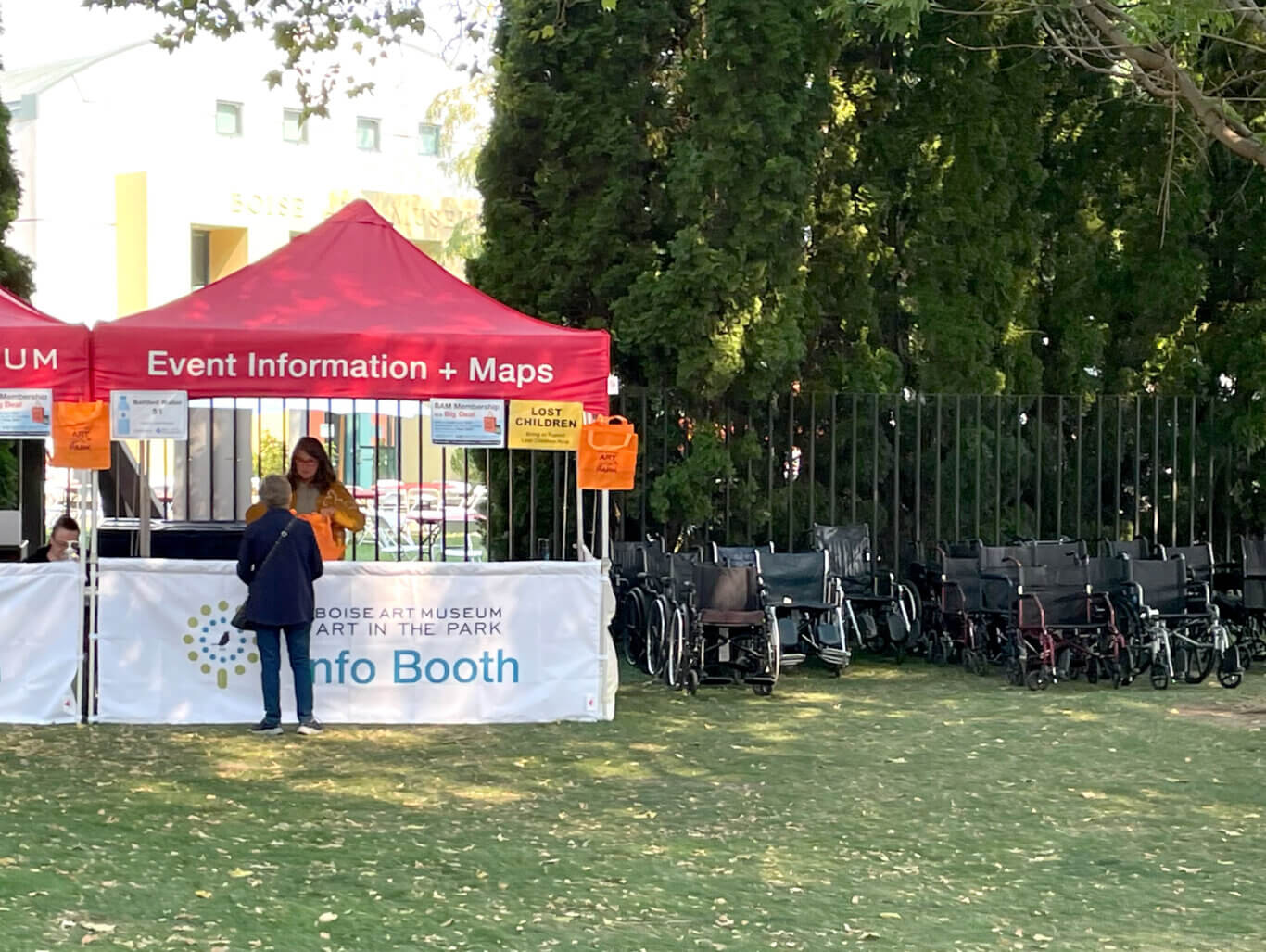
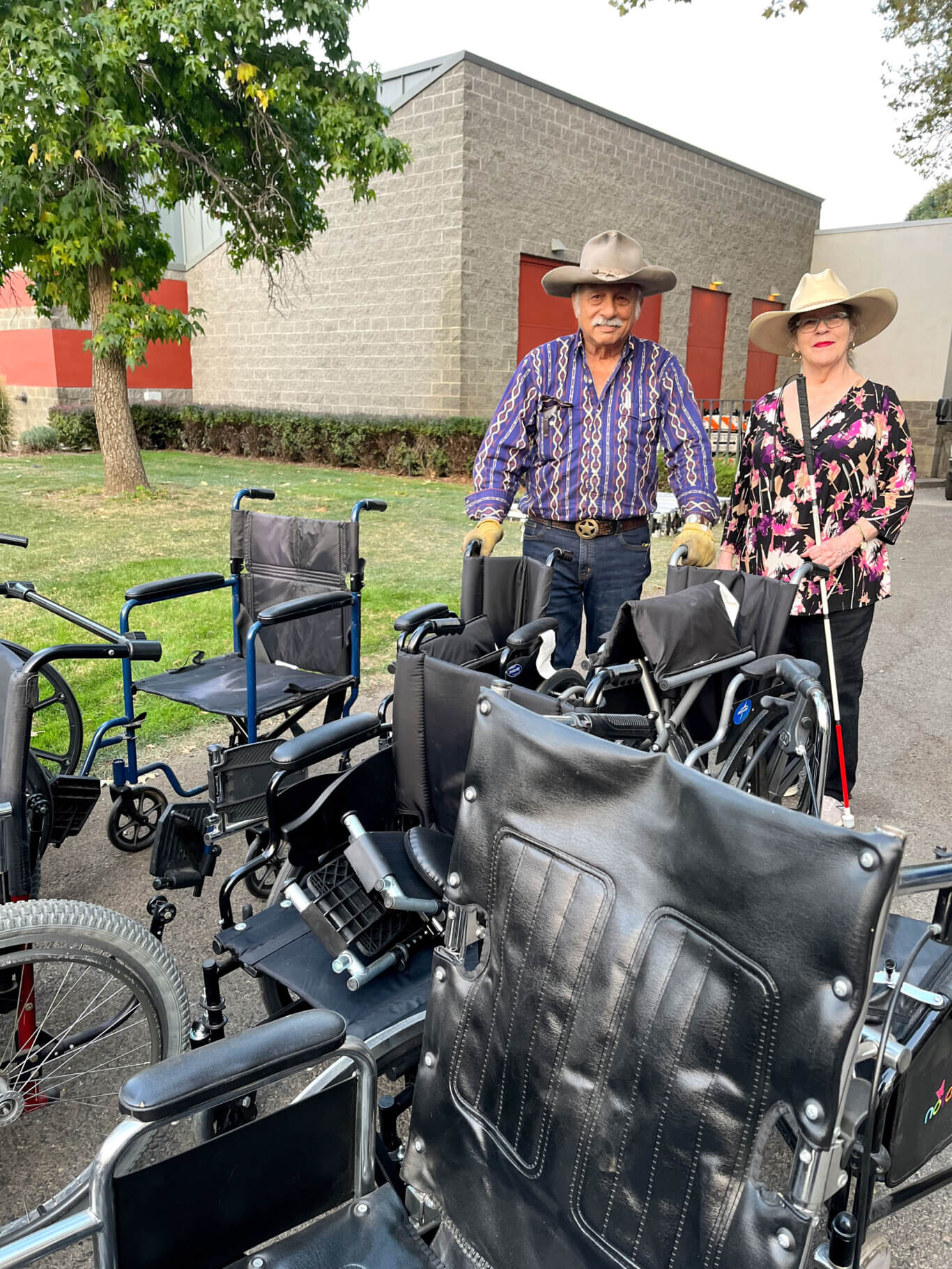
Wheelchairs were made available for visitors to borrow, and PAC examined not simply whether they existed but how people learned about them, where they were distributed, and how that service could be sustained in future years. The same thinking applied to accessible parking and drop-off. Feedback from disabled participants identified the need to train parking staff on accessible drop-off procedures so that the experience designed on paper was also understood by the people implementing it.
These details matter because accessibility is rarely determined by a single design decision. A wheelchair that visitors do not know is available, a safe drop-off location that event staff cannot explain, or an accessible route that is difficult to identify can each turn an intended accommodation into another barrier. PAC’s work helped BAM connect those individual decisions into a more coherent visitor journey.
Extending Inclusive Design to Hundreds of Vendors
When there is an access opportunity inside the museum, BAM can improve its own infrastructure, but much of Art in the Park happens inside booths operated by independent artists and food vendors. That meant accessibility had to become a shared responsibility.
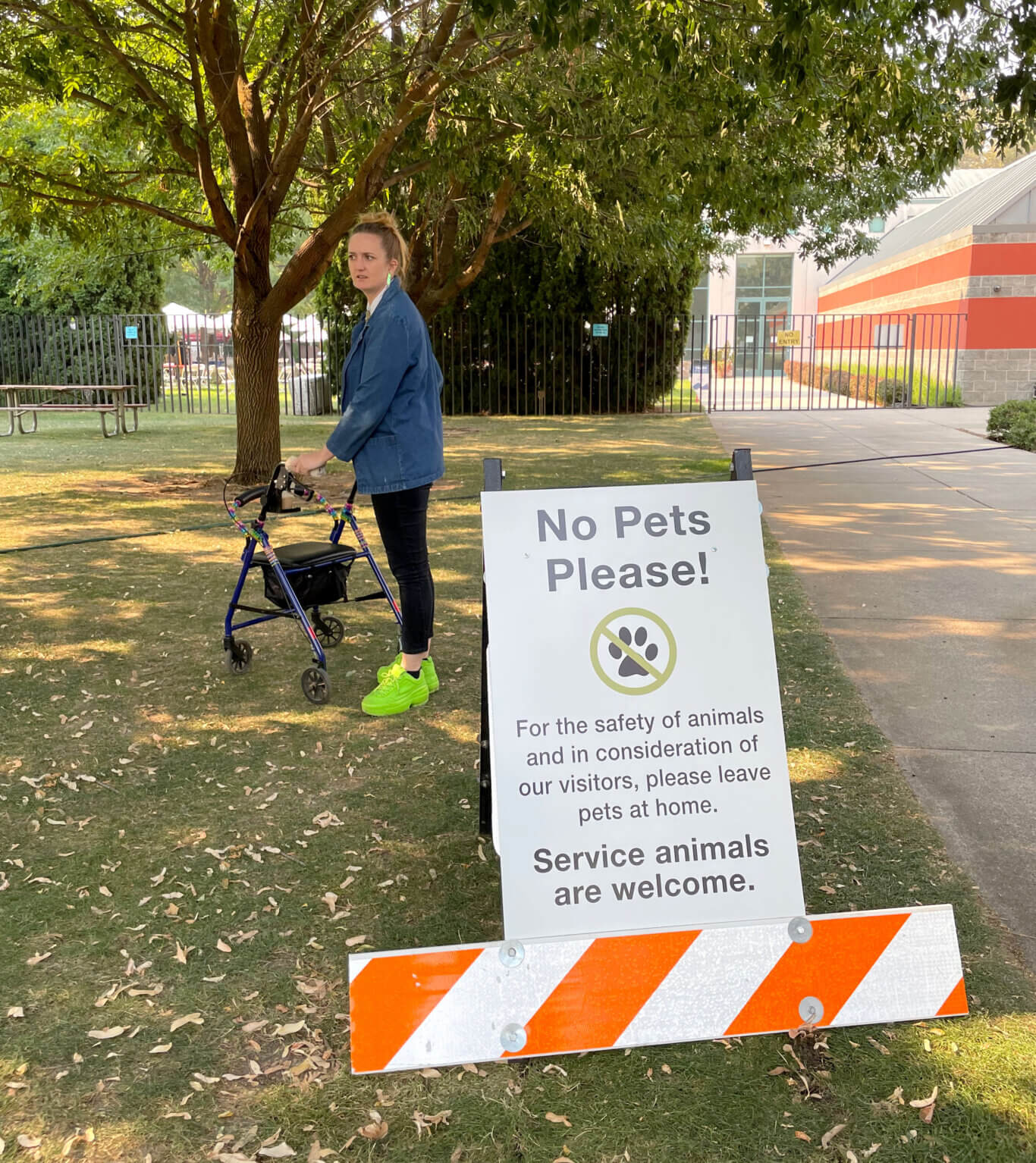
PAC supported BAM in developing clear accessibility guidance for participating vendors before the event. Artists and food vendors were asked to maintain booth entrances and interior paths at least 36 inches wide, keep merchandise and other protruding objects out of circulation routes, provide accessible service-counter space, and understand that service animals were permitted.
The guidance explained not only what vendors needed to do, but why. Accessible booths benefit wheelchair users and blind and low vision visitors while also making navigation easier for older adults, parents with strollers, people with temporary disabilities, and many others.
Post-event observations suggested that the approach worked: most booths appeared to follow the accessibility guidance they had received.
This was a small intervention with significant reach. Instead of BAM attempting to correct hundreds of individual booths once the festival was underway, inclusive design became part of vendor onboarding—moving accessibility upstream into planning.
Community Expertise in the Park
As with PAC and BAM’s work inside the museum, disabled community members were not only an audience for Art in the Park. They were part of evaluating it.
PAC trained a group of volunteers to act as sighted guides to have on hand if helpful. BAM’s Disability Community Advisory Group (DCAG) provided direct feedback on the experience. A blind DCAG member described the value of having a guide who listened to what she wanted from the experience—how much detail she wanted, which booths interested her, and when she wanted to approach artists directly. The guide also identified opportunities for tactile exploration, while participating artists offered impromptu visual descriptions of their work.
Other feedback identified where the experience still broke down, from rideshare drop-off to map access and community outreach. Rather than treating those gaps as evidence that accessibility had failed, PAC used them to define the next iteration of the event. Recommendations included getting the map description back in front of the advisory group, strengthening direct outreach through disability community networks, and creating event information specifically highlighting available access affordances.
This cycle—design, experience, community feedback, reflection, redesign—is what allowed accessibility to develop as an ongoing practice rather than a one-year initiative.
Designing for Conditions You Cannot Control
An outdoor festival also makes particularly visible one of the central realities of inclusive design: not every condition can be controlled.
Crowds fluctuate. Grass is uneven. Weather changes. Performances create noise. Independent artists configure their own spaces. Thousands of people and animals move through the park.
PAC helped BAM think about how to communicate those realities without simply labeling the event inaccessible. Post-event reflection, for example, identified Friday as substantially calmer than other periods and suggested communicating that it might offer a better experience for visitors sensitive to sensory overstimulation, while being clear that BAM could not guarantee environmental conditions.
That thinking has continued to develop. BAM’s current accessibility information describes terrain and pathway conditions, identifies quieter areas of the park, provides free earplugs at Welcome Centers, explains where live performances may produce higher sound levels, and gives visitors information they can use to decide when and how they want to participate.
Inclusive design, in this context, is not about promising a perfectly controlled experience. It is about providing enough information, choice, and support for visitors to make informed decisions for themselves.
From a Museum Practice to a Community Practice
Art in the Park demonstrated that the inclusive design methodology PAC helped BAM build could extend far beyond exhibitions.
The work touched physical access, wayfinding, maps and digital information, transportation, vendor requirements, staff and volunteer practices, visitor services, sensory considerations, community outreach, and one-on-one support. Just as importantly, these components were treated as connected parts of the same experience rather than isolated accommodations.
The project also demonstrated why capacity building matters. PAC was not brought in simply to make a single festival accessible. The work helped BAM develop ways of thinking, evaluating, communicating, and working with its community that could be repeated and refined from year to year.
For an event of this scale, inclusion was never going to come from one accommodation. It came from hundreds of decisions made across the full ecosystem of the experience.
That was the larger shift PAC helped BAM make: accessibility was no longer something provided alongside Art in the Park. It became part of how Art in the Park was planned.