
Capacity Building
PAC helped Monterey Bay Aquarium build inclusive design capacity through workshops, a five-year Inclusive Design Roadmap, physical prototyping, and theater accessibility guidance, establishing a practical foundation for embedding access across exhibits, programs, staff tools, and visitor experiences.
Media
Project Description
Every institution comes to inclusive design from a different starting point. Some are further along on their journey when PAC gets involved. Others are just beginning, working to understand what inclusion requires and how to build toward it systematically. When the Monterey Bay Aquarium engaged Prime Access Consulting, the aquarium was at the beginning of that journey, actively reimagining its spaces and programming and looking for a structured path forward.
The aquarium is a large and complex environment. With a campus spanning multiple educational buildings and research centers, a staff of over 500, and more than 1,500 volunteers, any meaningful approach to inclusive design has to account for scale. PAC’s engagement focused on strategic planning and early capacity building, helping the aquarium identify where it was, where it wanted to go, and how to get there in a way that could be sustained across departments and over time.
The Inclusive Design Workshop Series
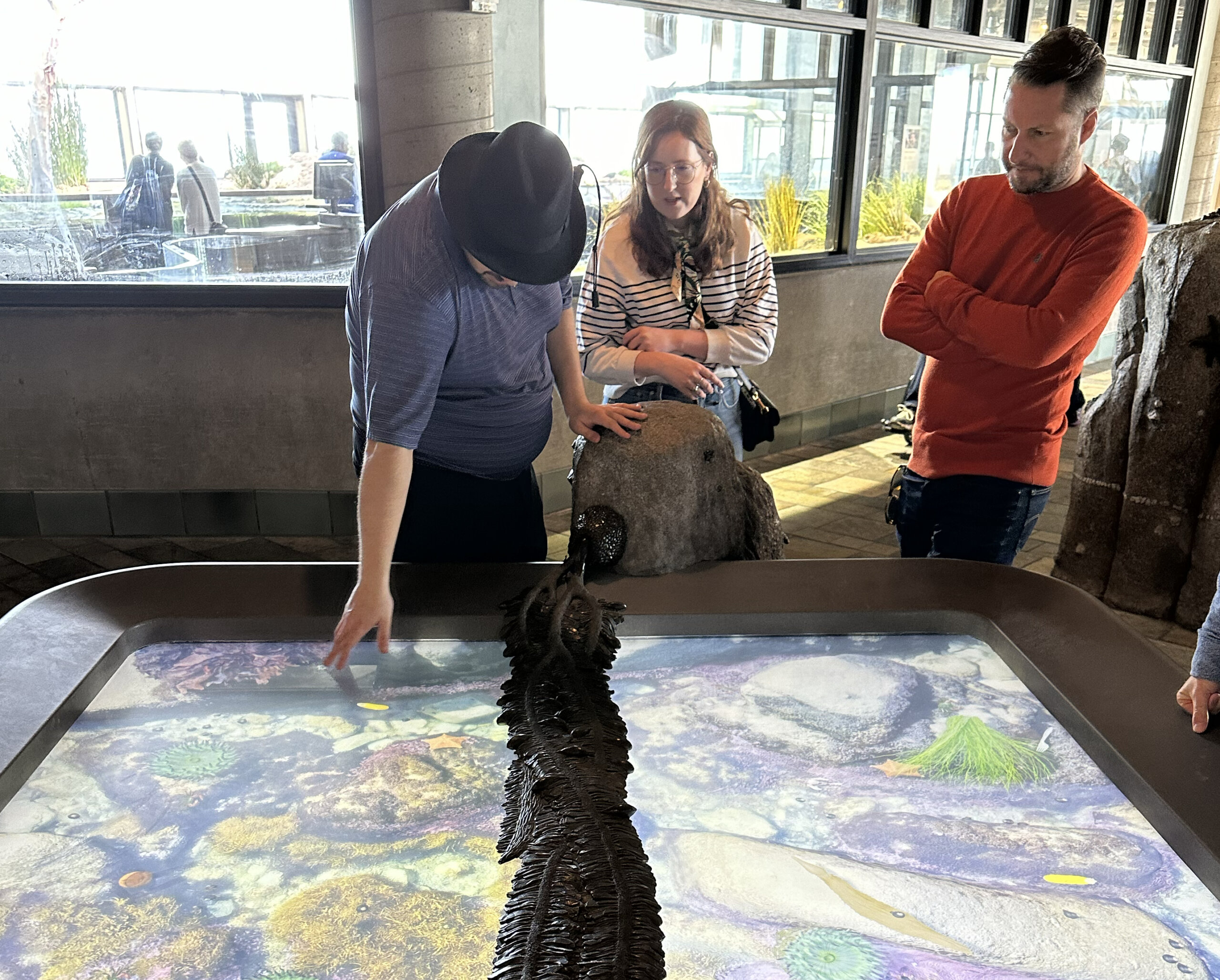
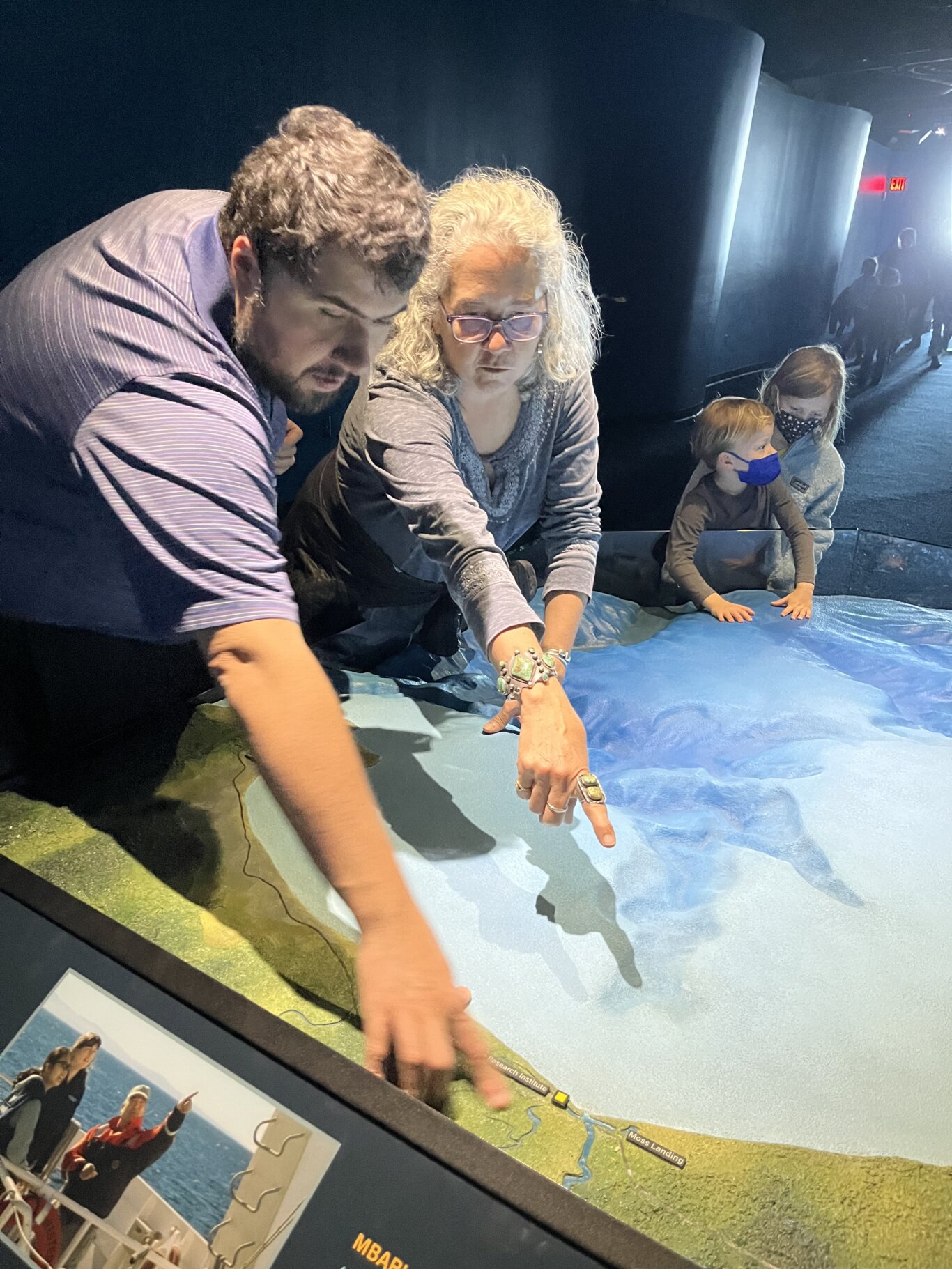
PAC’s Practice of Inclusion Workshop Series pairs in-depth instructional content with hands-on activities conducted directly in the aquarium’s exhibit spaces. Working in the aquarium’s own environment proved generative. The in-gallery activities prompted staff to look at familiar spaces through a new lens, surfacing both gaps and opportunities. The aquarium’s scenic elements offer one example: bronze animal sculptures, representations of coral reefs, and tactile forms depicting marine life and food webs are already present throughout the campus. With Braille labeling and guided tactile descriptions, these elements could be well positioned to serve as meaningful touch objects for visitors.
The Inclusive Design Roadmap
PAC used our Inclusive Design Roadmap to help the aquarium define tasks, identify areas of opportunity, and map inclusive design initiatives onto their five-year strategic plan. Rather than treating access as a separate workstream, this process worked to help embed inclusive design into the aquarium’s existing planning infrastructure. PAC team members met with the Monterey Bay Aquarium Inclusive Design Working Group weekly over four months, building out the Roadmap collaboratively and ensuring that the priorities it captured reflected both institutional goals and practical capacity.
Prototyping
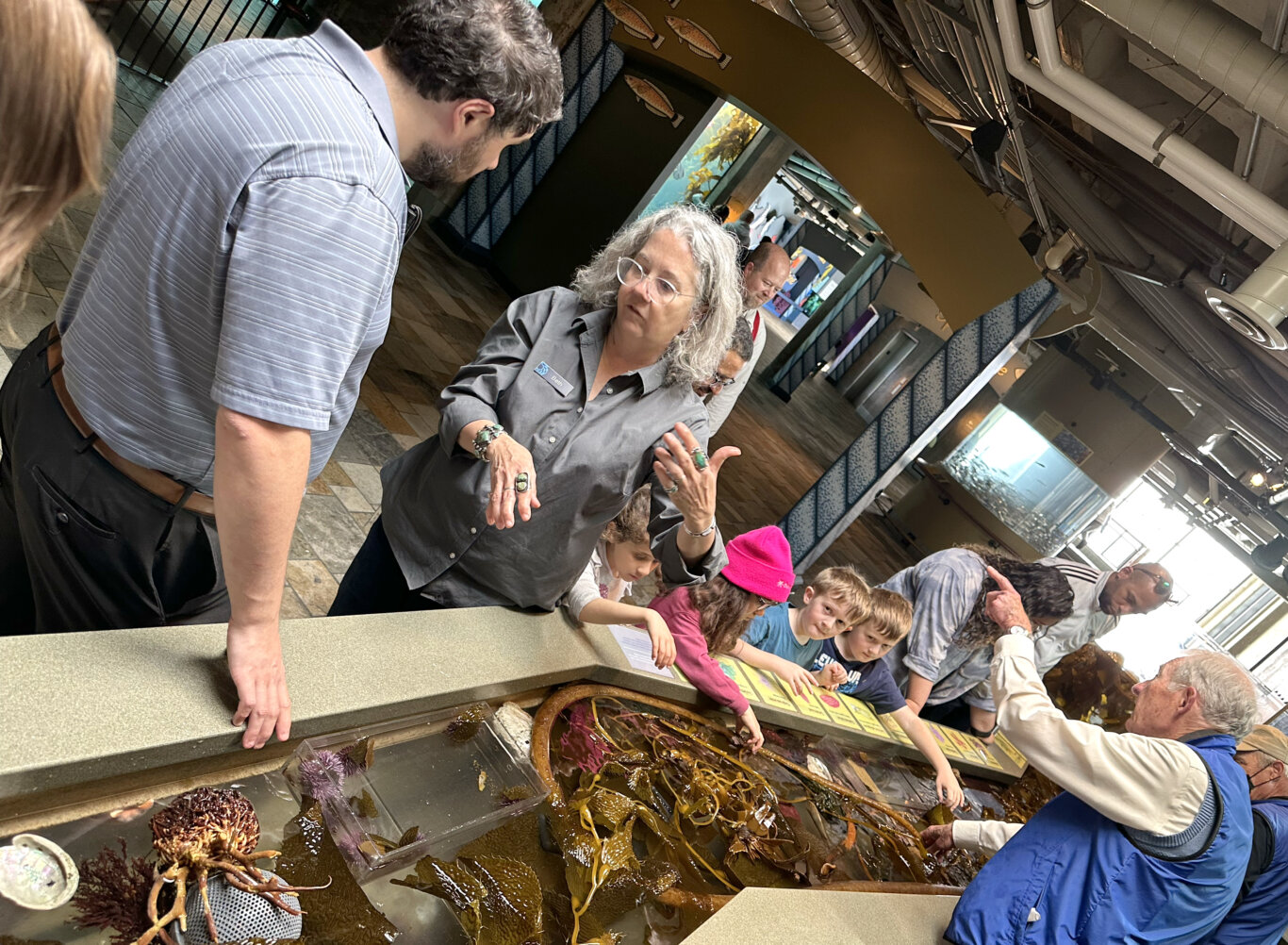
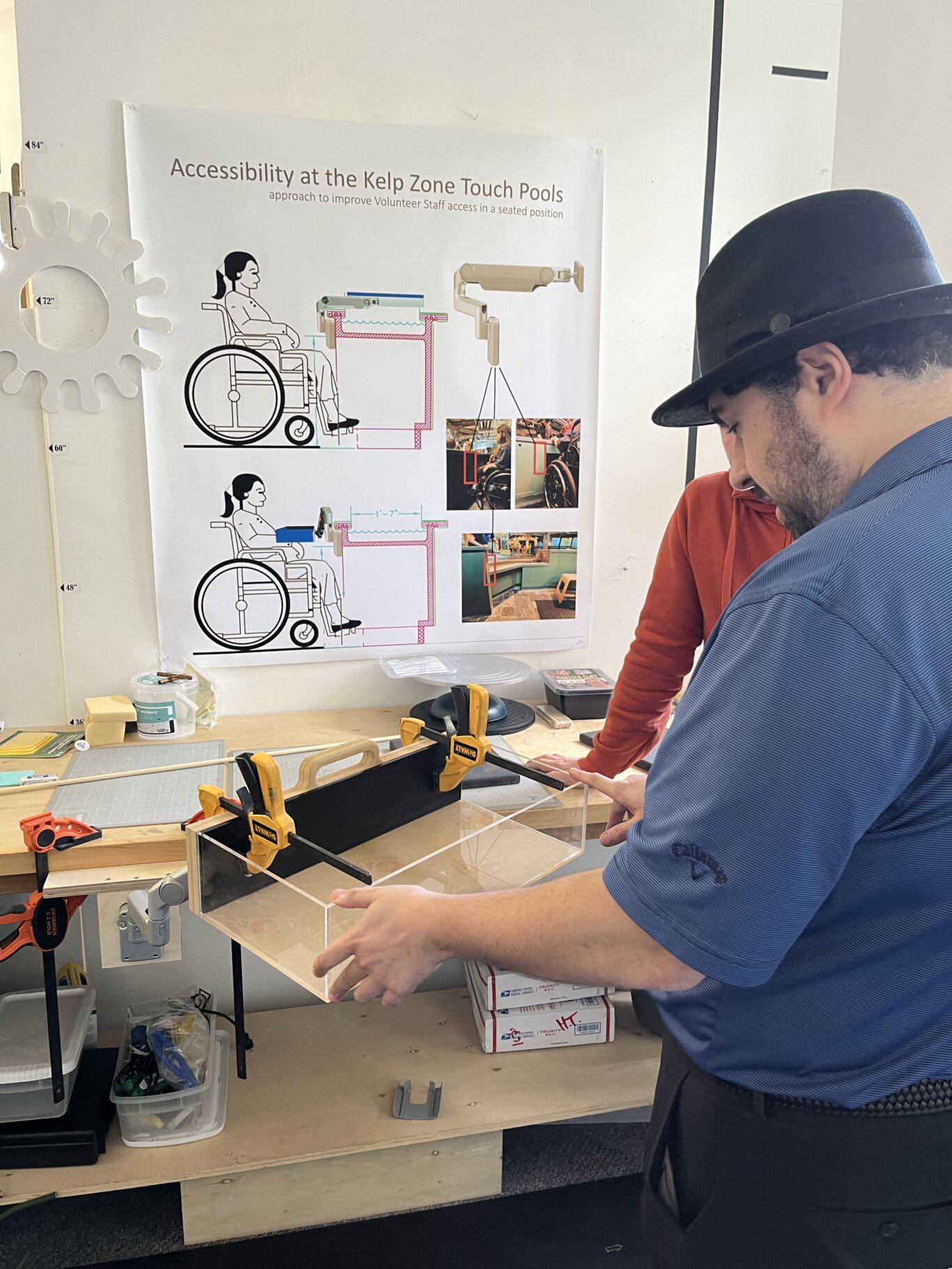
Capacity building at Monterey Bay Aquarium also extended into physical prototyping. As the aquarium works to create more inclusive environments for staff as well as visitors, PAC has supported the development of new tools and solutions through hands-on design sessions. One example is a portable touch tray designed for a disabled volunteer working the water touch tables in the Kelp Forest exhibit. The tray uses a mechanism similar to a computer monitor arm, allowing the volunteer to load it with specimens and then position it over their power chair for closer examination as they guide and teach visitors. It is a small but concrete example of what inclusive design looks like when it centers the people doing the work, not just those receiving it.
Theatre Accessibility and Media Experience
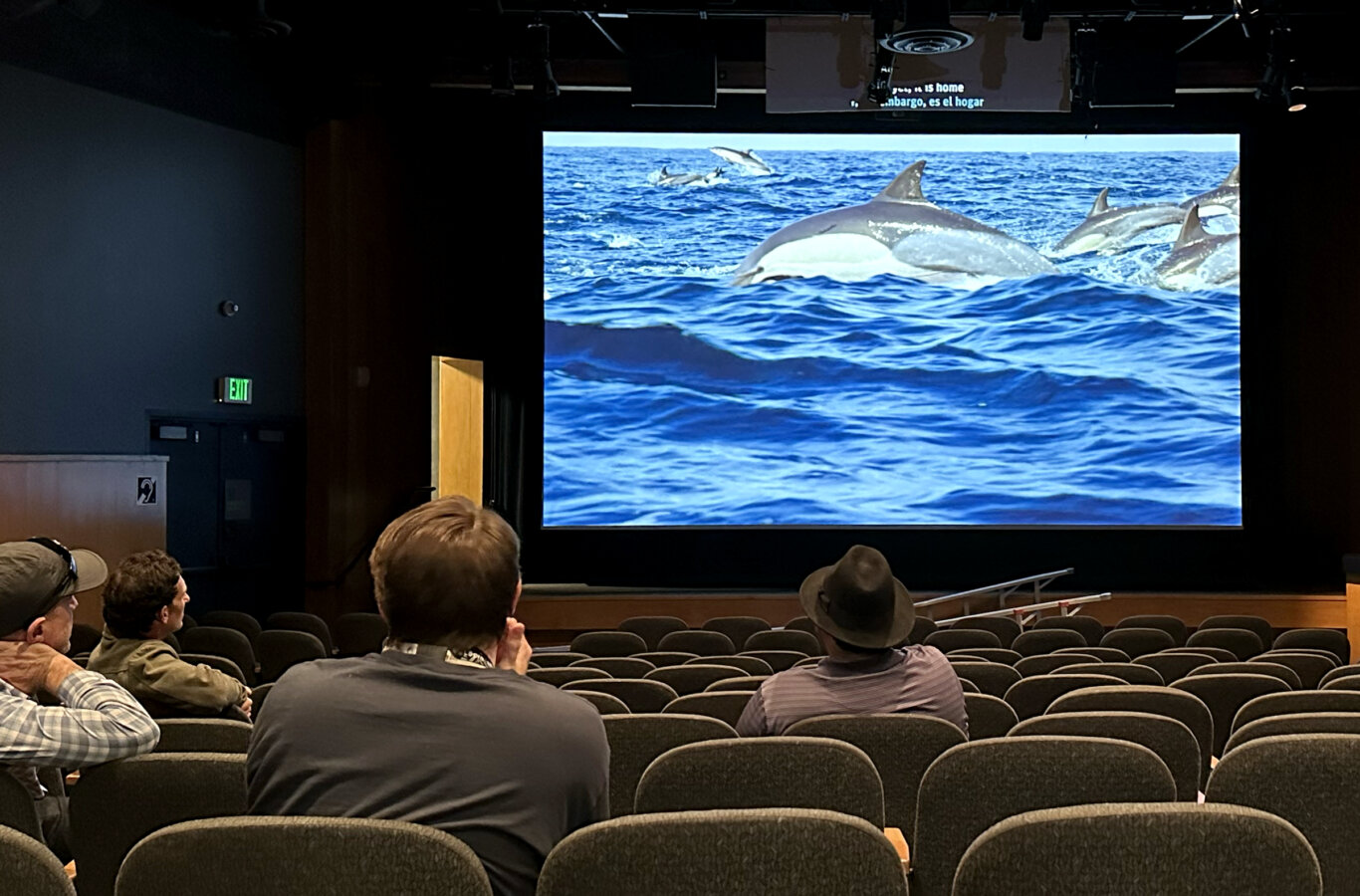
PAC also worked with Monterey Bay Aquarium on accessibility considerations within its theatre experience. This included reviewing the alignment and delivery of captions, identifying physical access considerations within the theatre environment, and pointing out built environment issues that could affect the visitor experience, including lighting, visibility, circulation, seating, and wayfinding.
Our work also explored a range of possible caption delivery approaches, from improving the existing presentation of captions in the theatre to considering more flexible digital delivery methods. PAC discussed potential future solutions involving automatic captioning supported by on-premises AI, allowing the aquarium to explore emerging tools while keeping privacy, reliability, and institutional control in view. These conversations also considered how similar infrastructure could eventually support audio description delivery.
Together, this work helps frame the theatre not as a separate accessibility challenge, but as part of the aquarium’s broader inclusive design ecosystem. Captions, audio description, lighting, seating, physical access, and visitor flow all shape who can participate in the experience and how fully they can do so.
Concluding Thoughts
Like many institutions, Monterey Bay Aquarium has a great deal ahead on the path toward full inclusion. This is how the work of inclusive design and accessibility naturally goes. What matters is that the aquarium has committed to planning this work thoughtfully, distributing it across teams and over time rather than treating it as a single project with a finish line. PAC is glad to have helped lay that foundation and looks forward to continued collaboration as the aquarium’s inclusive design practice grows. The roadmap is in place, the working group is engaged, and the next steps are already taking shape.