Inclusively Designed Mobile Application
Date: April 2013 through February 2017
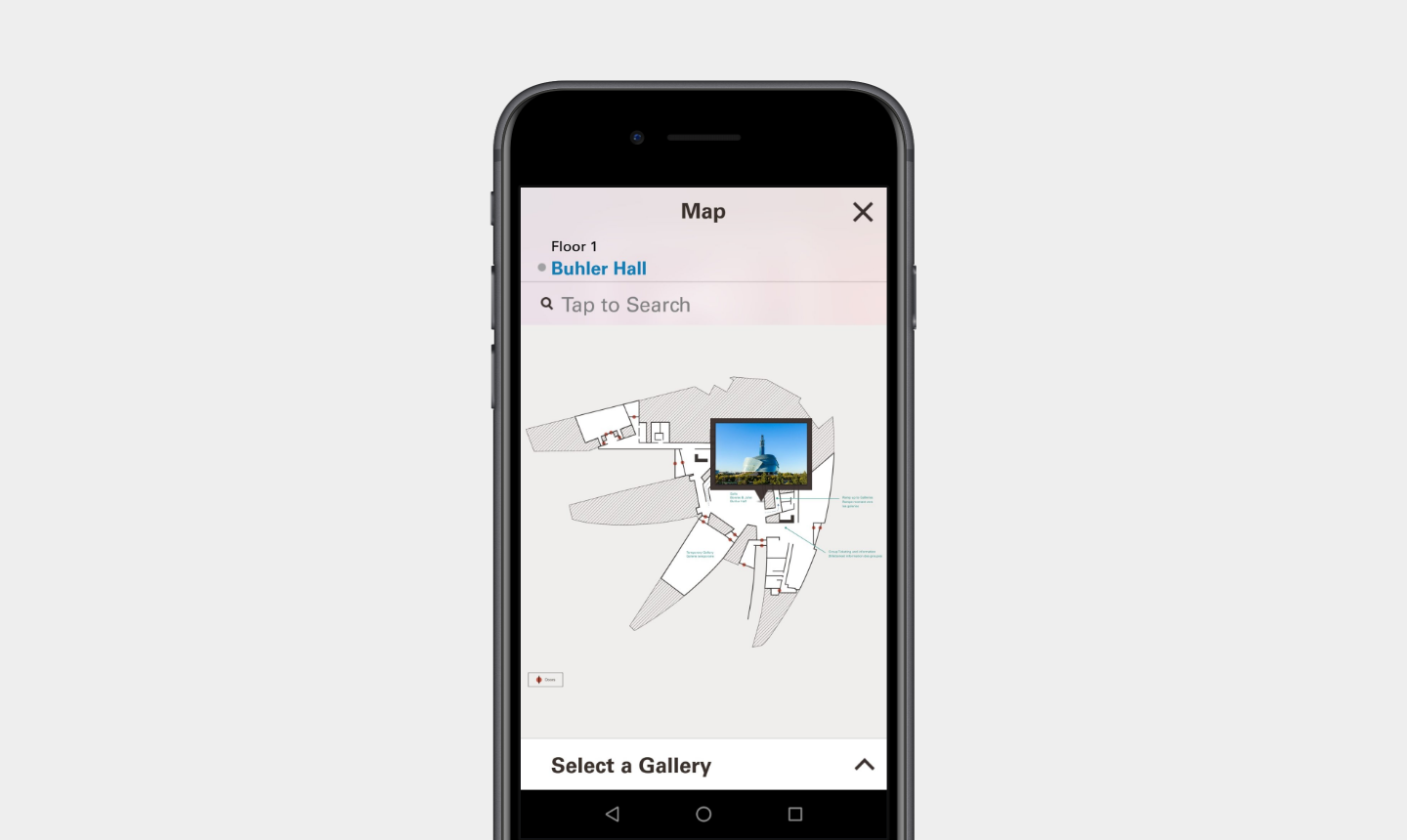
A black smartphone centered on a light gray background. On the phone screen is a map page titled "Map," with a close "X" icon in the top-right corner. Below the title, the interface lists "Floor 1" and highlights "Buhler Hall" in blue. A search field labeled "Tap to Search" appears beneath it. The main area displays a detailed floor plan with pathways and room outlines, including a small photo preview overlay of a building or landmark. At the bottom of the screen, a collapsible bar reads "Select a Gallery" with an upward arrow, suggesting more options can be expanded.

PAC supported the Canadian Museum for Human Rights in shaping and validating an inclusively designed mobile application that extends the museum’s Universal Access Point strategy, connecting gallery interfaces, beacon-based location content, and accessible exhibition media in English and French.

Media
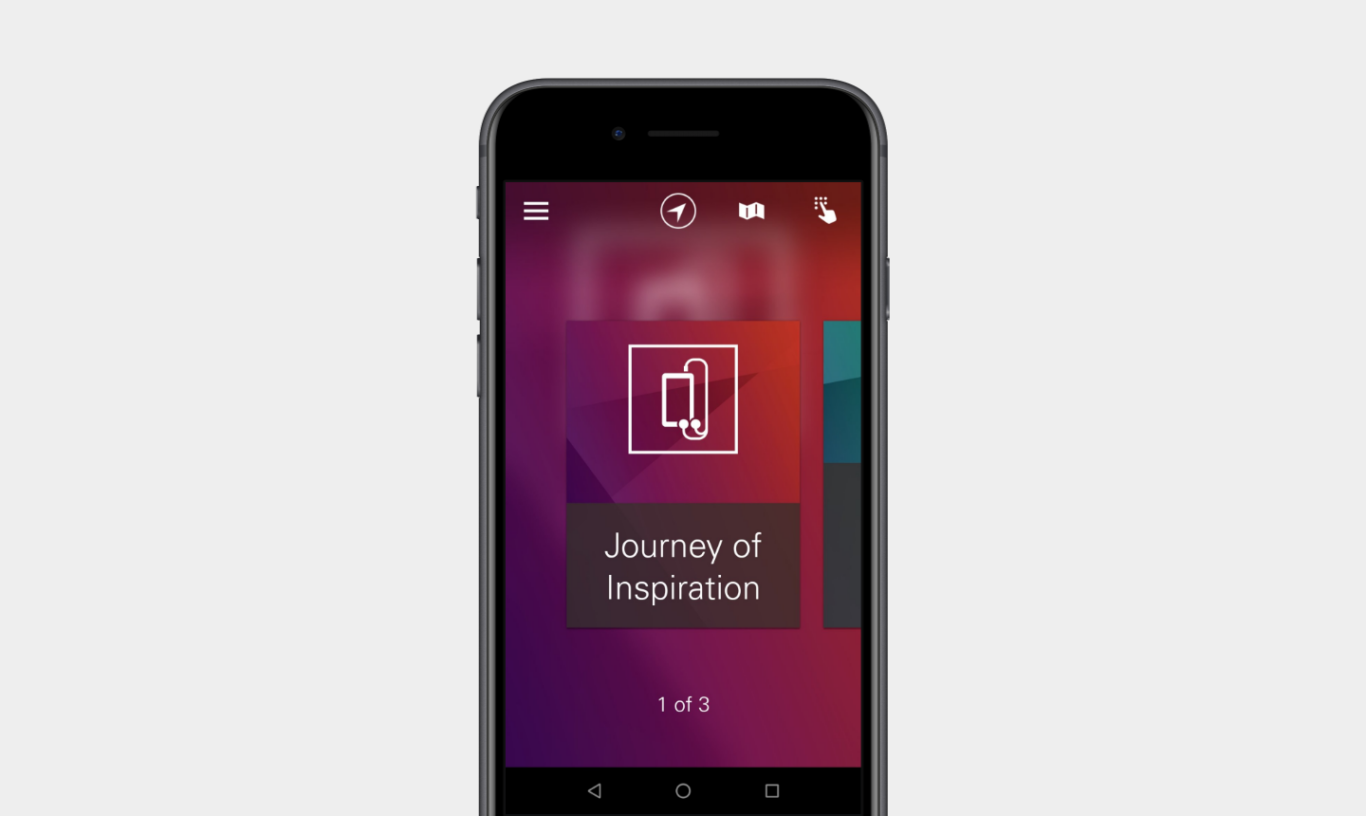
A black smartphone centered on a light gray background. On the phone screen is a modern app interface with a blurred purple-red gradient background. At the top are white icons for a menu, compass/navigation, map, and touch/interaction. In the center is a large card featuring a white line icon of a phone and cable, with the title "Journey of Inspiration" beneath it. Near the bottom, small text reads "1 of 3."
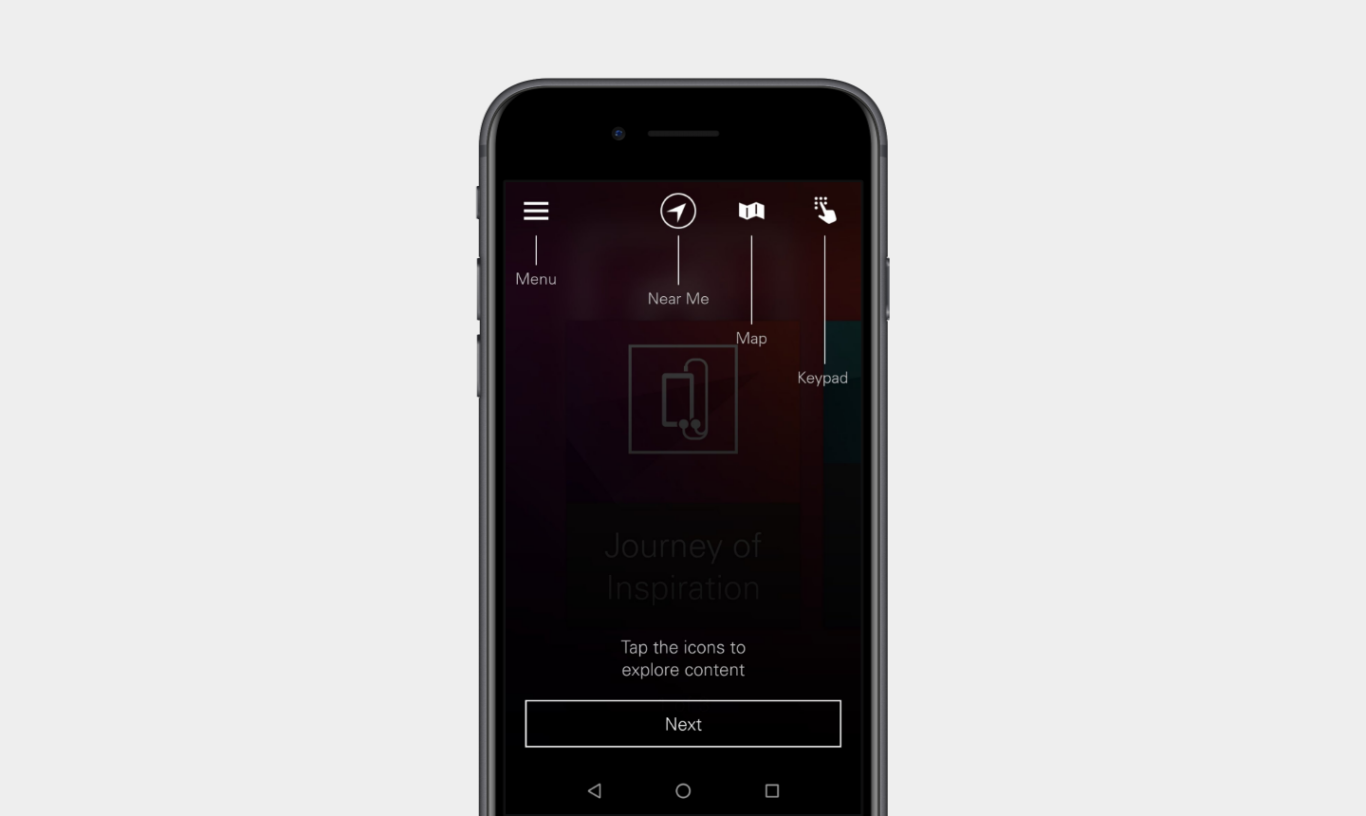
A black smartphone centered on a light gray background. On the phone screen is a dimmed app interface with a tutorial overlay. At the top are four white icons with vertical guide lines and labels: a hamburger icon labeled "Menu," a compass/arrow icon labeled "Near Me," a folded map icon labeled "Map," and a hand/keypad icon labeled "Keypad." In the middle of the screen, faint text reads "Journey of Inspiration," and near the bottom it says "Tap the icons to explore content." A rectangular outlined button labeled "Next" appears below the instruction text. The overall UI is dark, with muted red and purple tones in the background.
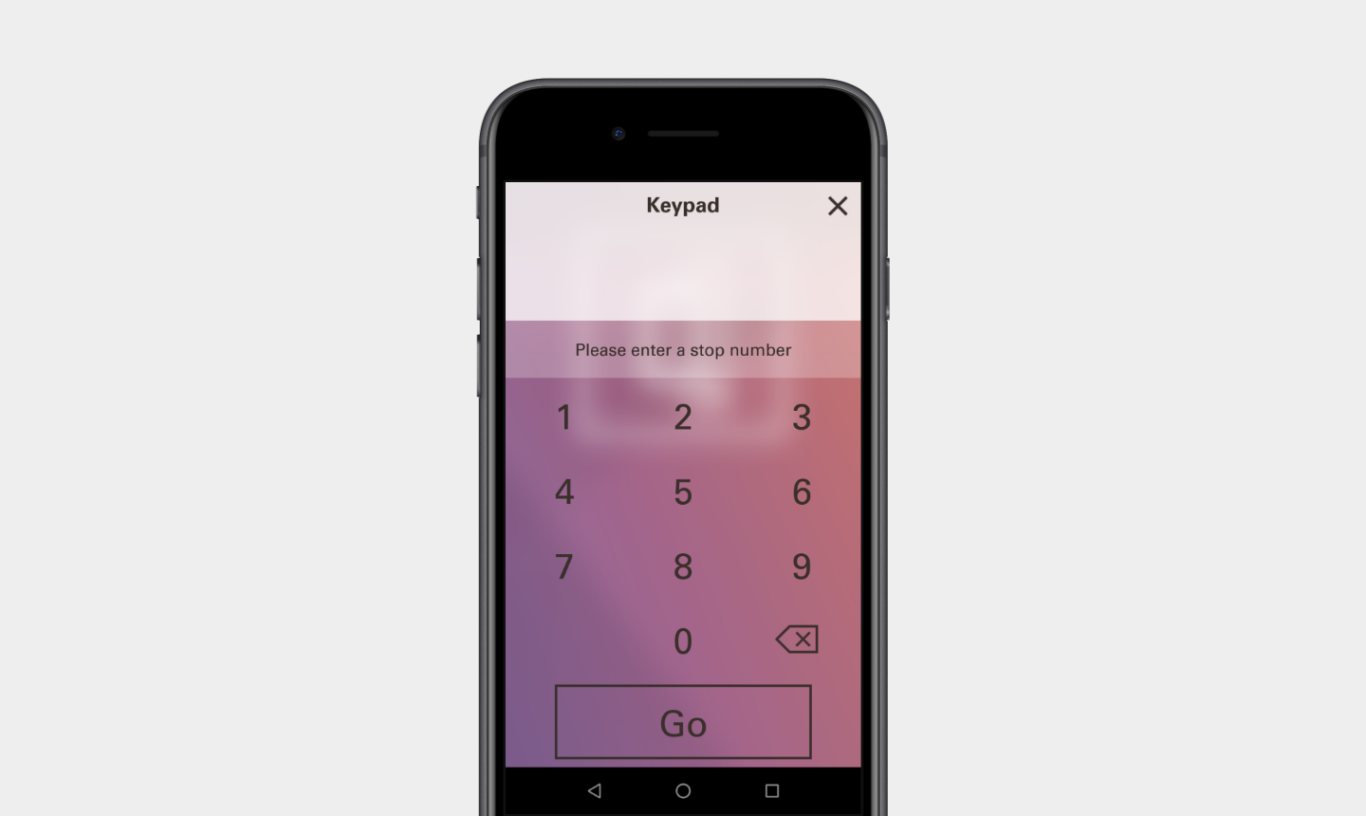
A black smartphone on a light gray background. On the phone screen is a keypad UI with the title "Keypad" at the top and an "X" close button in the upper-right corner. Below it, a prompt reads "Please enter a stop number." The main area has a pink-to-purple gradient background with large numeric buttons arranged like a keypad: 1-9, then 0 near the bottom. A backspace/delete icon appears to the right of the 0, and a large outlined "Go" button sits at the bottom.
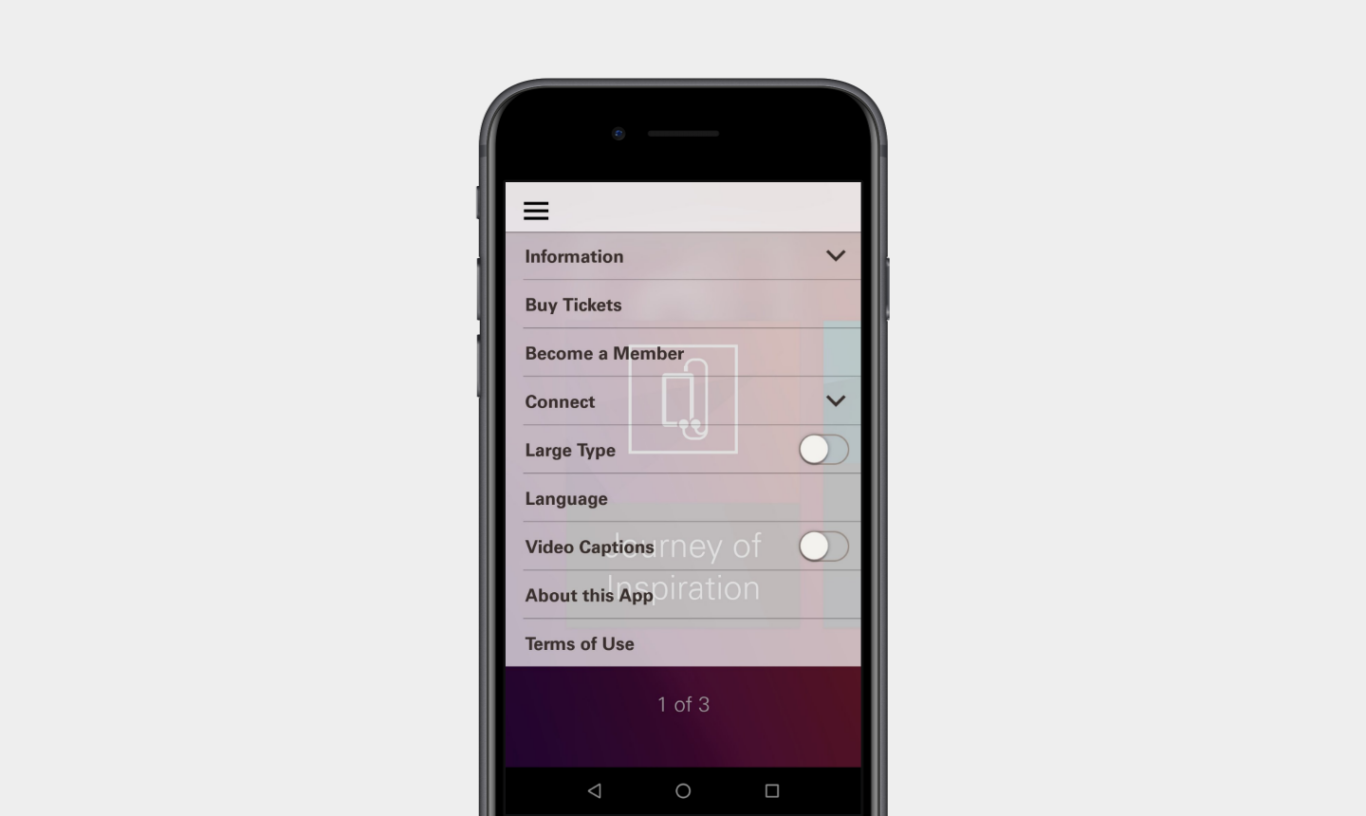
A black smartphone centered on a light gray background. On the phone screen, an app menu or settings panel is open with a hamburger icon at the top left. The menu lists several items in stacked rows, including "Information," "Buy Tickets," "Become a Member," "Connect," "Large Type," "Language," "Video Captions," "About this App," and "Terms of Use." "Information" and "Connect" have dropdown arrows, and the "Large Type" and "Video Captions" options appear to have toggle switches on the right. Behind the semi-transparent menu, faint underlying app content is visible, including the text "Journey of Inspiration" and a page indicator reading "1 of 3" near the bottom.

Project Description

The mobile application at the Canadian Museum for Human Rights (CMHR) is an integral part of the museum’s Universal Access Point (UAP) strategy. The UAP model ensures that visitors have multiple ways to access exhibition content throughout the museum. Visitors can use the Universal Keypad (UKP) in the galleries to hear or enlarge content, or they can use their own device to access the same material through the mobile app.

PAC supported CMHR in shaping and validating this multimodal access strategy, including the relationship between physical gallery interfaces, mobile content delivery, and the accessibility affordances embedded across the visitor experience. Each stop in the museum includes a number that is both embossed and provided in braille. By entering that number into the mobile app, visitors can access the relevant exhibition content, videos, and related material. PAC’s work helped ensure that the mobile experience reflected the same access priorities present in the galleries, including audio description, captions, subtitles, sign language, and transcripts in both English and French.

The app also supports location-based content through Bluetooth low-energy beacons installed at exhibition stops. These beacons allow the mobile application to surface content associated with a visitor’s location. PAC advised on how these digital and spatial systems could work together so that visitors could move between gallery-based hardware, personal devices, and exhibition content without losing context or control.

CMHR’s mobile application also includes features such as a mood map, which allows visitors to report and visualize their reactions to emotionally complex exhibition content. PAC helped address the accessibility of highly visual and interactive features like this, ensuring that they were not treated as exceptions to the access strategy. Instead, the mobile app became another expression of the museum’s broader commitment to multimodal, inclusive access across content, navigation, interaction, and interpretation.