
Simplified Layout Mode
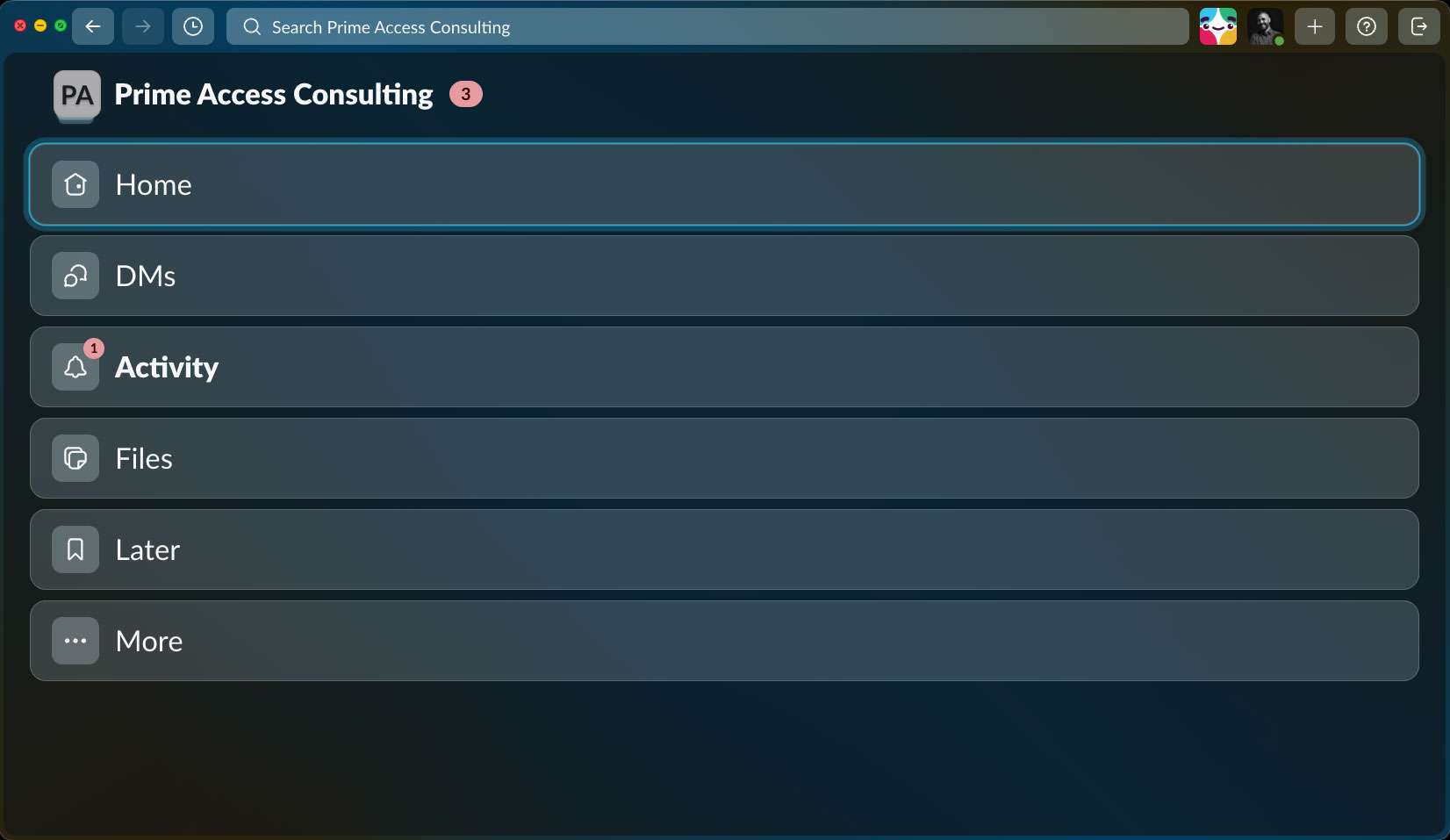
PAC helped Slack design and test Simplified Layout Mode, a desktop and web accessibility feature that reduces visible interface complexity, supports more linear navigation, and preserves core Slack functionality for users who benefit from greater focus, clarity, and access technology compatibility.
Media
Project Description
Software with a multi-pane layout can allow people to interact with multiple pieces of content simultaneously, compare related information, and cross-reference separate areas of an interface without repeatedly navigating back and forth. In a communication platform like Slack, that flexibility can be powerful. It can also become visually, cognitively, and operationally demanding, especially when several panels, sidebars, message lists, threads, canvases, and navigation regions are present at the same time.
To address this, Prime Access Consulting (PAC) helped Slack design and test Simplified Layout Mode, a desktop and web experience that prioritizes focus, clarity, and compatibility with access technology while preserving Slack’s core functionality and efficiency.
Rather than treating accessibility as a set of isolated fixes, Simplified Layout Mode reflects a broader inclusive design principle: users should be able to choose an interface structure that matches how they navigate, process information, and maintain context.
How It Works
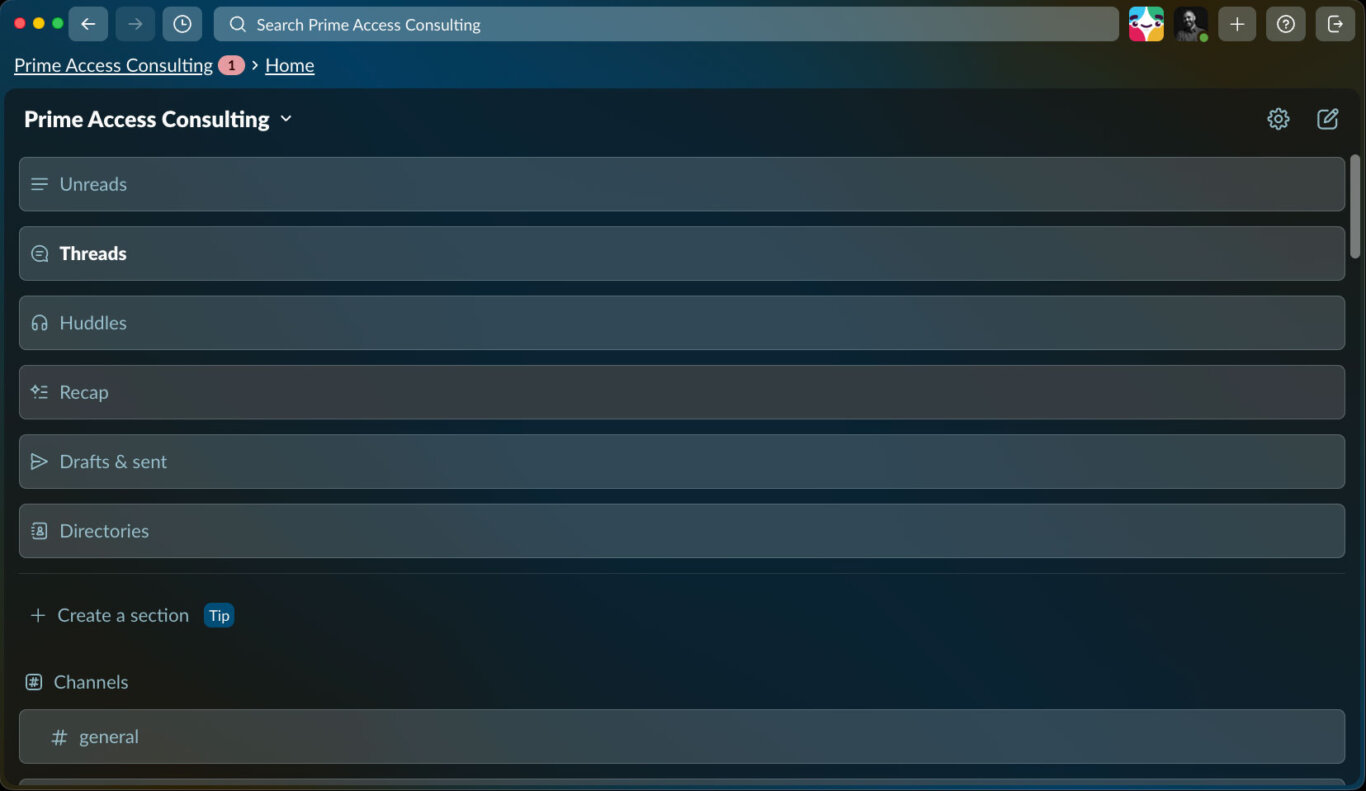
Simplified Layout Mode restructures the Slack interface to reduce the number of major app sections shown on screen at one time, often narrowing the experience to a single primary context. For example, instead of presenting the conversation sidebar, a channel message list, and a thread side by side, users can move through those layers sequentially, with the current context placed front and center.
After a user chooses a channel, the conversation list is replaced by that channel. When the user opens a thread, the channel view is replaced by the thread. A breadcrumb trail supports quick movement back to any previously visited level, including the channel, the conversation list, or the landing screen.
Critically, enabling Simplified Layout Mode does not fundamentally change how Slack works. It changes how Slack is presented. The same functionality remains available, but the interface is reorganized to reduce competing regions, lower navigational complexity, and support a more linear interaction model when that model is preferable.
A significant amount of design and engineering effort went into ensuring that new Slack features could continue to fit within the Simplified Layout Mode paradigm. This was essential because an accessibility feature that becomes disconnected from the main product can quickly become difficult to maintain, incomplete, or functionally unequal. Simplified Layout Mode was designed to remain part of Slack’s primary product ecosystem rather than becoming a separate, parallel interface.
At the same time, accessibility remains central to Slack’s default layout. Simplified Layout Mode does not replace the need for the standard interface to be accessible. Instead, it adds meaningful choice by offering a focused layout for people who benefit from reduced complexity without diverting product effort into an entirely separate application experience.
Impact
Simplified Layout Mode can make Slack easier to use for people who rely on alternative input methods such as eye tracking, switch control, and head mouse systems. By reducing the number of visible regions and focusable elements, it can decrease the amount of physical or operational effort required to move through the interface.
It can also benefit keyboard and screen reader users by creating a more predictable navigation model with fewer competing destinations. For neurodivergent users, the simplified structure can reduce cognitive load and help limit the sense of being overwhelmed by multiple simultaneous interface regions. It can also be useful for anyone working on a small screen, using high zoom levels, or trying to maintain focus in a dense communication environment.
The result is not a “special” version of Slack for one group of users. It is a flexible interaction model that recognizes that interface density, spatial complexity, and constant context switching affect people differently.
PAC’s Involvement
PAC is proud to have built a long-term, positive partnership with Slack. Through regular office hours, targeted accessibility evaluations, design consultation, and collaboration with Slack’s accessibility program and product teams, PAC has helped support a product development culture grounded in sustainable inclusive practices.
Simplified Layout Mode grew out of real-world issues repeatedly identified through that work, especially cognitive overload, navigational fatigue, and the difficulty of maintaining context across a dense, multi-pane interface. Rather than addressing those issues only through small, localized adjustments, Slack and PAC explored a more holistic solution: a layout model that could reduce complexity while remaining deeply integrated into the broader product.
Designing and building a new layout optimized for particular usage patterns, while ensuring that it remained compatible with Slack’s existing functionality and future feature development, was a major undertaking. The result demonstrates the value of moving beyond compliance-oriented remediation and toward product-level inclusive design.
Feature Availability
Simplified Layout Mode was released in May 2025. It can be turned on and off in the Accessibility section of Slack’s Preferences dialog on desktop or in a web browser.
Concluding Thoughts
Simplified Layout Mode shows what becomes possible when accessibility is treated as a design opportunity rather than a constraint. It does not assume that one interface structure will work equally well for everyone, nor does it require users to sacrifice functionality in order to gain clarity. Instead, it gives people more control over how Slack presents information, how much complexity is visible at once, and how they move through the product.
For PAC, this project reflects a central principle of inclusive design: meaningful access is not only about whether a feature can technically be reached. It is also about whether people can use that feature with clarity, efficiency, and confidence. Simplified Layout Mode helps make that possible by aligning Slack’s interface more closely with the varied ways people navigate, process information, and work.