
Sarah Sze “Forever is Composed of Nows”
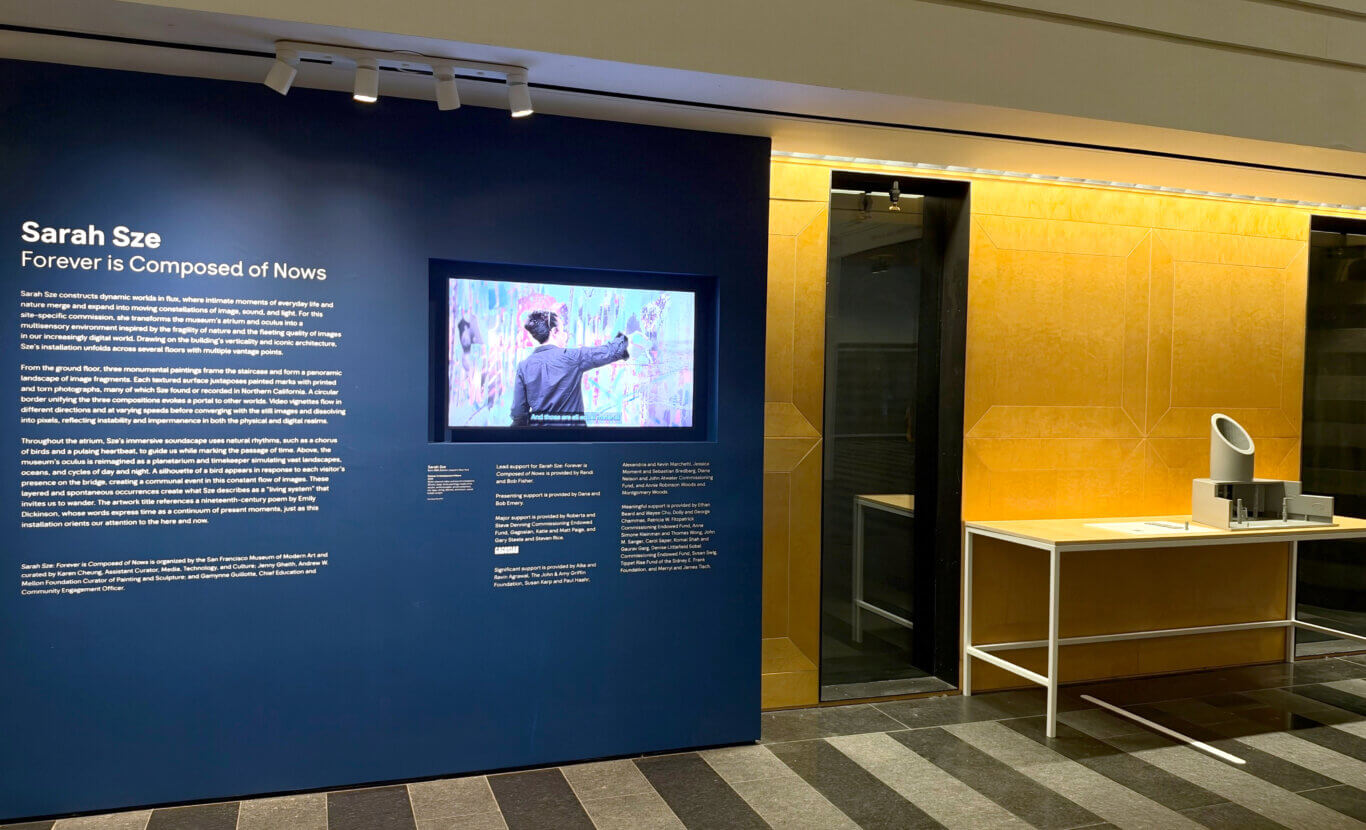
PAC partnered with the San Francisco Museum of Modern Art and Sarah Sze to deliver an integrated accessibility strategy for Sarah Sze: Forever is Composed of Nows, including a three-dimensional touch object, wayfinding with tactile QR codes and Braille, layered visual and sound descriptions, and an accessible microsite.
Media
Project Description
How do you make an artwork accessible when it is constantly changing, spans multiple floors, and uses the architecture of a building as its canvas? How can all visitors experience not only what an artwork looks and sounds like, but also its scale, movement, atmosphere, and emotional impact?
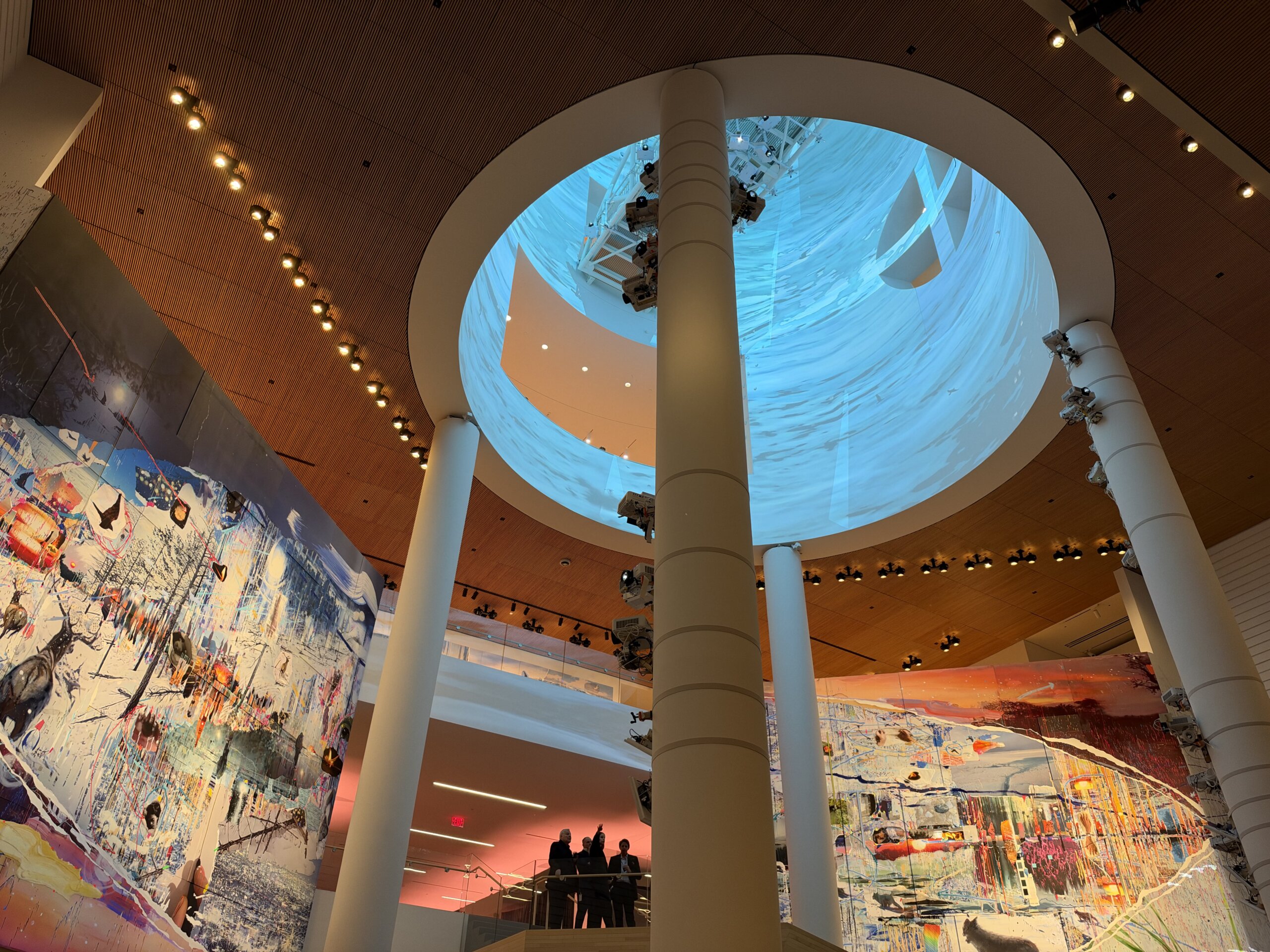
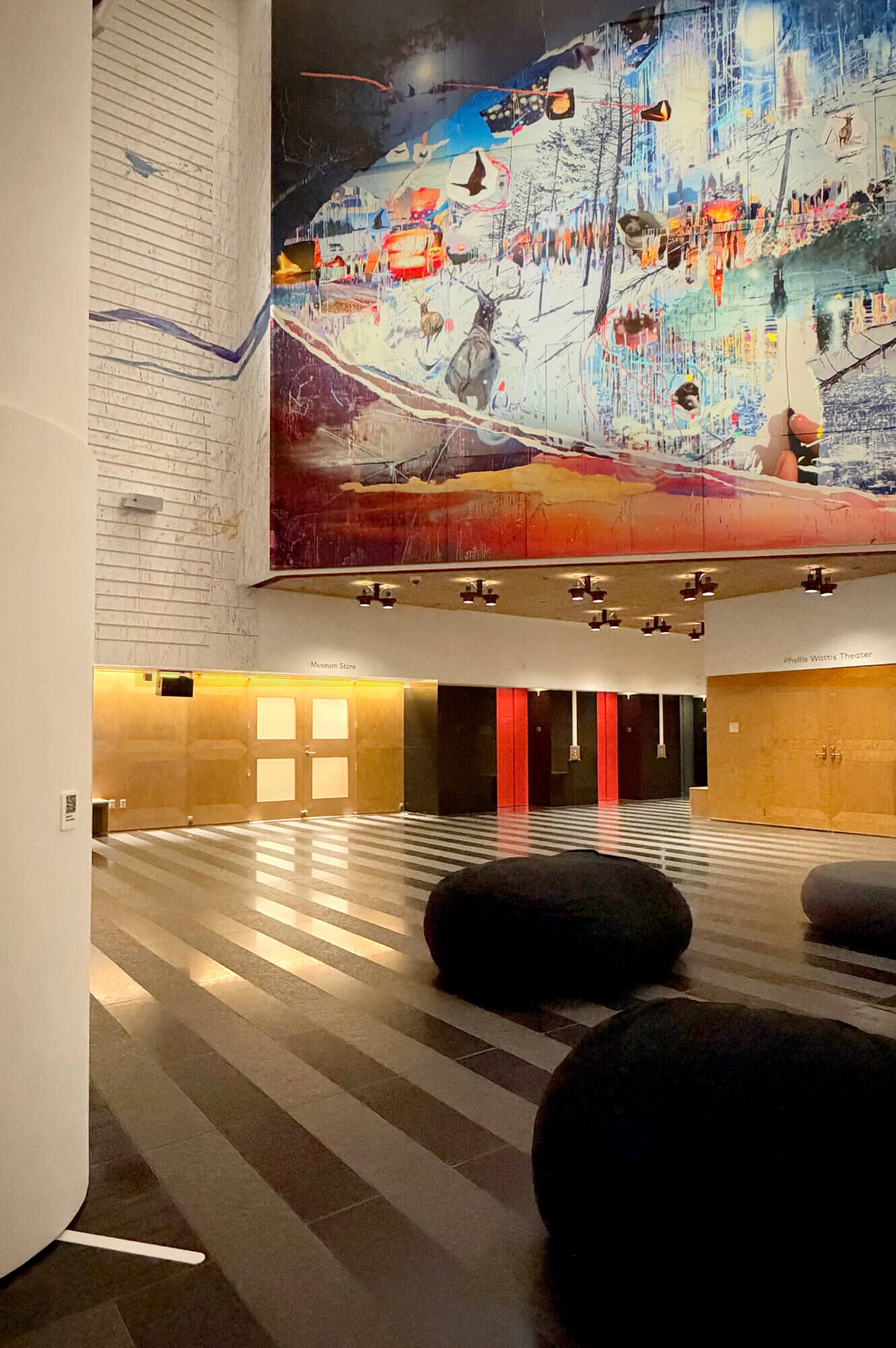
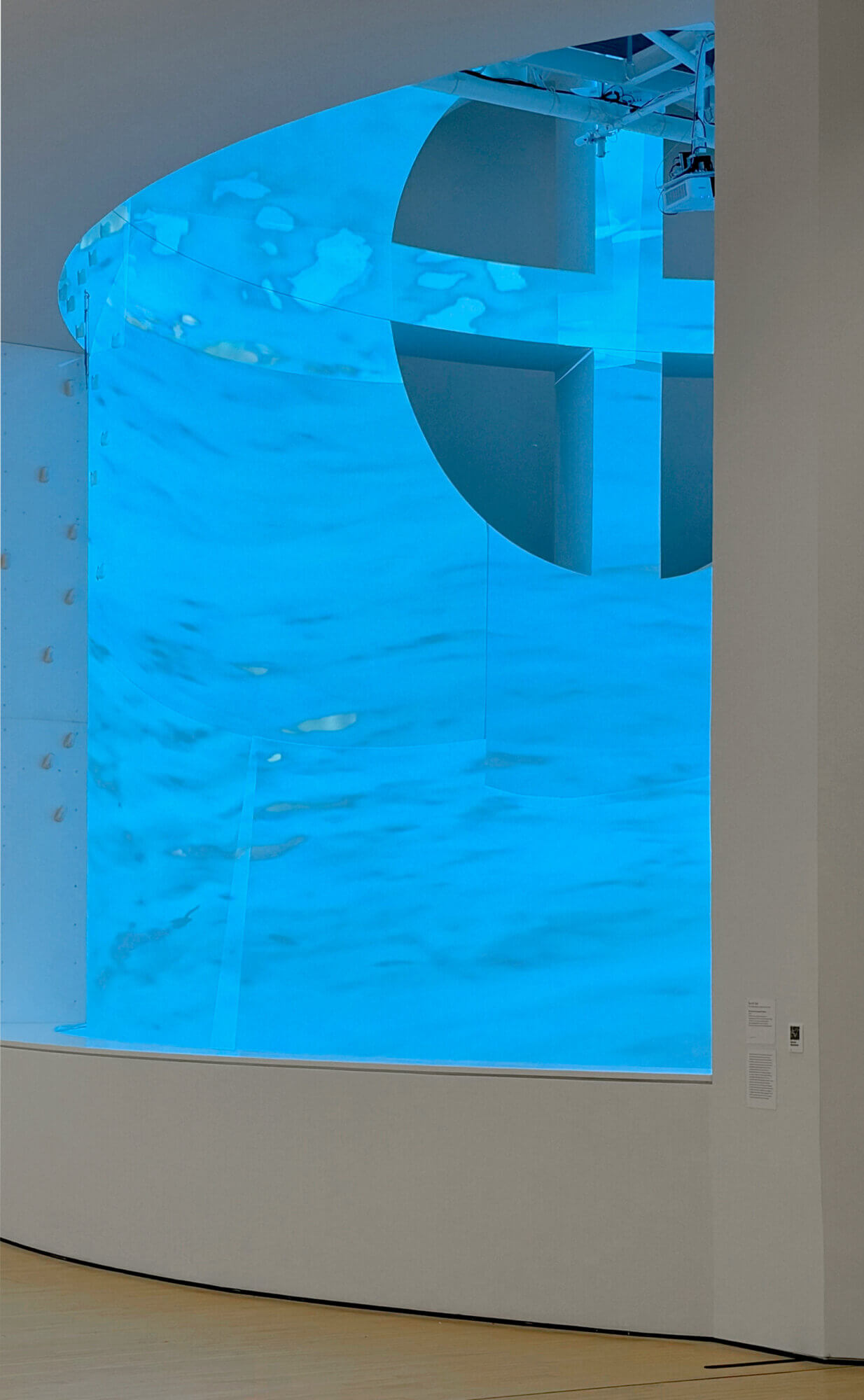
These were central questions in Prime Access Consulting’s (PAC’s) collaboration with Sarah Sze and the San Francisco Museum of Modern Art on Sarah Sze: Forever is Composed of Nows, an ambitious multimedia installation that transforms the museum’s five-story atrium into an immersive, evolving artwork.
Combining three monumental mixed-media paintings with moving projections and a layered soundscape, Sze’s installation unfolds across the museum’s architecture. Images of landscapes, birds, people, and everyday moments appear, disappear, and reemerge in different forms as visitors move through the space. The experience changes with time, perspective, and the presence of other visitors.
PAC worked alongside SFMOMA and the artist’s studio to develop an integrated approach to accessibility that responds to the artwork’s unusual scale, complexity, and dynamic nature. Rather than simply providing alternative formats for visual and auditory content, the collaboration explores how inclusive design can communicate the spatial, experiential, and emotional qualities of an immersive artwork.
The resulting accessibility strategy connects tactile exploration, physical wayfinding, descriptive interpretation, and digital access into a cohesive visitor experience.
Tactile Exploration and Spatial Understanding
Understanding the scale and composition of an artwork that extends through five stories presents a unique challenge, particularly when no single vantage point reveals the installation in its entirety.
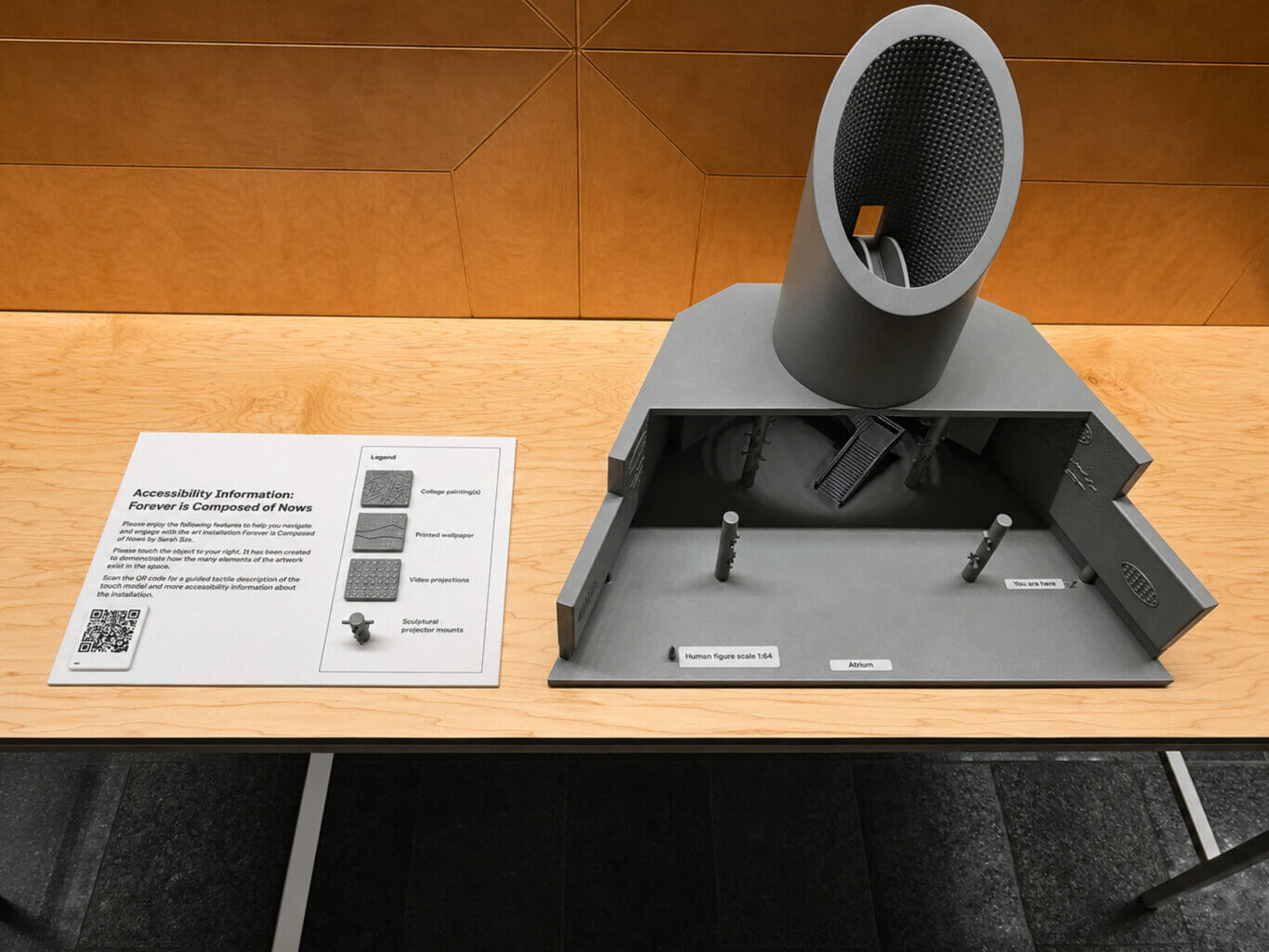
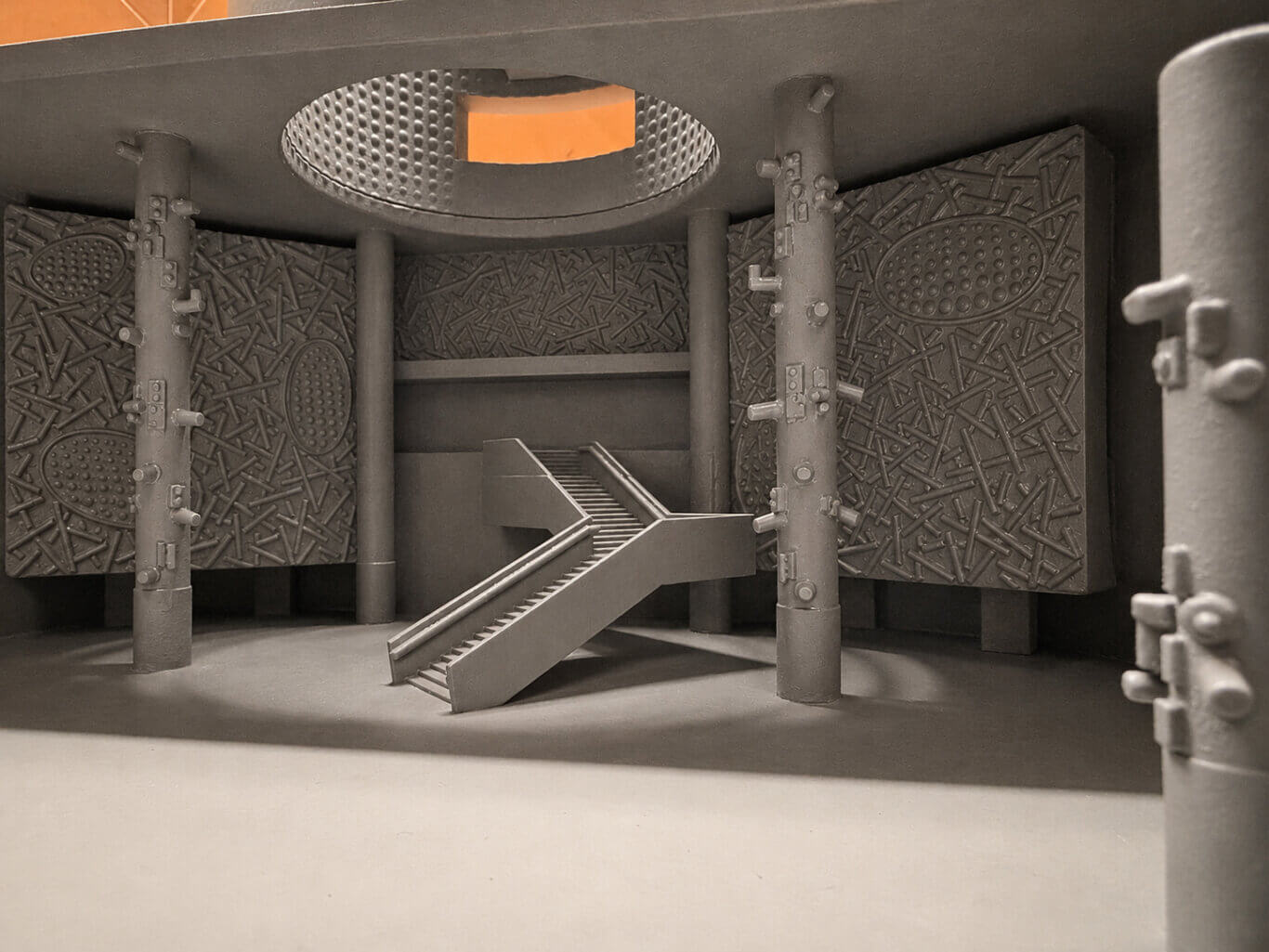
PAC collaborated with SFMOMA to develop a three-dimensional touch object that represents the relationship between the installation and the museum’s architecture. The tactile experience provides an opportunity to explore the artwork’s overall geometry, the positioning of its major elements, and the spatial relationships between the different viewing locations.
Accompanied by a guided tactile description, the touch object helps visitors construct a mental understanding of the installation that can inform their experience throughout the building.
Tactile Wayfinding and Braille
The installation extends across multiple floors, making orientation and the discovery of accessible interpretive content especially important.
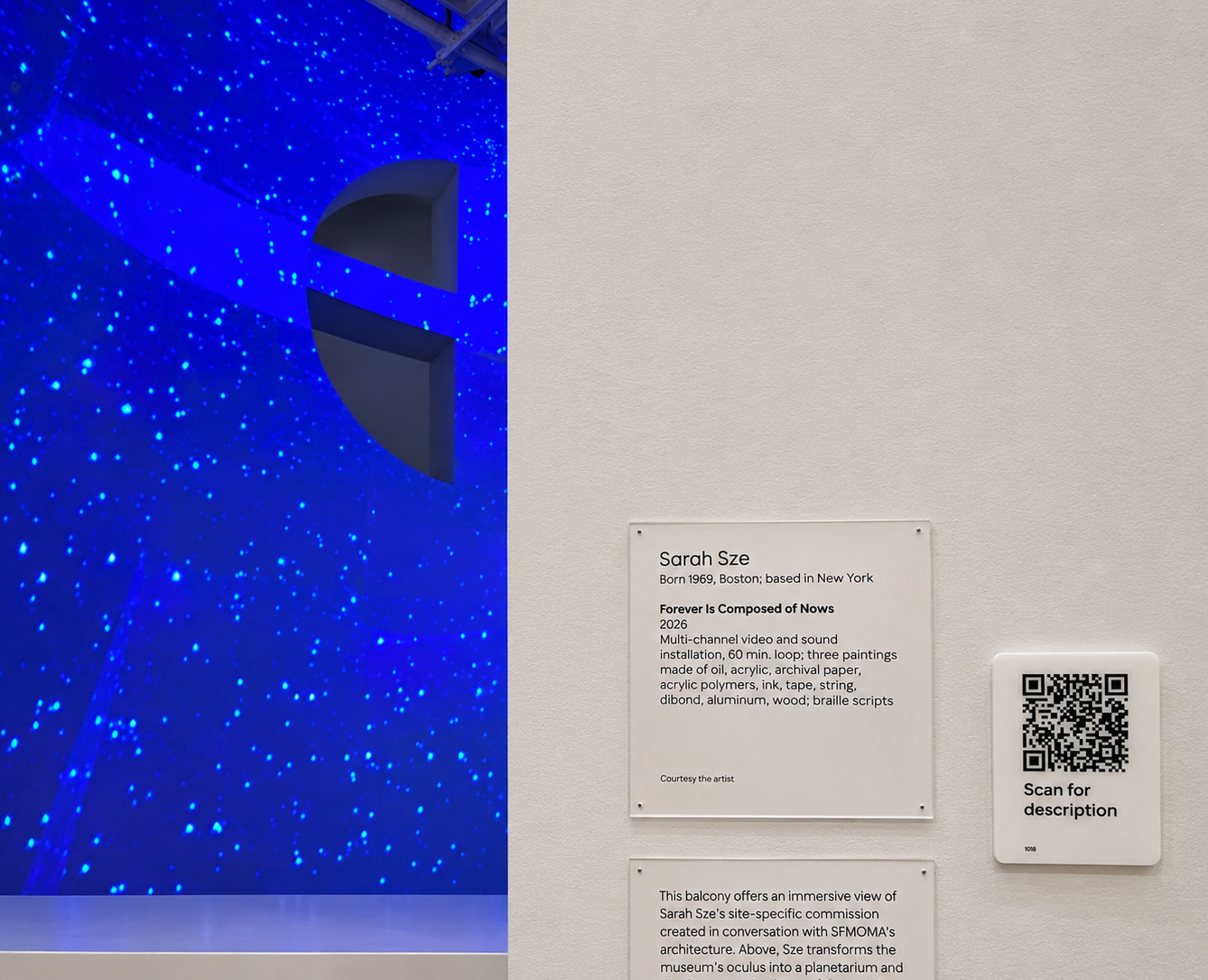
PAC developed a tactile wayfinding approach using floor markers and tactile QR codes to identify locations where visitors can access descriptions and interpretive information. These physical indicators connect the architectural experience to an accessible digital guide, allowing visitors to engage with content relevant to their location.
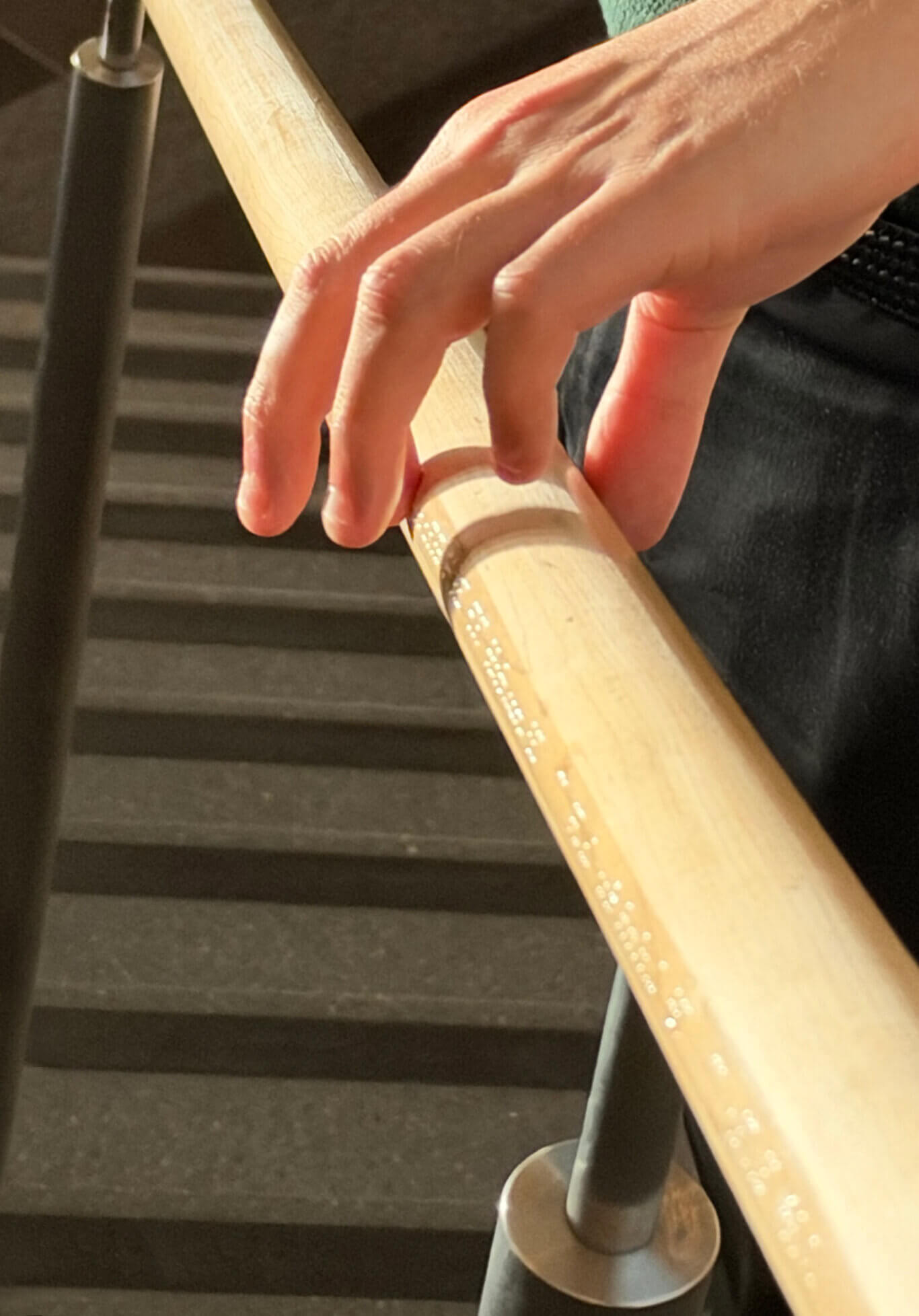
The project also incorporates Braille into the physical environment, creating opportunities for tactile discovery and connecting the exhibition’s interpretive experience with the poetry that inspired the artwork.
Together, these elements support autonomous exploration of the artwork while allowing accessibility to become a meaningful part of the visitor experience.
Visual, Audio, and Sound Description
Traditional artwork descriptions are often designed around a static image or object. Sze’s installation requires a different approach. Its paintings, projections, and soundscape interact with one another, and the experience shifts depending on where and when a visitor encounters the work.
PAC developed a layered descriptive strategy that begins with an overview of the installation and expands into more detailed interpretations of its individual components.
Visual descriptions communicate the composition, materials, imagery, and relationships between the three monumental paintings. Descriptions from selected vantage points provide opportunities to explore the artwork from different locations throughout the museum, while sound and audio descriptions address the installation’s complex auditory and moving-image elements.
The goal is not simply to enumerate what is present. It is to communicate the qualities that make the installation compelling: its monumental scale, shifting perspectives, recurring imagery, and the relationship between sound, movement, and space.
Accessible Digital Interpretation
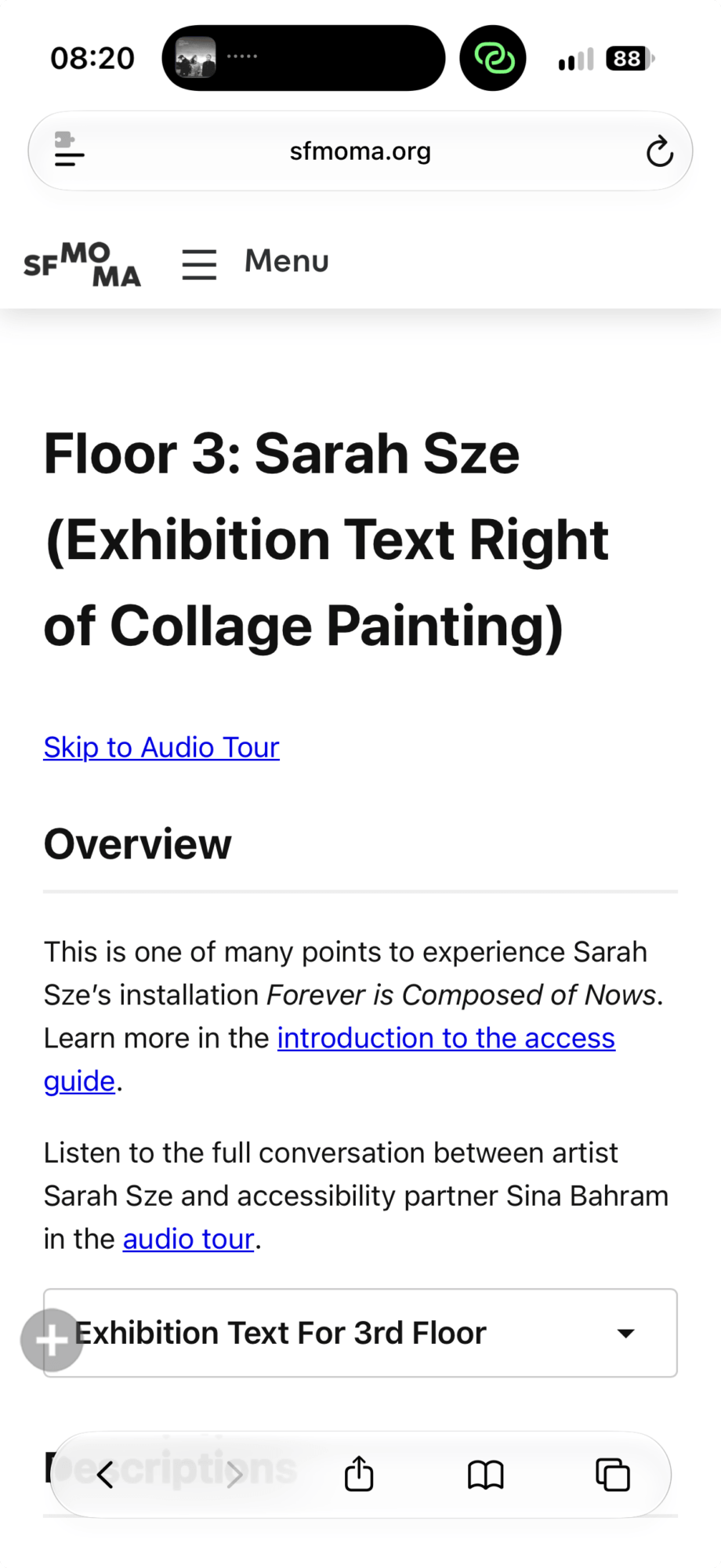
PAC also collaborated with SFMOMA on an accessible exhibition microsite that brings the installation’s interpretive and accessibility content together in one place.
Designed for access through visitors’ personal devices, the digital experience connects to physical locations throughout the museum using tactile QR codes. It brings together exhibition information, visual and sound descriptions, guided tactile interpretation, an artist audio tour, captions, and transcripts.
This approach allows visitors to explore the installation through multiple modes and at their own pace, while supporting the use of screen readers and other access technology.
By connecting physical and digital access, the microsite provides a flexible interpretive framework that extends beyond any single location or moment within the artwork.
Concluding Thoughts
Forever is Composed of Nows demonstrates the possibilities of inclusive design when accessibility is developed alongside the artistic intent of an experience rather than being applied as a separate layer.
The installation challenges conventional approaches to describing and interpreting art. Its changing imagery, layered sound, monumental scale, and architectural setting require accessibility solutions that work together while remaining responsive to the character of the artwork.
For PAC and SFMOMA, the project represents another step in an ongoing collaboration to expand what accessible art museum experiences can be. It builds on a shared commitment to moving beyond access to information toward access to the experience itself.
When inclusive design considers how an artwork makes visitors feel, as well as what they can see, hear, and touch, it creates opportunities for richer and more meaningful engagement for everyone.