
Museum of the Blind People’s Movement
PAC is leading planning, design, and delivery for the National Federation of the Blind’s Museum of the Blind People’s Movement, creating an inclusive, multimodal museum framework that centers blind-led history, advocacy, and visitor experience from pre-planning through schematic design.
Media
Project Description
Most museums are designed in familiar ways: decisions are made, design drawings are produced almost entirely visually, and accessibility is addressed later, if at all.
The Museum of the Blind People’s Movement is doing the opposite.
In 2022, the National Federation of the Blind (NFB) brought Prime Access Consulting (PAC) on to lead the planning, design, and delivery of a new national museum dedicated to the history, advocacy, and impact of the blind community in the United States. The museum will tell blind-centered stories as a way to share the history of the organized blind movement and the everyday blind people who have fueled it.
The importance and impact of this project lie not only in the content of the museum itself, but also in how the museum is being created. If the museum is meant to shift perceptions of blind communities and confront exclusion, the process has to do the same.
The path of progress is jagged. There is rarely a simple starting point, and never a true endpoint, for the journey marginalized groups are forced to undertake. This museum will celebrate and honor the hard-won progress along that path. It will dispel myths about blindness while calling visitors to action, reminding us that we are still at the beginning of the work toward equality, equity, and inclusion. Every visitor who enters the museum, whether physically or digitally, has a role to play in building a future where blind people are fully included, not simply tolerated or accommodated.
To that end, the museum will serve as a trusted source of scholarship, a space for communities of practice, and a platform for conversations central to the movement. It will celebrate the rich plurality within the blindness community, demand action, honor those doing the work every day, and support the NFB in dismantling barriers to living, working, and participating fully in the world.
When PAC designed a survey answered by more than 400 NFB members, the most common response to what the museum should be was clear: “a model for other museums on how to be more inclusive and accessible.” For a community that has been deeply excluded from museums and the cultural sector at large, this was a call for fundamental change in the museum field, championed by those most impacted.
PAC has embedded inclusive design into every layer of the work, from pre-planning through concept and schematic design. This includes establishing corporate structures, creating a mission and mandate, developing values statements, defining success criteria, and establishing workflows and protocols. It also extends to the tools and tactics that ensure inclusive participation in planning and design, as well as community engagement, communications, and development efforts.
For a museum to be inclusively accessible, it needs a comprehensive methodology that spans disciplines and working units. Architects, engineers, builders, exhibition designers, content developers, media producers, and project managers all contribute to the final experience. Inclusion depends on how these groups work together and whether collaboration respects the agency of all participants, irrespective of ability or disability. PAC invested significant time onboarding collaborators to both the inclusive design methodology and the cultural competency required to work for and with blind communities.
Pre-Planning
Pre-planning began with developing a clear understanding of the context in which the museum will exist. This phase included documentation and literature reviews, defining intentions, understanding the assets and expectations of the NFB and its membership, and conducting environmental scans.
Two primary environmental scans were completed: one focused on the Baltimore and Maryland region, and another examined comparable institutions nationally. Key metrics included venue size, ticket pricing, visitation, staffing, volunteer capacity, and operating budgets. While data collection proved inconsistent across institutions, these scans established a critical baseline for positioning the museum.
At the same time, membership engagement grounded the work. As a membership-led organization, the NFB is deeply committed to the voices of its community. To ensure the work started from the community, a nationwide digital and phone-based survey was conducted, with responses from 48 of the 52 state affiliates. Survey responses revealed varied experiences with cultural institutions, with many respondents describing museums as only mildly inclusive and citing persistent barriers across programs, services, and environments.
PAC conducted in-depth interviews at the annual NFB National Convention, gathering firsthand accounts that shaped the curatorial direction. Stories of systemic barriers, resilience, humor, advocacy, and community-building informed the foundation for concept design.
Members raised fundamental questions: Why a museum? Why invest in a field that has historically excluded us? These tensions became central to the work. At the same time, there was clear enthusiasm and a recognized gap, both in access to inclusively designed museums and in spaces that meaningfully represent blind history and culture.
The mission, vision, and values were crafted around empowerment, education, inclusion, impact, and credibility as driving values. The mission statement was: “The mission of the NFB Museum is to explore the struggles and successes of the blind as individuals, as collectives, and as a movement; and to encourage understanding of the past, facilitate awareness, and evoke dialogue today, while inspiring respect, determination, and action for an equitable future.”
Concept Design
After a successful pre-planning phase, NFB leadership, supported by its membership, made the decision to move forward with the museum. Concept design focused on answering a set of foundational questions:
- What stories would be told?
- How could the museum speak to both those unfamiliar with blindness and leaders within the movement?
- How would the design process itself be made inclusive?
Content development established the intellectual and narrative foundation of the museum. The museum centers the lived experiences, struggles, and successes of blind people, both as individuals and as a movement. It is designed to facilitate understanding of the past, stimulate awareness of the present, and encourage respect, action, and equity for the future.
A clear exhibition throughline emerged: the Blind People’s Movement is marked by cycles of struggle, success, regression, and innovation, driven by both individual commitment and collective action. Visitors are invited to recognize that this work is ongoing and that they have a role to play within it.
From this, a set of core ideas and messages took shape. The museum challenges dominant assumptions about blindness, reframes it as a complex and multifaceted human experience, and emphasizes agency, resilience, and community. It reinforces that inclusive design is not an outcome, but the starting point; that blindness is not something to fear; and that empathy, not sympathy, is essential to allyship.
The curatorial approach was built on this thinking. Content is developed through a plurality of perspectives, ensuring representation across geographies, time periods, identities, and lived experiences. This was then further broken down into six main zones and mapped to the museum space. The focus areas were:
- Blindness and Expectations
- The Blind People’s Movement
- Public Perceptions and Misconceptions
- Innovation
- Participation and Collaboration
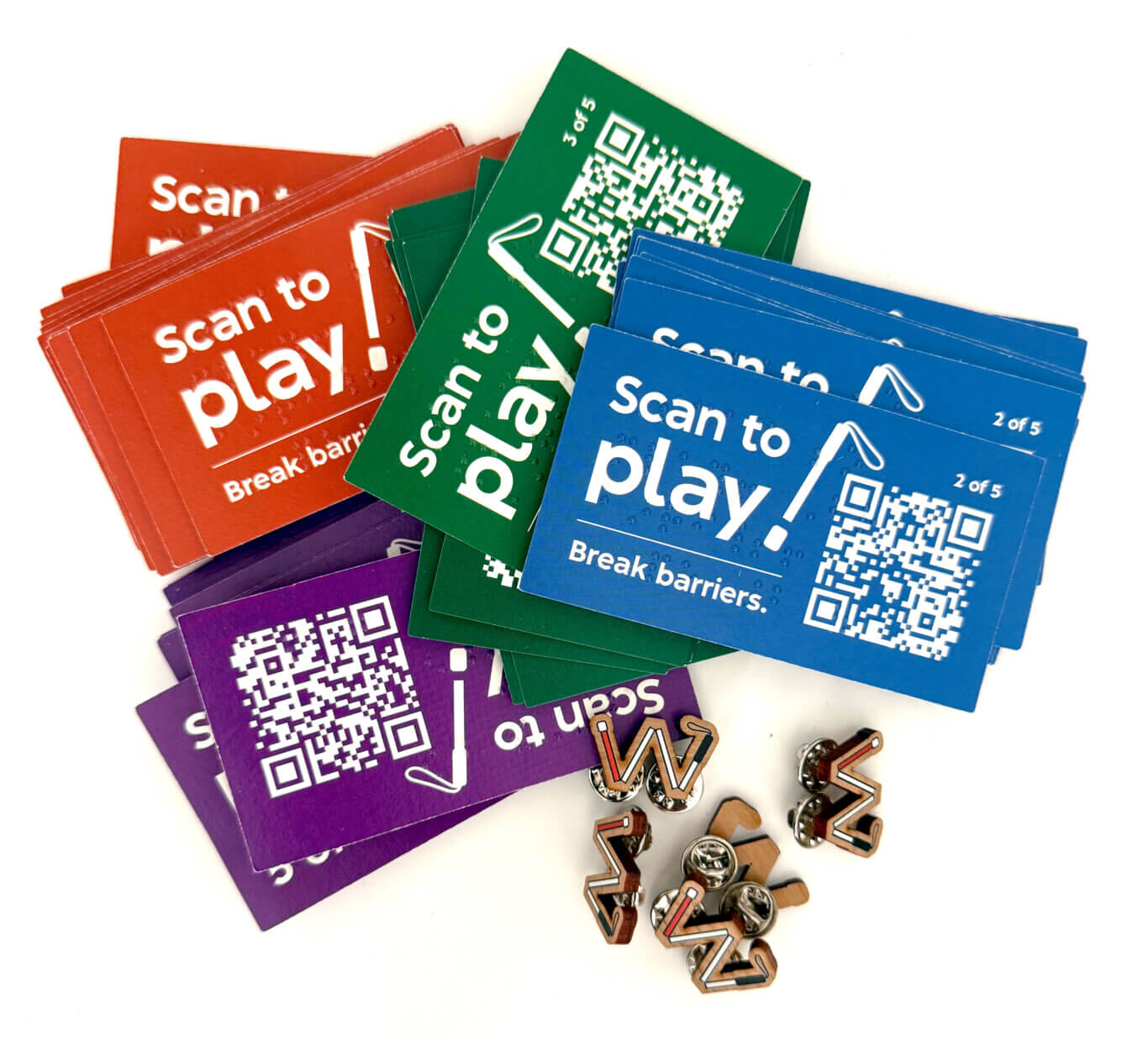
Alongside content development, PAC supported efforts to build awareness and communicate the project to broader audiences. At the American Alliance of Museums (AAM) conference in 2024, PAC designed an interactive, accessible game that was deployed across the event. Participants engaged with questions about blindness and civil rights advocacy through QR-based interactions. This initiative not only raised awareness of the museum, but also extended its core message by challenging assumptions and demonstrating inclusive engagement.
Concept design concluded in 2024, establishing a clear direction for the museum’s content, experience, and inclusive design methodology. The work set the foundation for the next phase, where these systems continued to be iterated upon.
Schematic Design
Building on the foundations established during concept design, the schematic design phase translated the museum’s vision into a fully developed spatial, experiential, and operational framework. This phase deepened the integration of inclusive design across all aspects of the project, advancing exhibition and gallery design, refining content strategy, and aligning building, technology, and organizational systems to support long-term success.
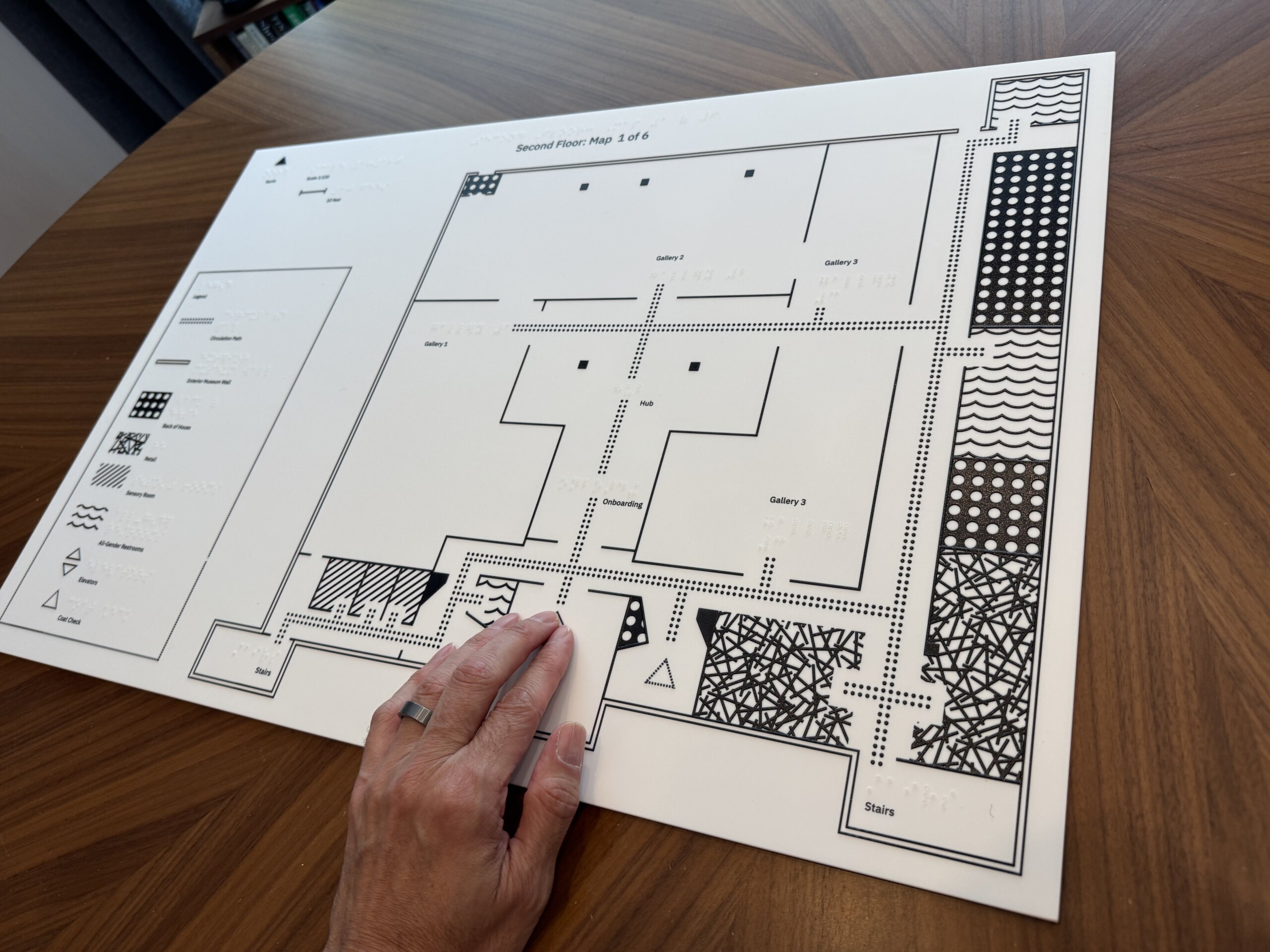
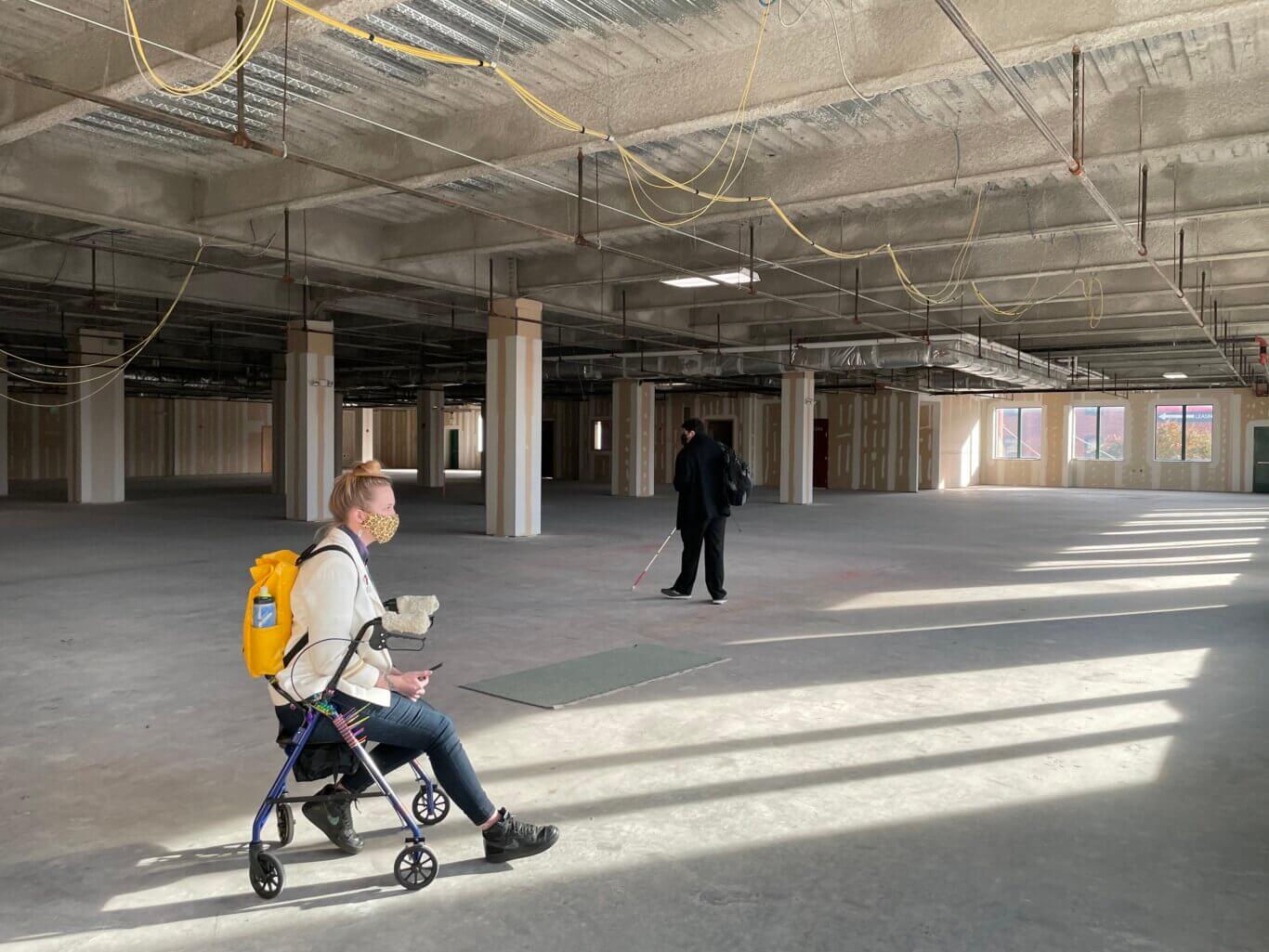
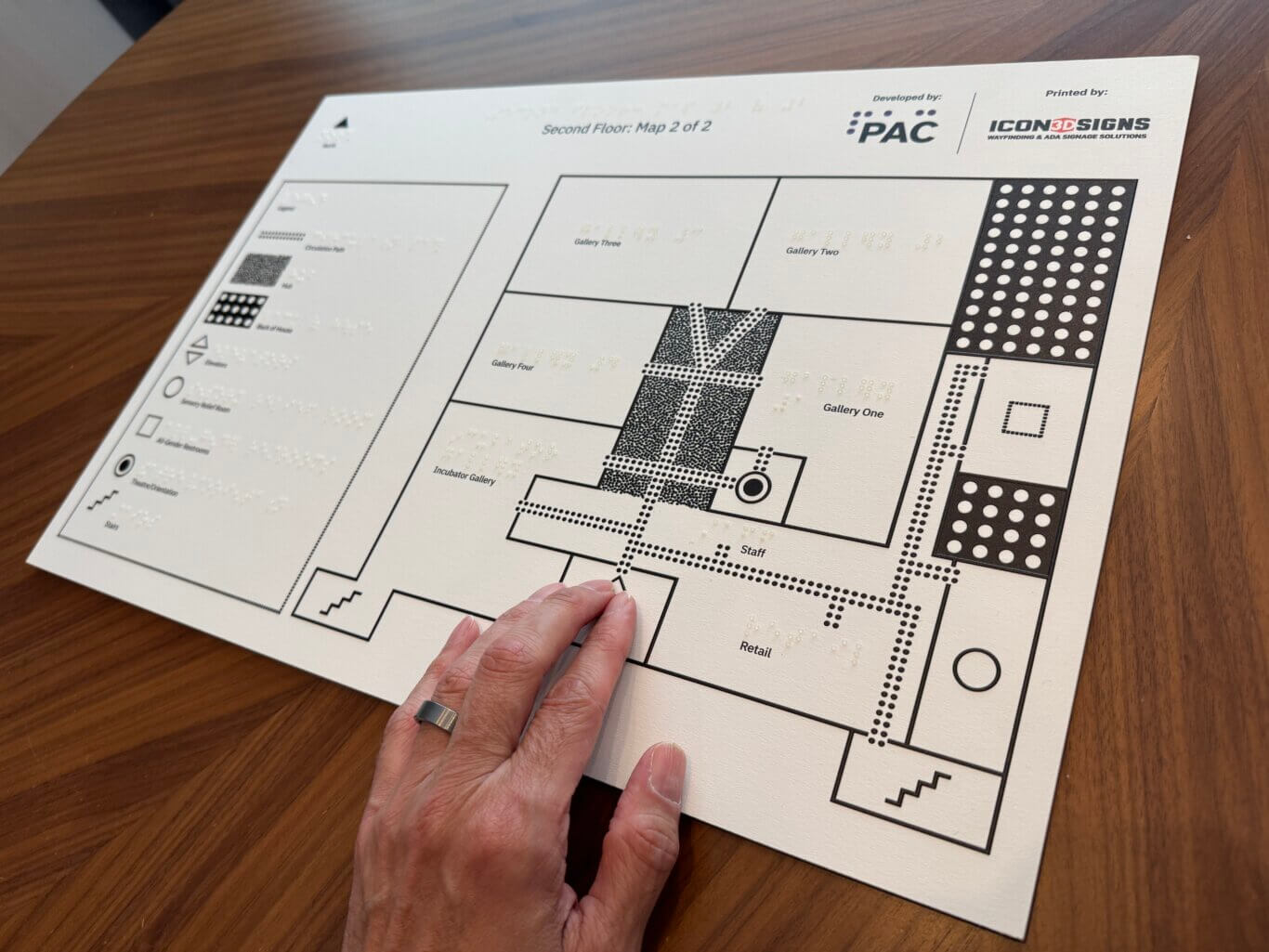
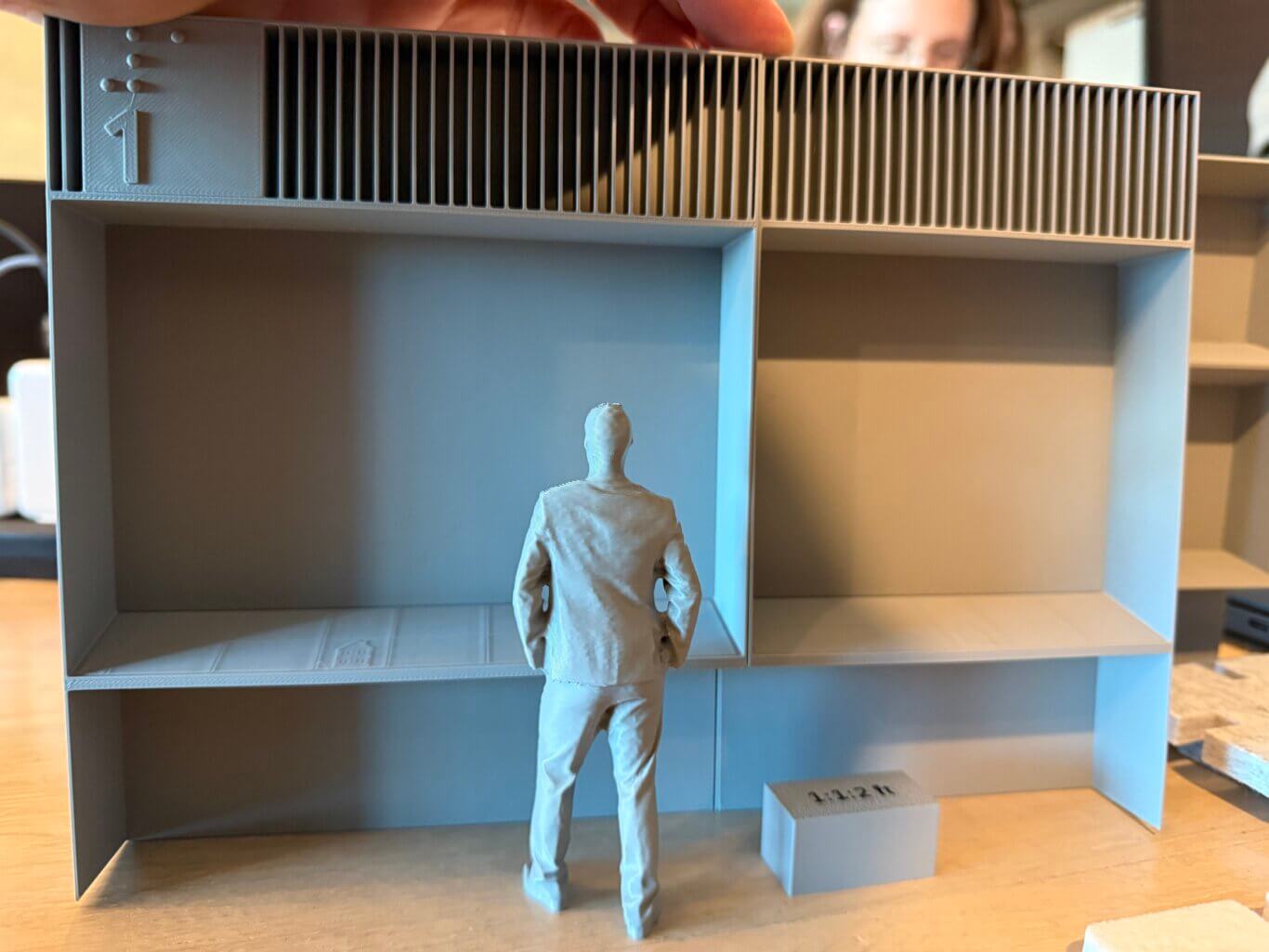
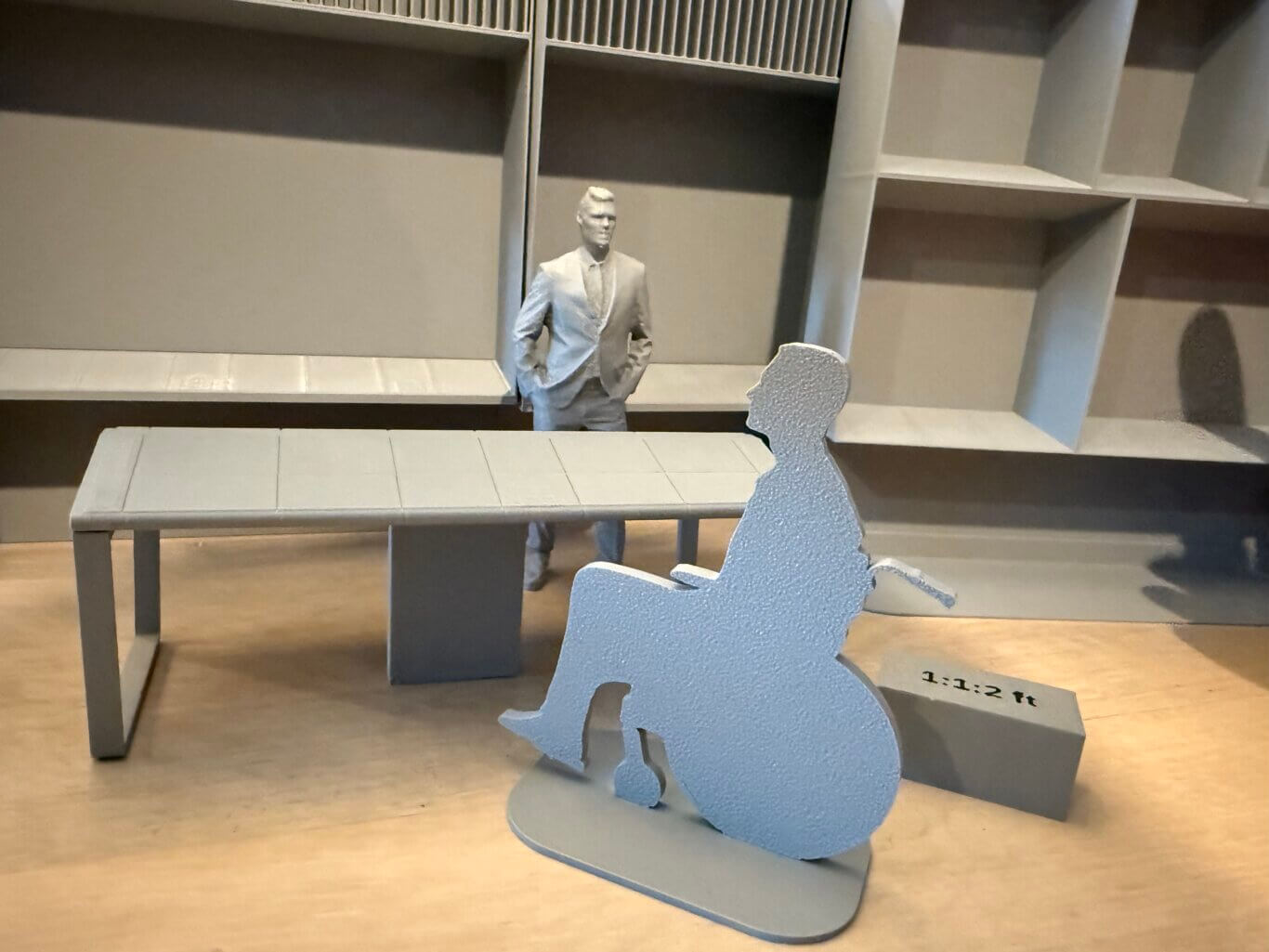
One of the most significant areas of innovation emerged in the design of the process. Traditional museum design relies on drawings, models, and systems that assume sight. Floor plans, diagrams, and presentations are created to be seen, limiting meaningful participation for blind collaborators. PAC reworked this model by embedding inclusive design directly into the design workflow. Tactile maps of proposed floor plans became essential tools, not only as deliverables, but as working instruments for design charrettes and collaborative decision-making. These maps allowed spatial concepts to be explored through touch, enabling direct engagement with the evolving design. Paired with detailed visual descriptions of mood boards and 3D modeling, a final audio story was crafted to offer a more evocative non-visual entry point into the museum experience.
Exhibition and experience design were developed into a cohesive, multimodal visitor journey organized around three primary galleries and a central Hub. Together, these spaces establish a rhythm between high-engagement, immersive environments and areas for rest, reflection, and social connection. The galleries present a layered narrative, from lived experiences of blindness, to the history and power of the Blind People’s Movement, to innovation as an ongoing cultural practice, while allowing visitors to navigate non-linearly and engage on their own terms.
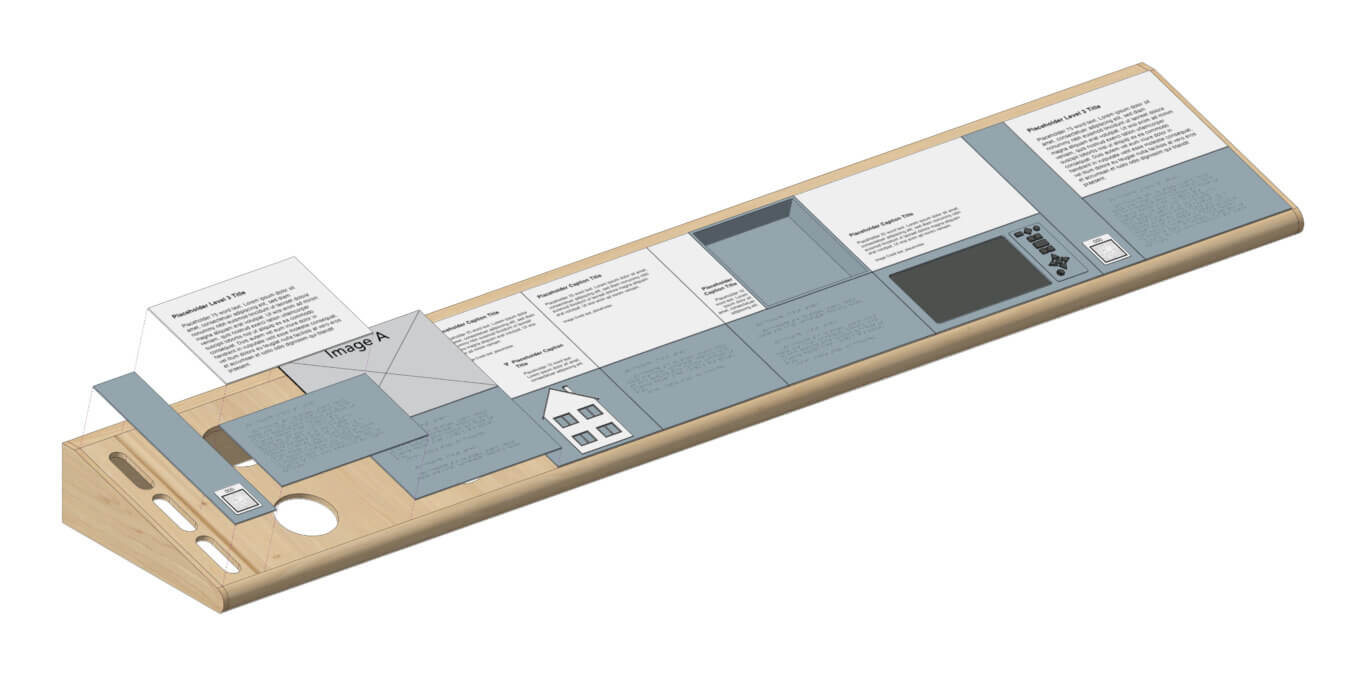
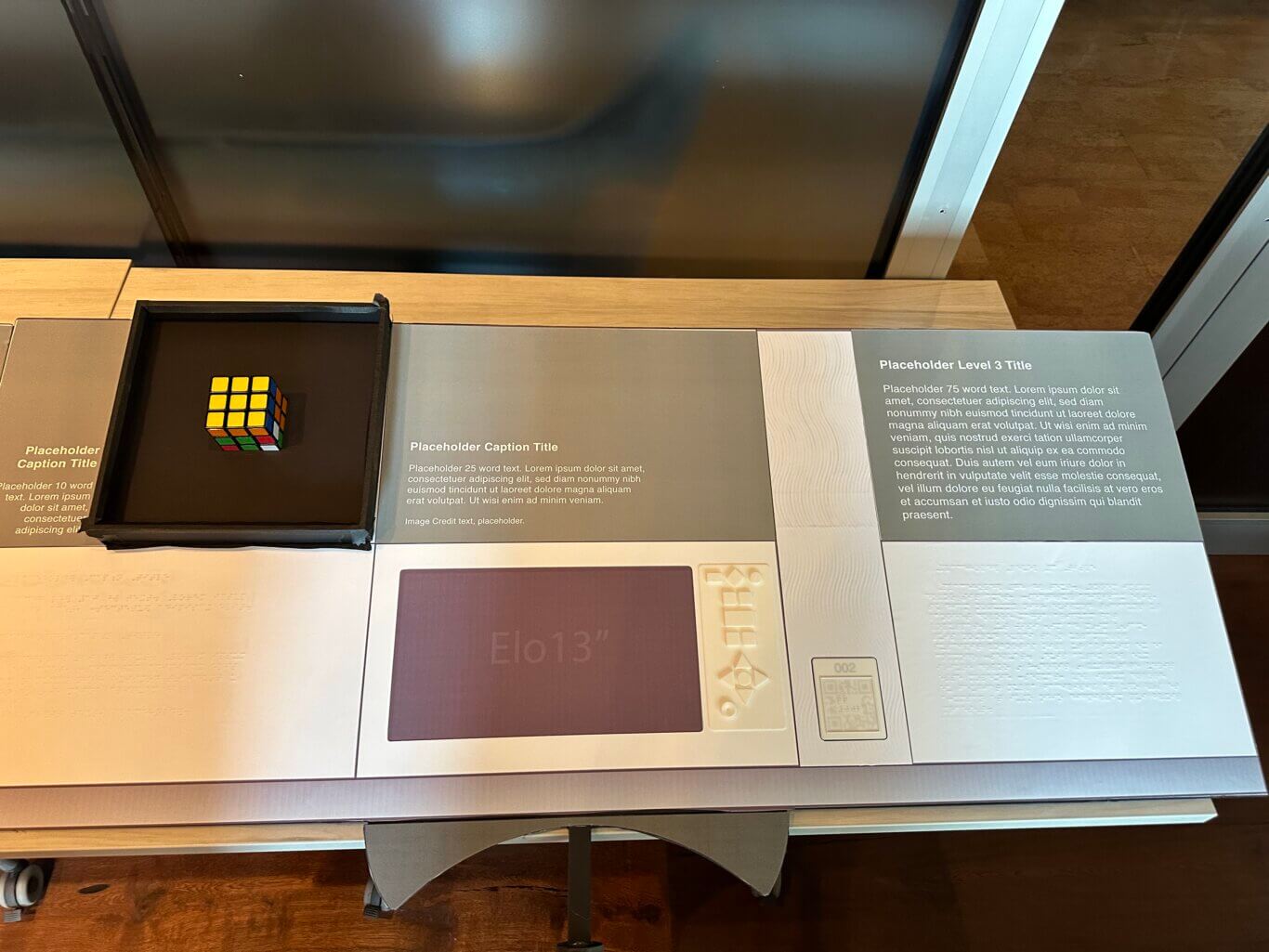
Gallery design advanced significantly during this phase, with content narrowed and focused into detailed concepts, interaction models, and thematic zones across all three galleries. Experiences range from immersive environments to quieter, didactic areas designed for reflection. Across all galleries, tactile maps and wayfinding systems were fully integrated as both orientation tools and interpretive elements, reinforcing spatial literacy and independent navigation as core aspects of the visitor experience. A dedicated Sensory Room, located directly off the entry, provides a low-stimulation space for regulation and rest, ensuring that visitors have access to support before and throughout their visit.
The arrival sequence was carefully designed to set expectations and immediately communicate the museum’s values. From the first encounter with the building, the arrival experience introduces a tactile, auditory, and visual wayfinding system designed to shift away from vision-dominant environments and toward a multimodal welcome. Visitors first encounter an onboarding experience that combines introductory museum content with experiential learning, introducing both the museum’s core message and the physical language of the visitor experience.
The mixed-media core exhibition was designed to be modular and scalable, allowing for easier configuration and evolution over time. Certain modules were developed to be swappable, including elements that provide contemporary content, stories, interpretation, evolving legal positioning, and updatable concepts and topics subject to new and evolving lenses.
Content development continued through the creation of a draft curatorial prospectus, establishing the first comprehensive articulation of the museum’s narrative framework, key messages, and thematic structure. This work was informed by extensive stakeholder and community member interviews, as well as research led by the curatorial team, ensuring that the content reflects a plurality of perspectives and lived experiences while remaining grounded in the priorities of the National Federation of the Blind.
To support long-term sustainability, the team also advanced planning for the museum’s operational and institutional infrastructure. This included the development of archival systems to manage and grow the museum’s collections and storytelling assets, as well as mapping the full IM/IT ecosystem required to deliver and maintain the museum’s multimodal experiences. These efforts clarified the technological, staffing, and operational implications necessary to support the museum at scale.
Schematic design also included early architectural coordination and building preparation, aligning spatial requirements with the realities of the existing site and future construction phases. A Class C budget estimate was developed to establish baseline costs and guide decision-making as the project moves forward.
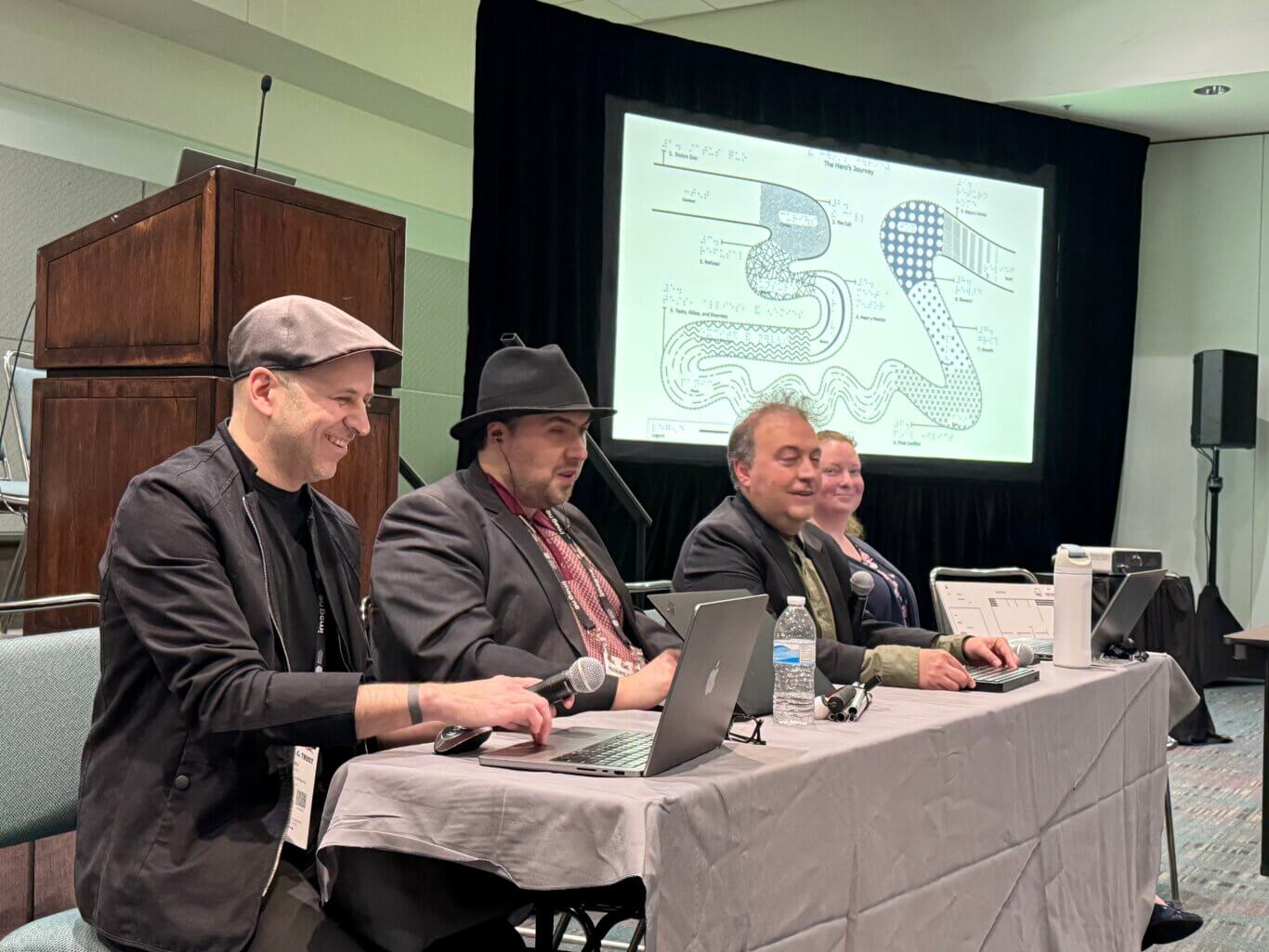
In parallel, PAC supported communications, marketing, and development efforts to build momentum and visibility for the project. This included shaping narratives for external audiences, supporting fundraising strategy, and creating opportunities for public engagement. The project was also shared through national platforms, including presentation sessions at the inaugural Mosaic Convening 2024, the American Alliance of Museums 2025 conference, and Building Museums 2026, helping position the museum as a leading example of inclusive design in practice.
Schematic design concluded with a comprehensive and coordinated framework that integrates content, experience, architecture, and operations, setting the stage for the next phase of design development and implementation.
What Comes Next
In design development, the project will move from the comprehensive framework established during schematic design into a more detailed and iterative phase of exhibition, content, media, technology, and affordance design. This phase will resolve major experience decisions before the project moves into final design, construction documentation, production, fabrication, and installation.
The exhibition design will be advanced to a greater level of specificity, with gallery concepts, spatial relationships, visitor flows, interpretive priorities, interaction models, and experience types tested and coordinated across the three primary galleries, the central Hub, the arrival sequence, the Sensory Room, and other visitor-facing spaces. This work will clarify what each space needs to do, how visitors will encounter it, what kinds of engagement it will support, and how its design will express the museum’s values.
A central focus of this phase will be the detailed development of the museum’s multimodal interpretive approach. Tactile, auditory, visual, spatial, digital, media-based, and interpersonal affordances will be designed as core components of the exhibition experience, ensuring that access, interpretation, and engagement remain integrated. The layered interpretation strategy will also be refined so that visitors can enter the content through introductory messages, personal stories, historical context, objects, media, tactile experiences, reflection prompts, and opportunities for participation.
Design development will also define the assets that carry the museum’s stories, including artifacts, archival materials, oral histories, commissioned work, media assets, interactives, environmental content, and interpretive elements. The team will determine what needs to be produced, commissioned, researched, collected, or drawn from existing archives and collections.
The mixed-media core exhibition will continue to be developed as a modular and scalable system, with fixed, flexible, swappable, and updatable elements clearly defined. Particular attention will be given to content that may evolve over time, including contemporary stories, changing legal and policy contexts, current advocacy priorities, and topics shaped by new language, research, social frameworks, and movement priorities.
Digital systems design will also be advanced, including the infrastructure required to support media delivery, interpretive systems, access affordances, content management, archival workflows, and visitor-facing experiences. Digital media will move into design and pre-production, with clearer definition of formats, content requirements, user experience, accessibility requirements, technical dependencies, and production needs.
Content and curatorial work will continue through the refinement of gallery narratives, interpretive hierarchies, key messages, story selections, object lists, media treatments, and visitor-facing language. This work will remain grounded in the museum’s commitment to representing the plurality of the blindness community across geography, identity, lived experience, history, advocacy, and culture.
By the end of design development, the museum will have a much more resolved and coordinated design direction, with major exhibition decisions clarified, key assets and affordances defined, digital systems designed, digital media advanced into pre-production, and the foundation established for final design, construction, production, fabrication, and installation.