
Empowering Women
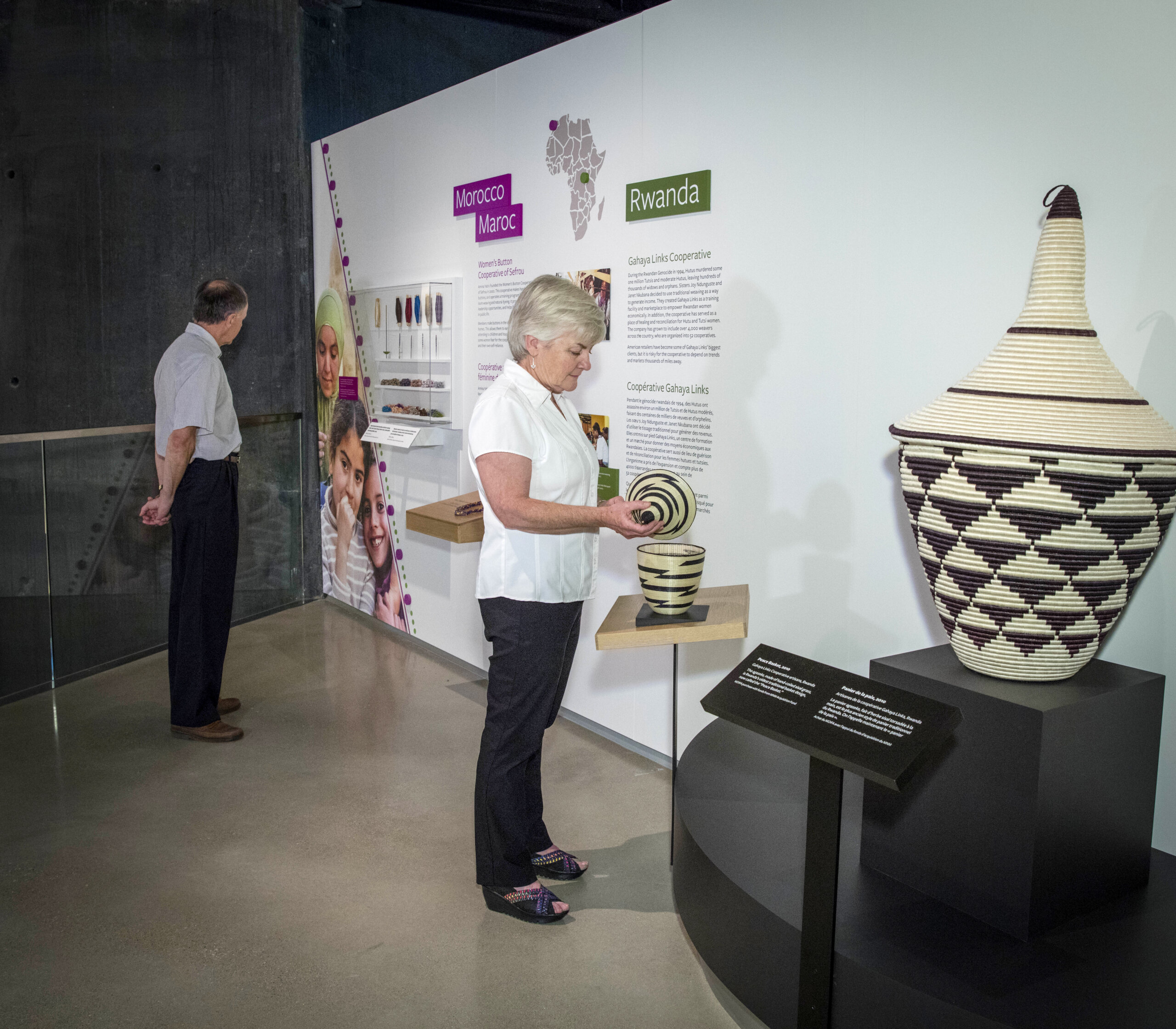
PAC worked with the Canadian Museum for Human Rights to expand Empowering Women into a multimodal, accessible exhibition experience featuring tactile objects, multilingual description, and a user-tested virtual reality component extending its stories beyond the museum.
Media
Project Description
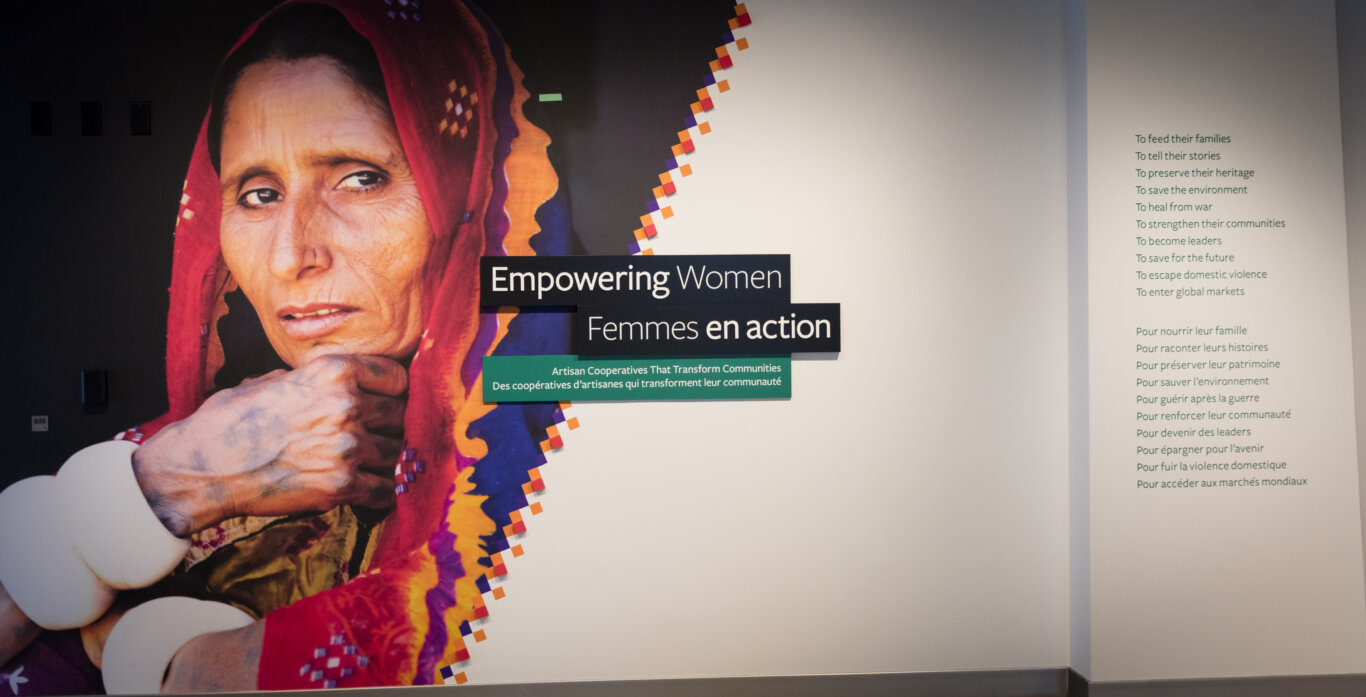
The Empowering Women exhibition was loaned from the Museum of International Folk Art in Santa Fe, New Mexico. The exhibition explored the power of female-run artisan cooperatives from conflict and post-conflict regions, and the role those cooperatives play in advancing human rights goals within their communities.
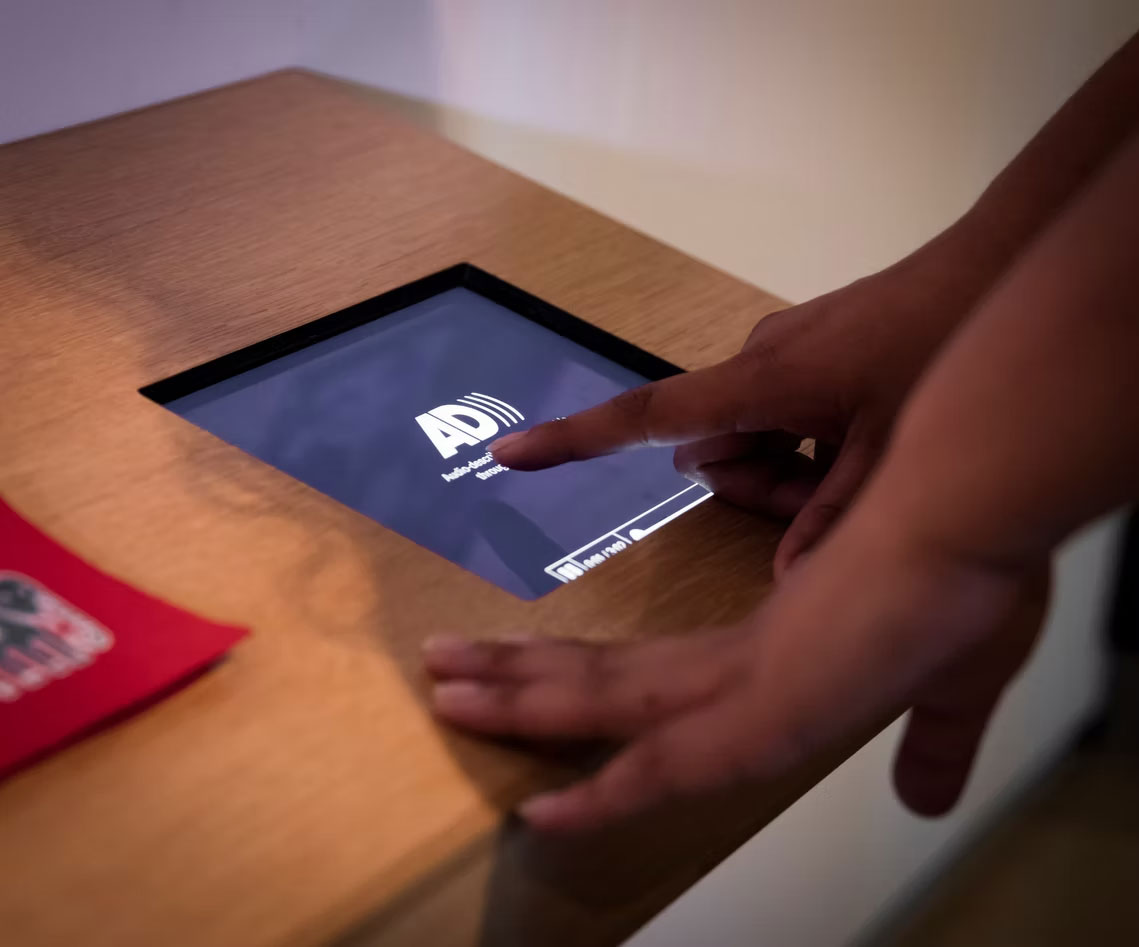
The challenge was to expand the exhibition’s storytelling approach so these important stories could be experienced by more visitors and through a greater number of modalities. This meant developing more multimodal and transmedia interpretive opportunities across the exhibition, including tactile objects, accessible environmental and graphic design, visual and audio description, multilingual content, and an accessible virtual reality experience.
The Power of Touch
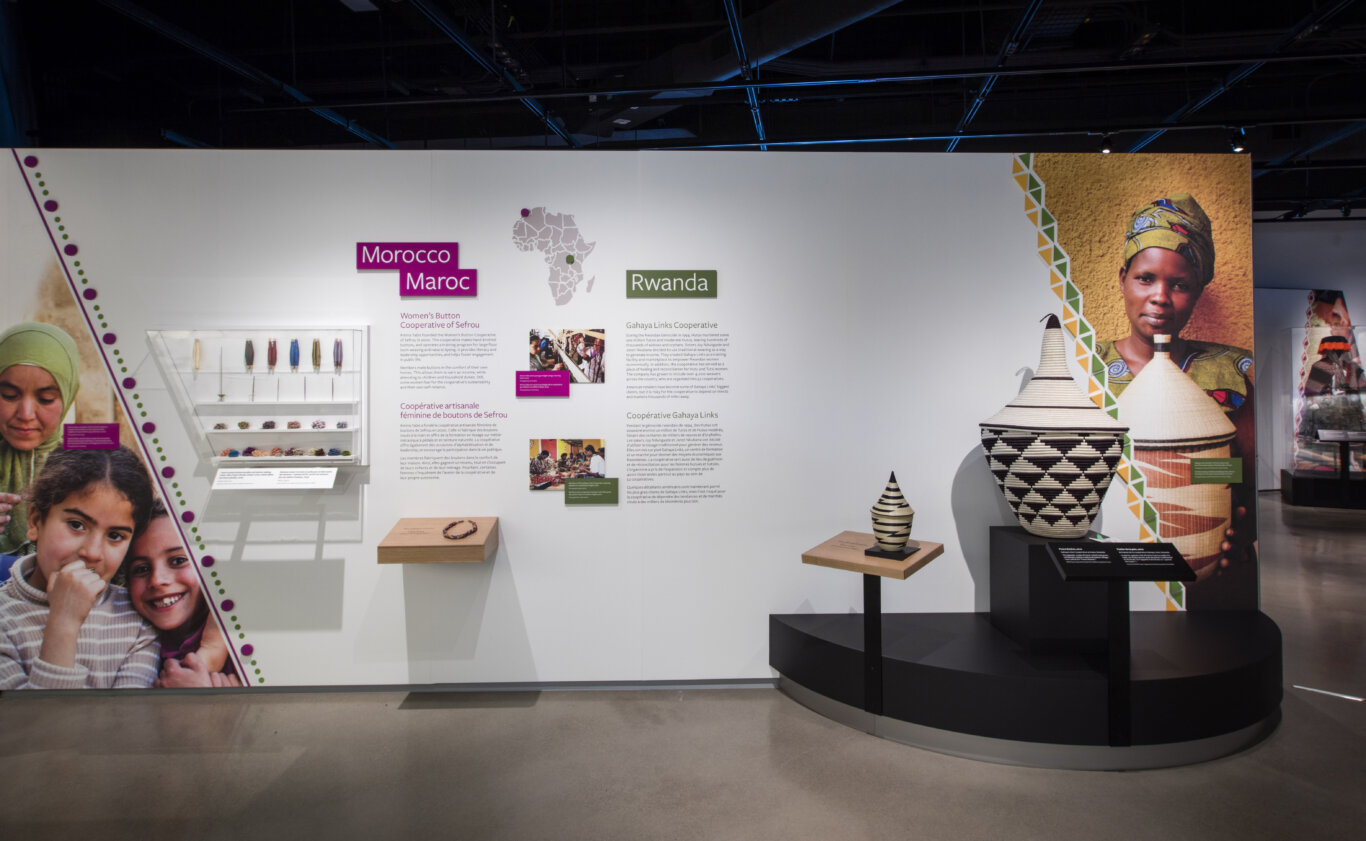
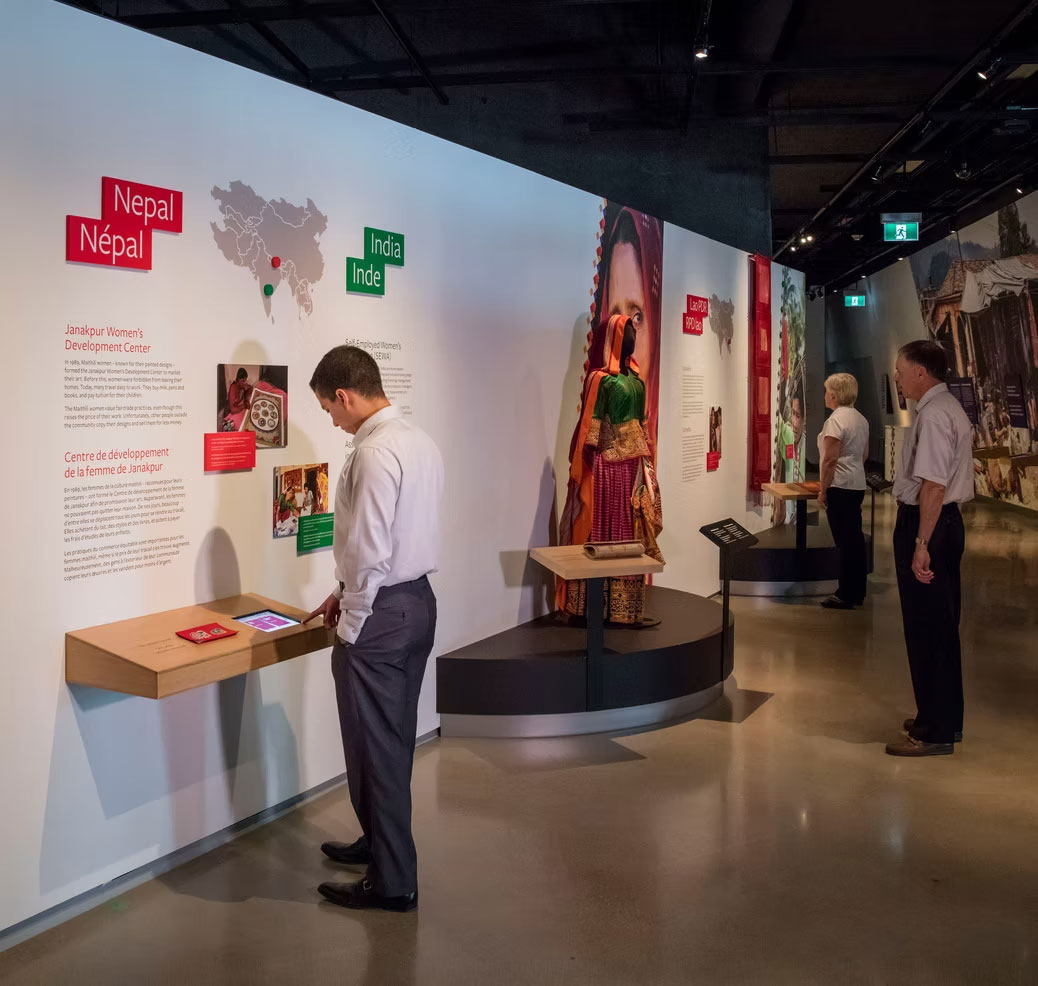
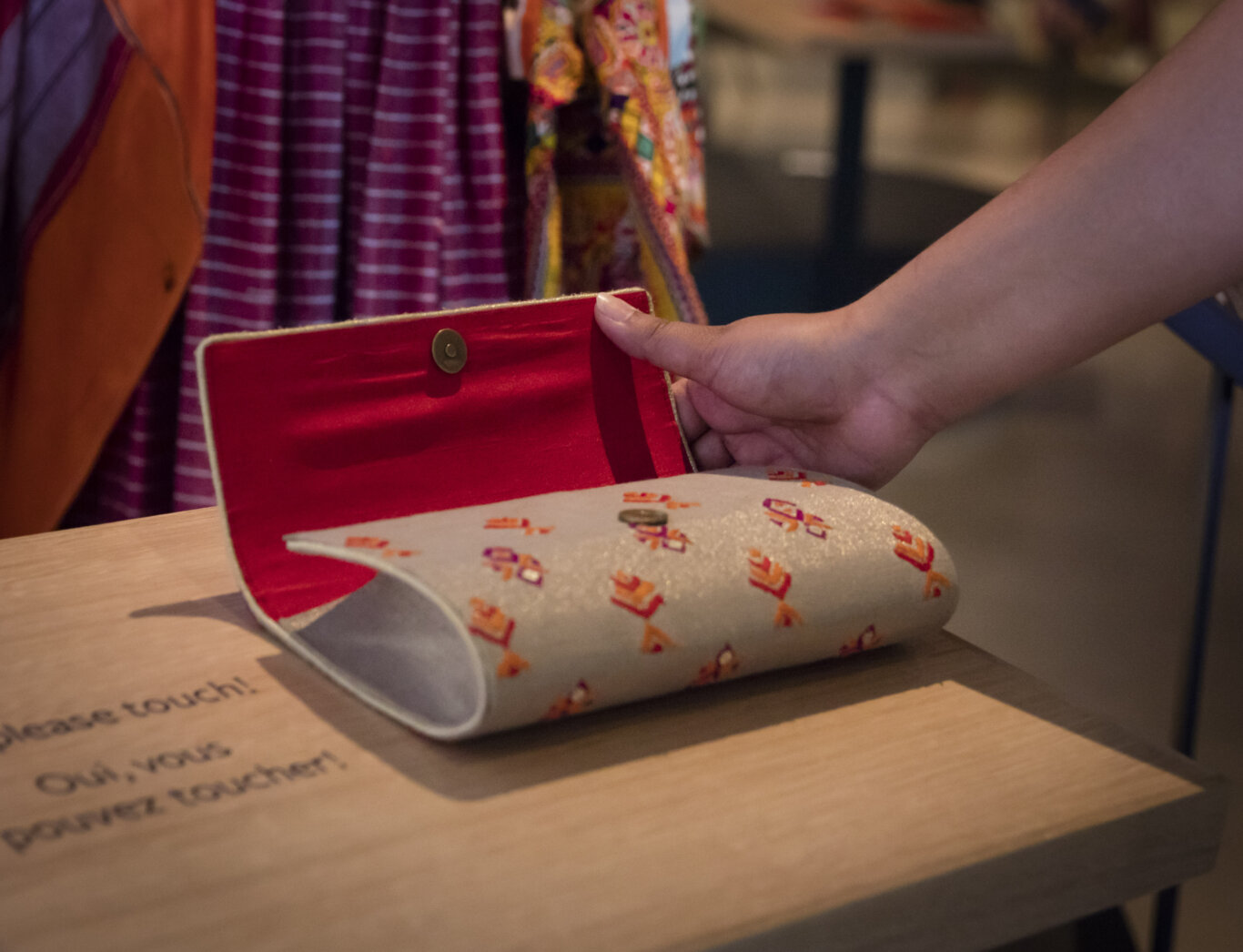
Many exhibitions place precious artifacts behind glass, limiting direct engagement and often privileging visual access alone. For Empowering Women, accessible environmental and graphic design were applied throughout the exhibition, and touch objects were added for each story and cooperative represented in the gallery.
These touch objects gave visitors another meaningful way to encounter the materials, techniques, textures, and cultural context of the exhibition. Forward access was ensured so visitors could approach and engage the touch objects comfortably. As a result, visitors were able to explore the exhibition visually and tactilely, creating a richer and more equitable interpretive experience.
Accessible Virtual Reality
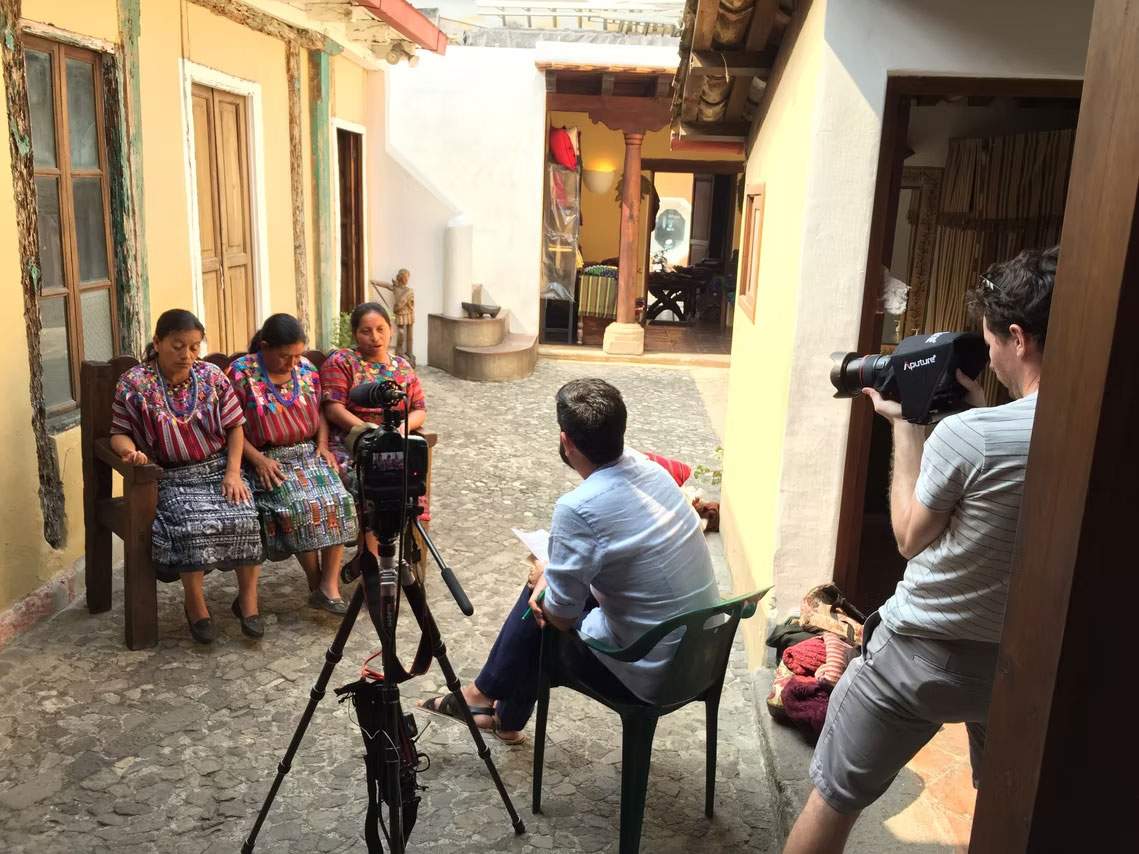
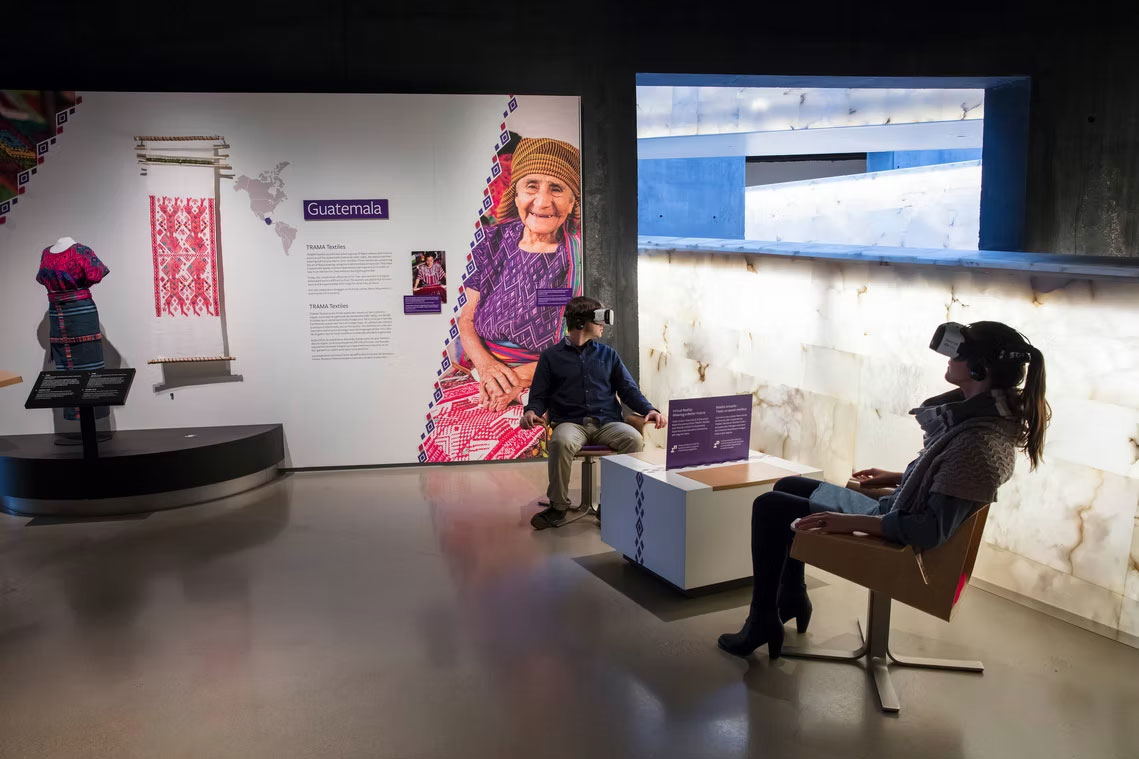
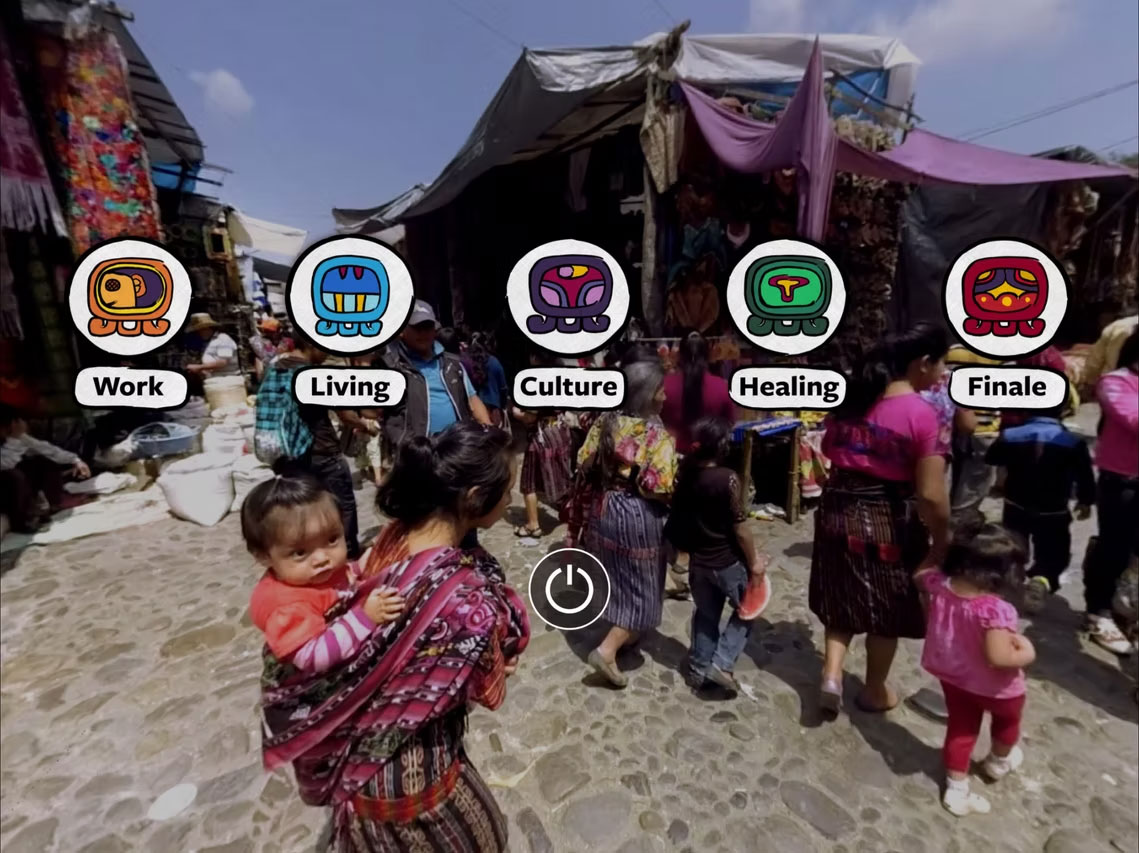
A novel component of this exhibition was the development of an accessible virtual reality experience. Members of the team traveled to Guatemala to collect interviews, photographs, and 360-degree video. The artifacts referenced in those stories were brought to Canada and became part of the exhibition, accompanied by corresponding touch objects. Through the VR experience, visitors could virtually travel to Guatemala and be immersed in the contexts surrounding the first-hand stories being told.
This created a layered transmedia storytelling experience across artifacts, text, images, touch objects, descriptions, and virtual environments. The goal was not to treat VR as a standalone novelty, but to integrate it into the broader interpretive strategy of the exhibition.
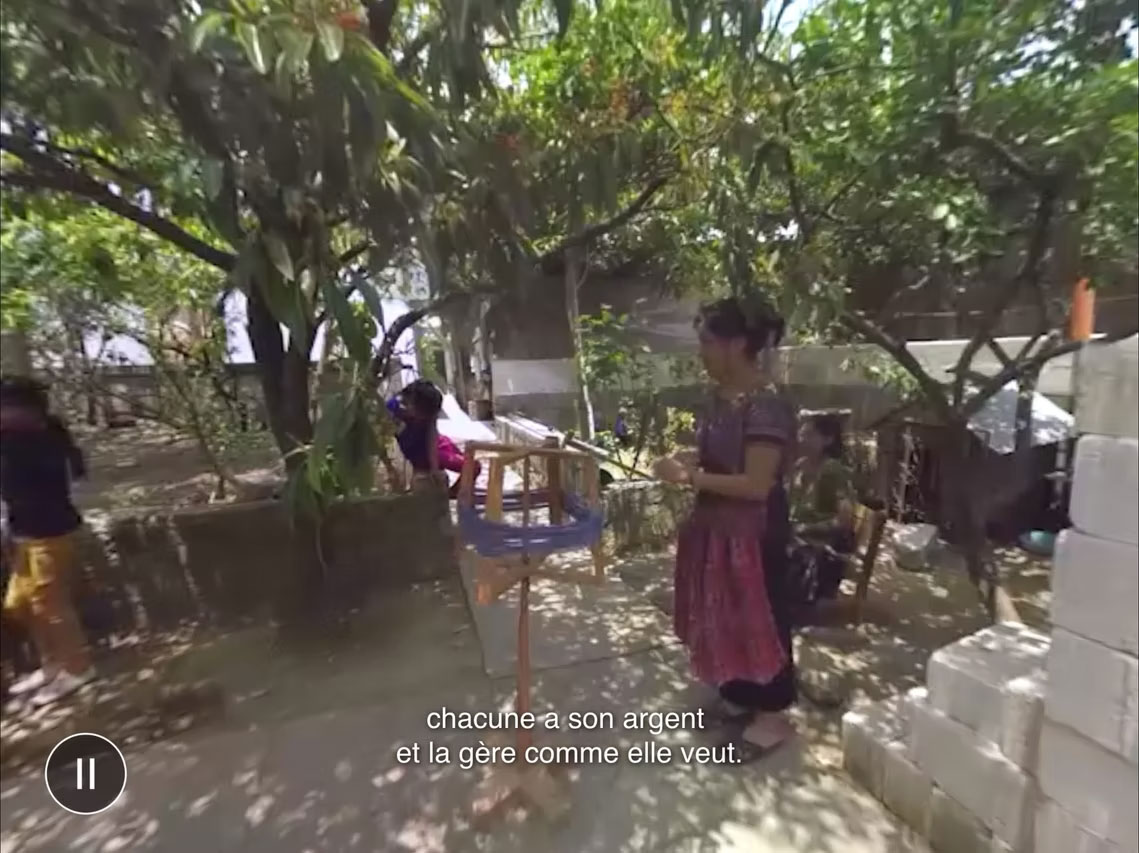
A central challenge was ensuring that the VR experience included meaningful accessibility affordances. Captions, audio description, and signed interpretation were developed in English, French, and Spanish. After extensive user testing, the team found that signed interpretation inside the headset created usability and comfort issues for some visitors. The VR experience already involved multiple forms of motion: 360-degree moving video, head tracking and swivel, and the visual presence of a static interpreter signing within the virtual field. Those competing motion systems created discomfort for some users.
In response, the signed interpretation was moved to an adjacent iPad-based version of the experience. This preserved access to the signed content while reducing motion conflict inside the headset. The iPads were placed adjacent to the VR installation, allowing visitors to choose the experience that worked best for them. The final implementation received outstanding feedback and demonstrated a practical, user-tested approach to making immersive media more accessible.
The VR experience was additionally available on iOS, Android, and Oculus so that users could enjoy the experience outside of the museum using either an Oculus headset or Google Cardboard.