
Capital Project
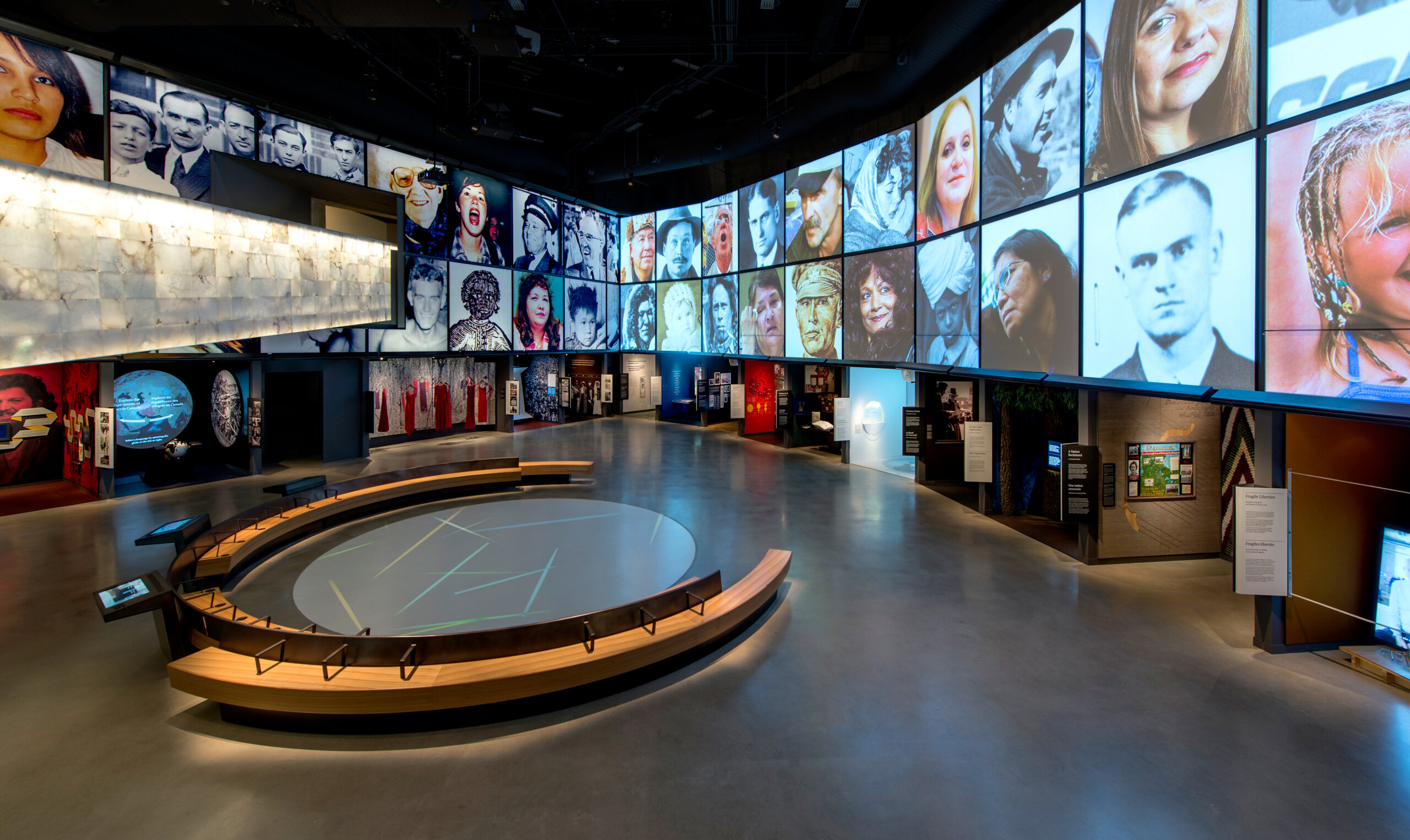
At the Canadian Museum for Human Rights, the Capital Project established a foundational precedent for PAC’s inclusive design practice, embedding accessibility across exhibitions, architecture, digital platforms, the Universal Keypad, Universal Access Point, and Enterprise Content Management System to create a coherent, accessible museum experience.
Media

Project Description
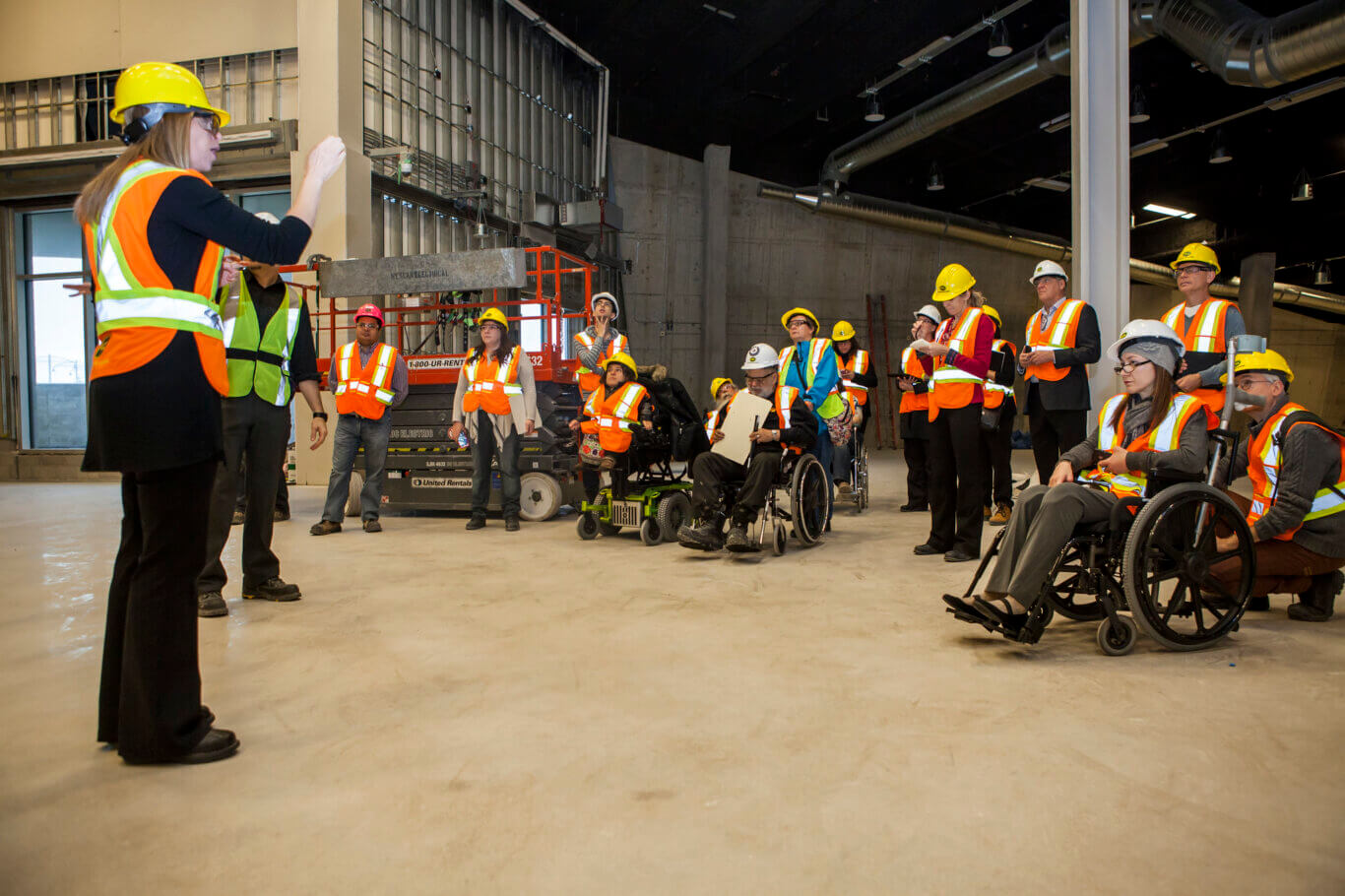
The Canadian Museum for Human Rights (CMHR) was a net-new start-up project for a new kind of national museum. Work began in autumn 2009, five years before the museum opened to the public. Corey Timpson, now PAC Principle, served at CMHR in the dual role of Vice President, Exhibitions, Research and Design, and Project Director for the museum’s design-build. In that role, he helped lead the full program design and development process while also serving as the client authority for architecture, facilities, construction, and related areas. Sina Bahram also consulted on the project during this period, contributing to the inclusive design and accessibility work that helped shape the museum’s approach. Together, this work became a foundational precedent for the inclusive design methodology PAC continues to advance today. It made inclusive design and accessibility primary pillars of the capital project rather than downstream accommodations or isolated accessibility features.
Primary responsibilities under Corey’s leadership included exhibition design and development; fabrication; installation; A/V integration; curation and content development; interpretation; digital platforms, including kiosks, in situ and remote installations, mixed and transmedia storytelling, and emerging technology; design and production across all media, programs, and services; time-based media production, including documentary, film, and animation; art commissioning; library, archives, and museum collections; the creation of design studios, workshops, collections spaces, the library, and the reference centre; asset research and licensing; web presence, including social media; mobile applications; wayfinding and signage; and the development and administration of work practices, workflows, roles and responsibilities, and other aspects of enterprise architecture, standards, guidelines, policies, processes, protocols, and procedures. Corey also established a project management office, oversaw project management, and led the creation of CMHR’s inclusive design practice, working group, community engagement model, accessibility standards, and related protocols.
Cognitive and Physical Load
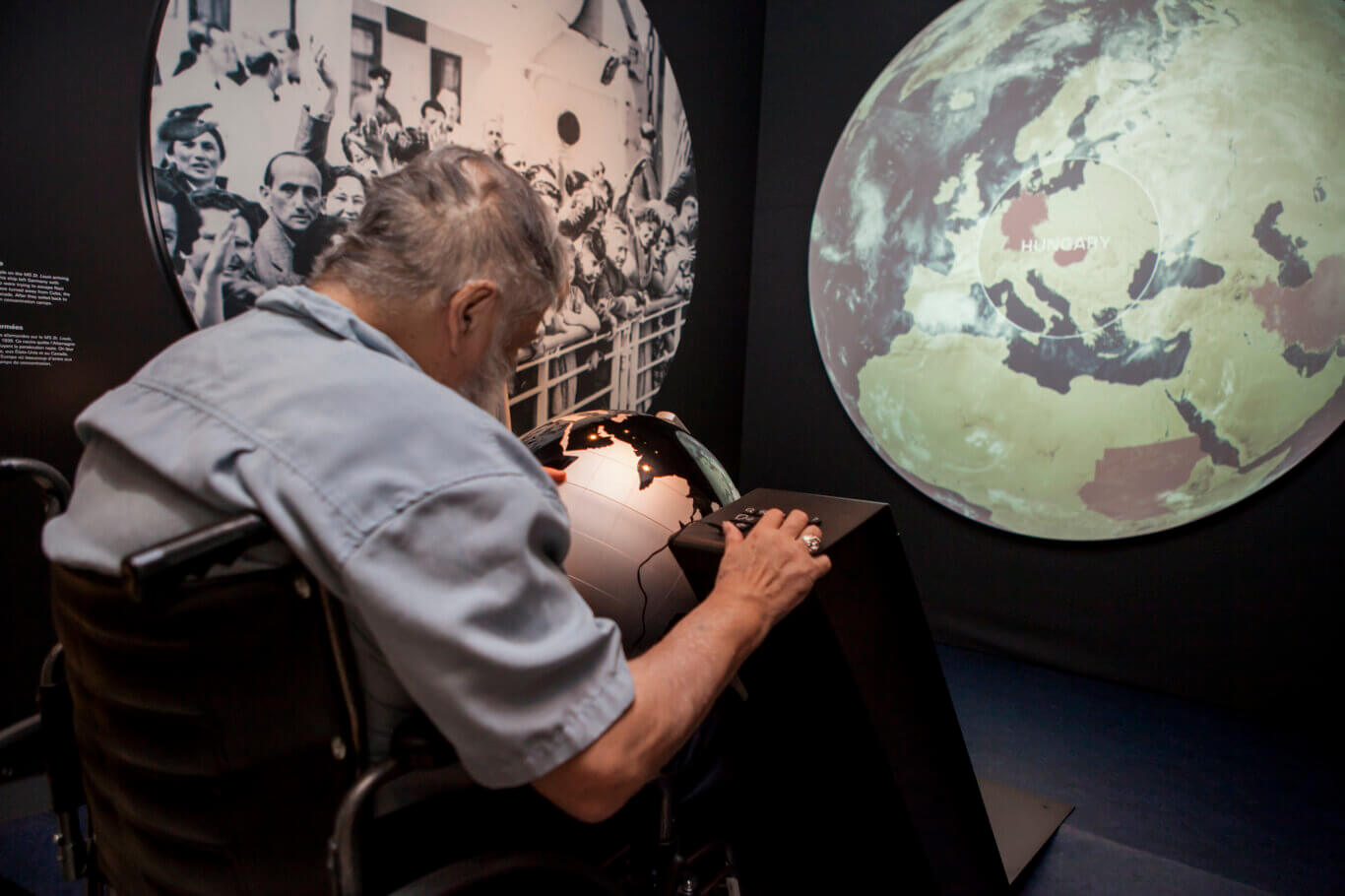
The Canadian Journeys Gallery, CMHR’s largest gallery, includes 23 different installations using a range of design styles and aesthetic approaches. These include passive, active, interactive, and immersive experiences; varied interface designs; rich environmental graphics; scenographic elements; thematic environments; and many different artefact and object types. Even with that complexity, the gallery adhered to rigorous inclusive design standards.
The result was that visitors spent less cognitive and physical effort figuring out how to access content and more of their attention on the content and experiences themselves. The inclusive design system supported a comfortable, accessible, and shared experience for all visitors.
The UKP
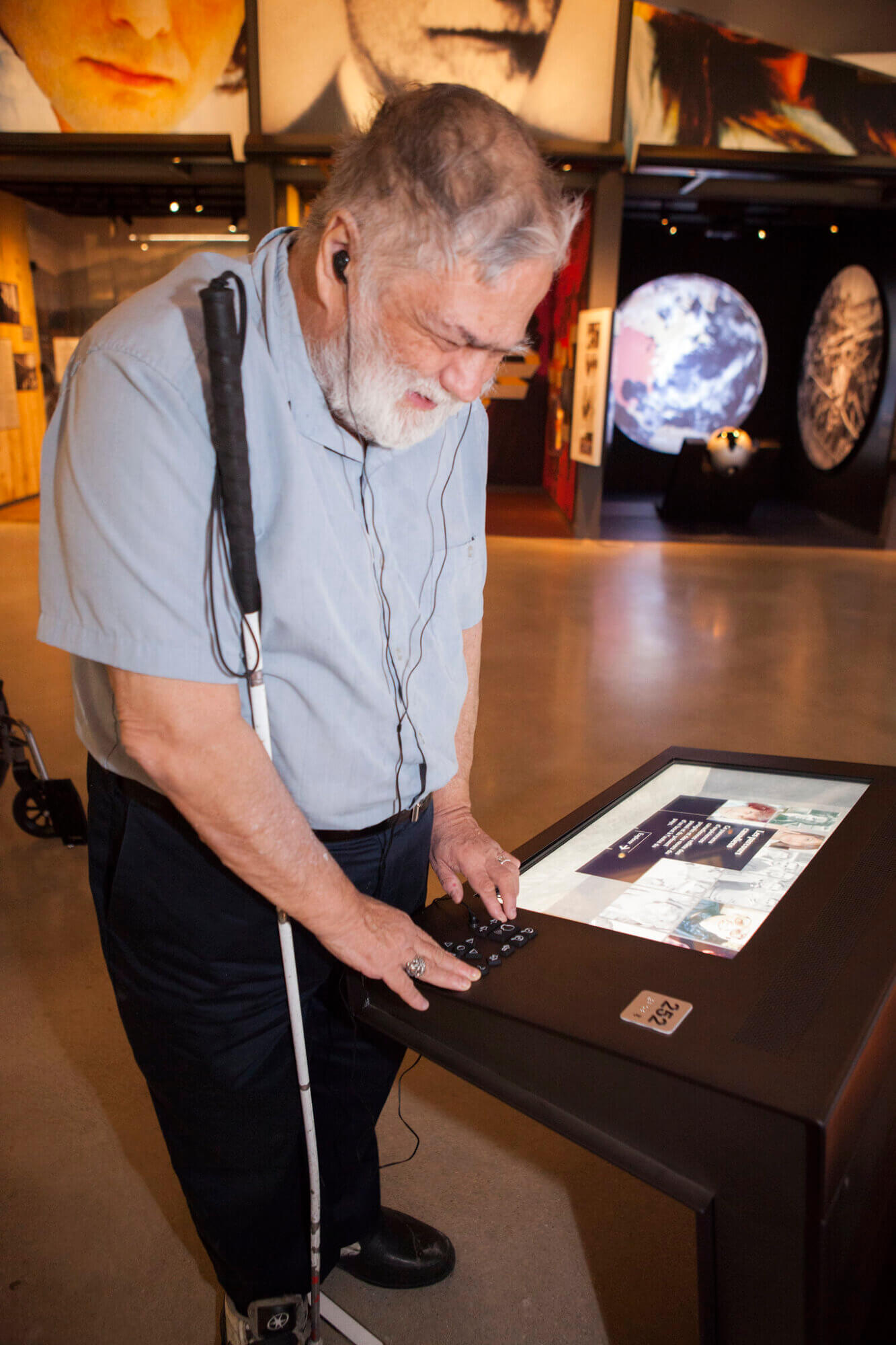
The Universal Keypad (UKP), developed through the inclusive design methodology led by Corey and shaped with significant contributions from Sina, ensured that visitors could access content throughout the core galleries. The UKP provided high-contrast tactile buttons for content navigation, wrist support, screen reader functionality, zoom, text-to-speech speed adjustment, volume control, and access to digital text content, visual descriptions, and audio descriptions at every tangible and/or touch screen interface.
The UKP also solved a significant systems-integration problem created by the scale and complexity of the project. CMHR had roughly 13 different media producers working across varied platforms and installations. While we would not recommend replicating that production model today, Sina designed and orchestrated the implementation of nearly a dozen screen reader experiences across those platforms, all of which needed to behave consistently from the visitor’s perspective. This meant that even though the underlying technologies varied, the user experience remained coherent, predictable, and accessible across the museum.
The UKP later evolved into the Universal Experience Point (UXP) for the Obama Presidential Center. The foundation for that later generation was first created at CMHR, where the core challenge was not simply making individual interactives accessible, but creating a consistent access layer across a large, complex, mixed-media museum environment.
The UAP
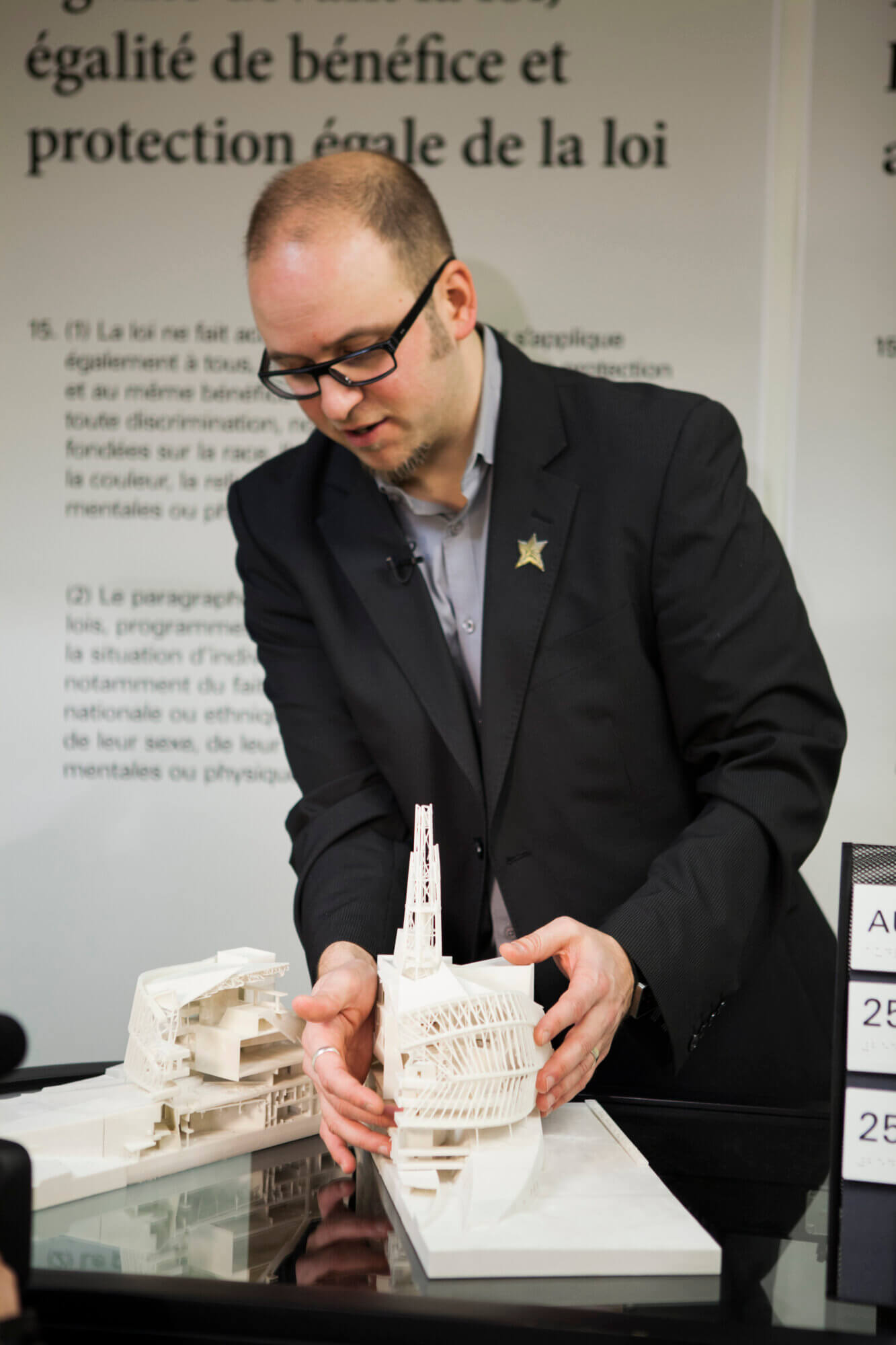
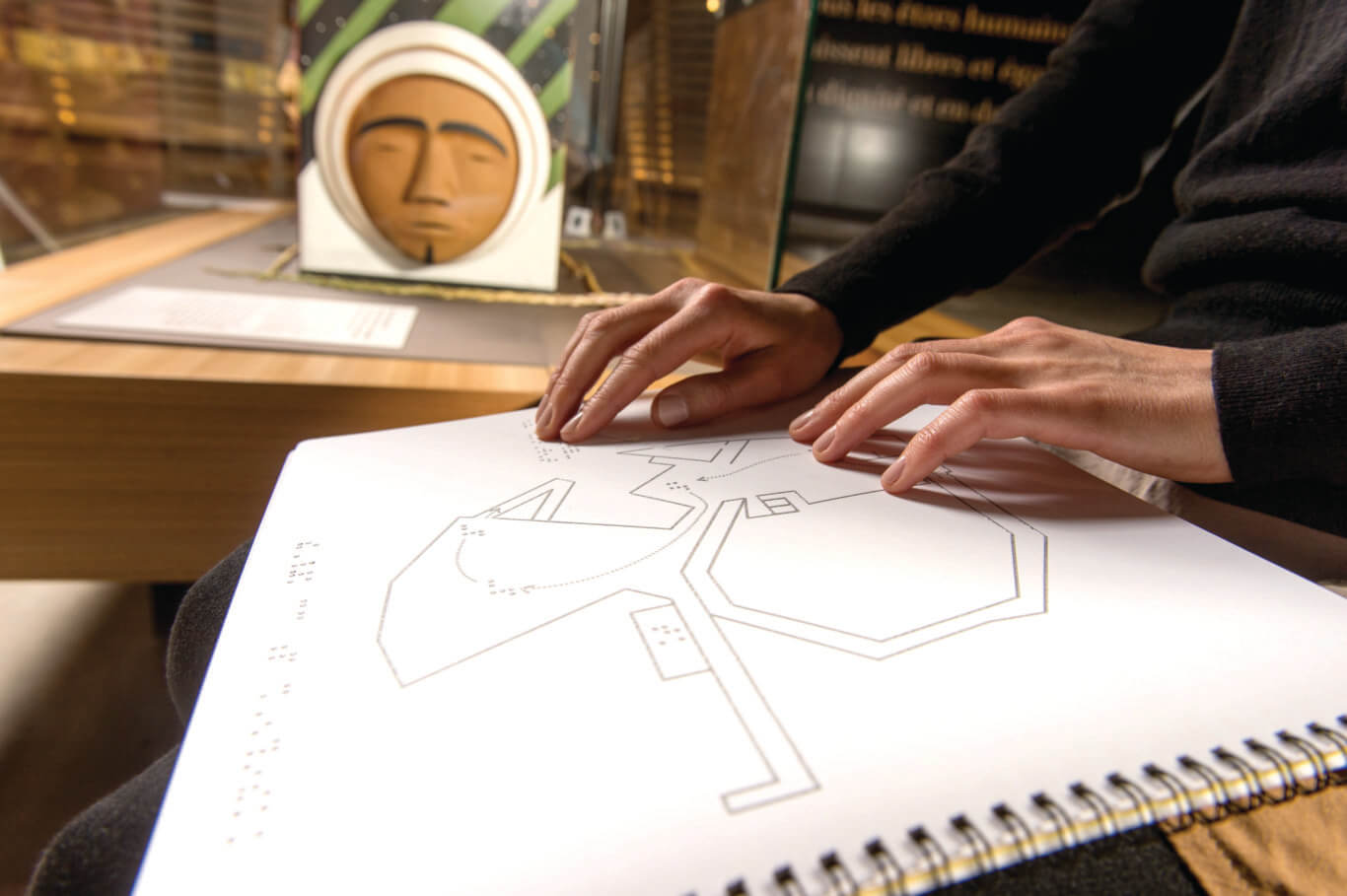
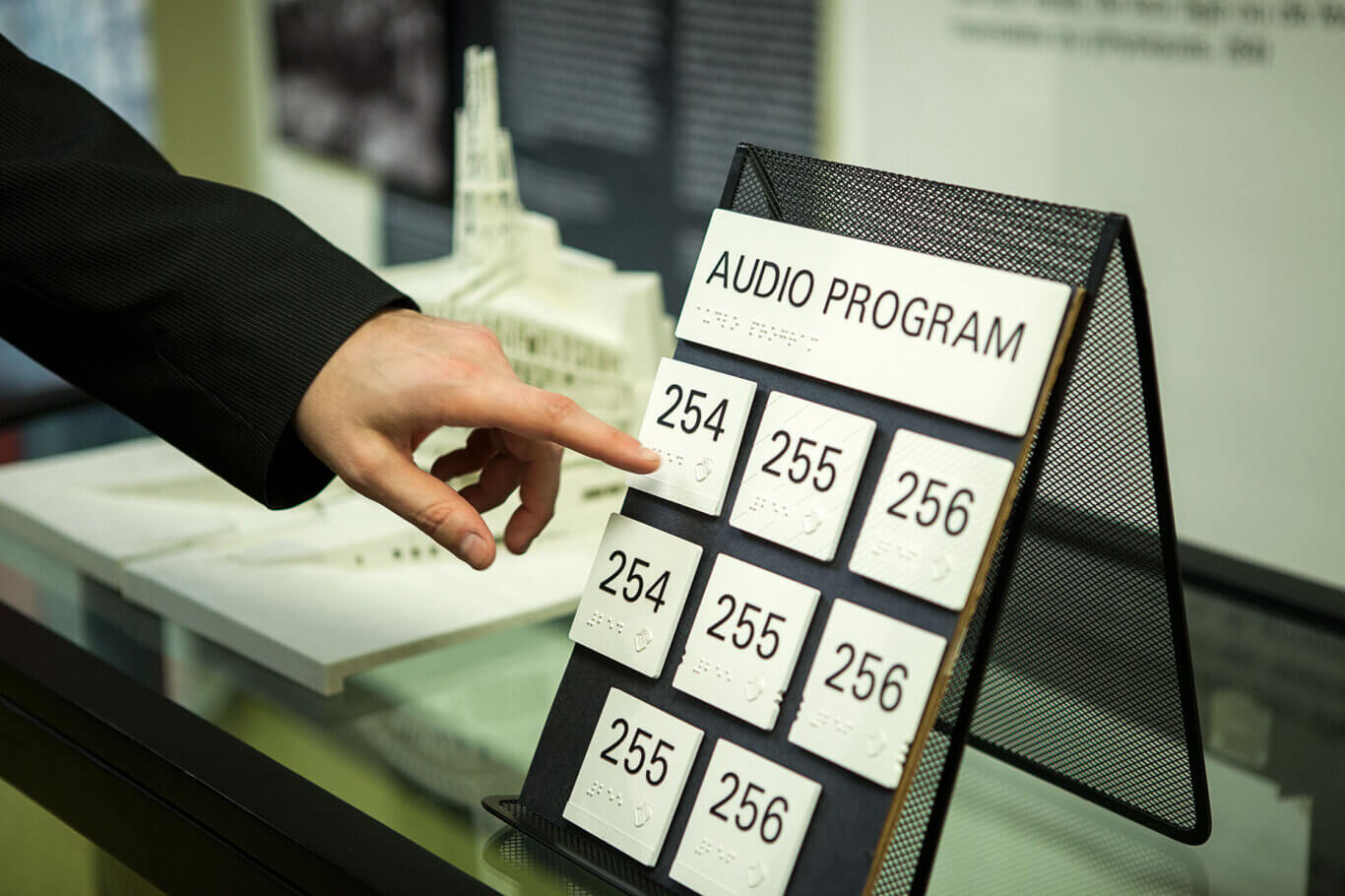
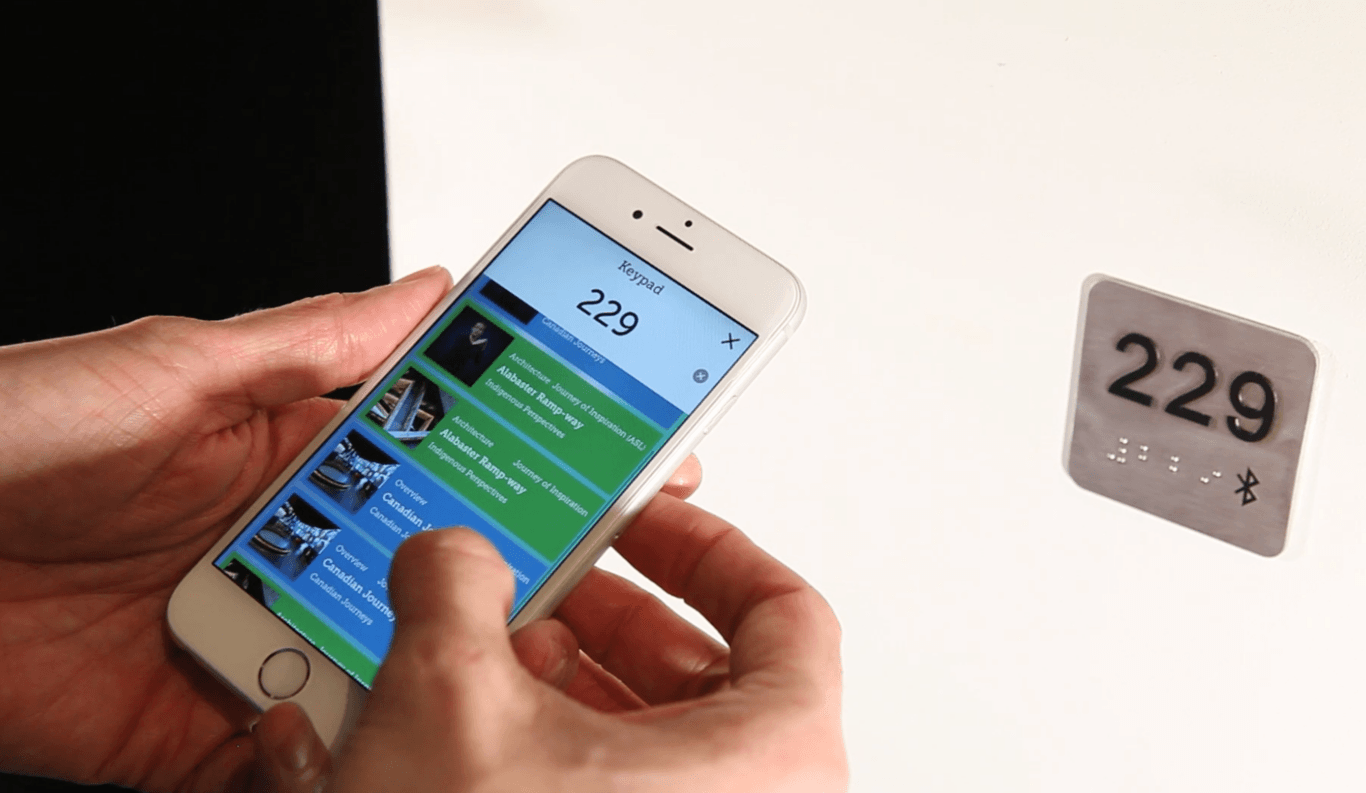
The Universal Access Point (UAP) was a system composed of several components: a cane-detectable tactile floor lozenge; an embossed numbered square plaque with braille, smaller than the average coaster, affixed to each installation; a low-energy Bluetooth beacon hidden near the numbered plaque; a mobile app; and a content and digital asset management system.
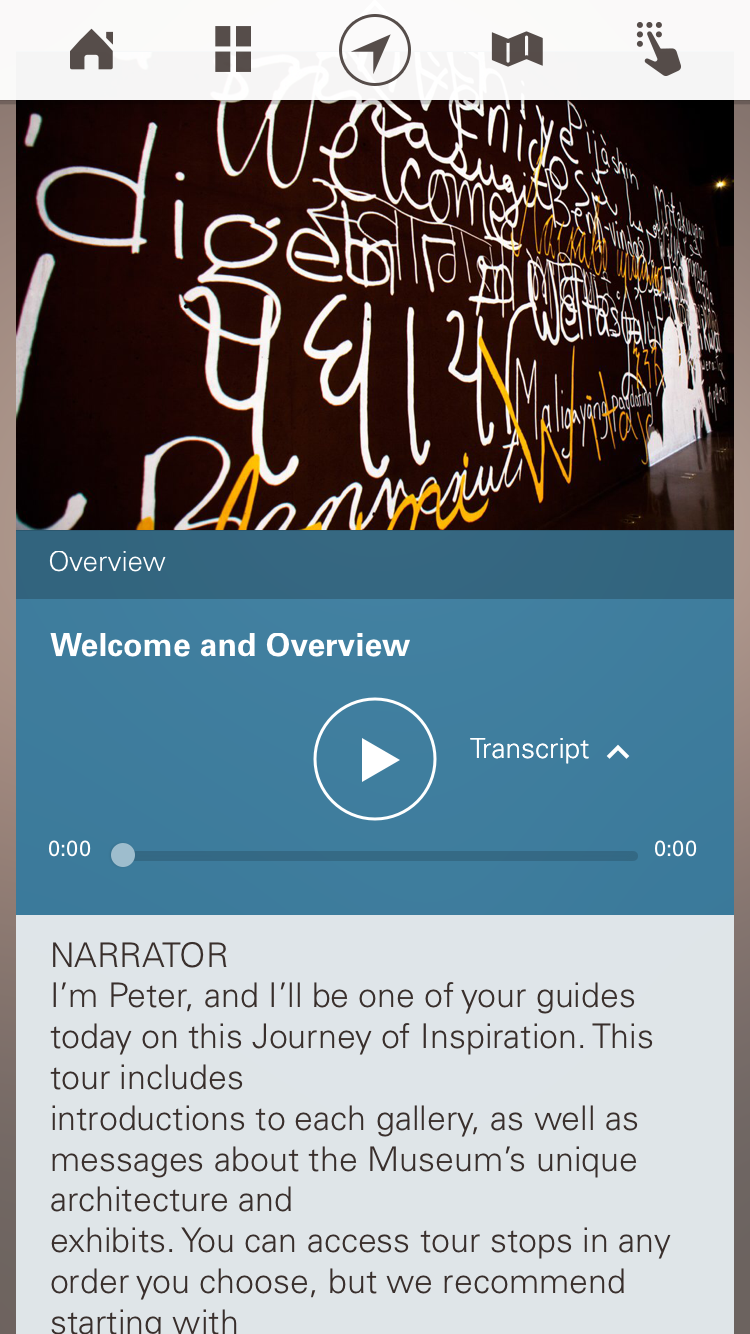
The UAP ensured that visitors could access static, printed, and analogue content on their mobile devices, either by typing in a plaque number or by using “near me” mode through Bluetooth beacons and selecting the content closest to them. This allowed users to scale content, change foreground and background colors, use a screen reader, bookmark content for later, and access any additional accessibility affordances available for each installation. It made static content accessible to a much wider audience.
The Enterprise Content Management System
The Enterprise Content Management System (ECMS) was a novel concept introduced into the CMHR project. Given the museum’s subject matter, and the fact that many of its stories were both contemporary and subject to evolving interpretation, it was critical to create a way to update content within the core exhibitions as efficiently as possible.
The ECMS made this possible through an integrated system combining digital asset management, museum collections management, archival management, library management, and enterprise search. Building on the success of an enterprise search and faceted browsing system implemented at the Canadian Heritage Information Network, the ECMS sought to integrate and track all data regardless of which interface staff used to access or manage it.
The goal was to empower curators and interpreters to update content without requiring assistance from design and fabrication teams. Ultimately, the ECMS became the canonical source of truth for all content in the museum. When a story broke that dated content in the exhibition, curators could update digital content themselves from their own computers, publishing it to the galleries, the website, the mobile app, and other channels. They could also initiate production workflows for static and analogue content.
The Inclusively Designed Ecosystem
CMHR was the first major capital project where the inclusive design methodology that would become central to PAC’s practice was applied across an entire museum ecosystem. The inclusive design ecosystem recognizes that large capital projects involve many teams, each with their own skills, expertise, subject matter specializations, and goals. All of those pieces must come together to complete the project, and each team’s work must support the same inclusive outcome.
This methodological approach embraces that reality and ensures that siloed teams work toward an aggregate result that is fully accessible and inclusive of all people and the many ways they interact with rich, mixed-media environments.
For example, a video may be presented through software, delivered through hardware, housed within exhibitry such as a kiosk, positioned within a themed gallery, and set within a building. Many teams contribute to that experience: the media production team creates the film or video; the software team creates the media player and interface; the hardware and A/V team integrates the presentation surface and interface, such as a touch screen; the exhibition design and fabrication teams create the exhibitry and furniture; and exhibition designers, architects, and trades create the built environment.
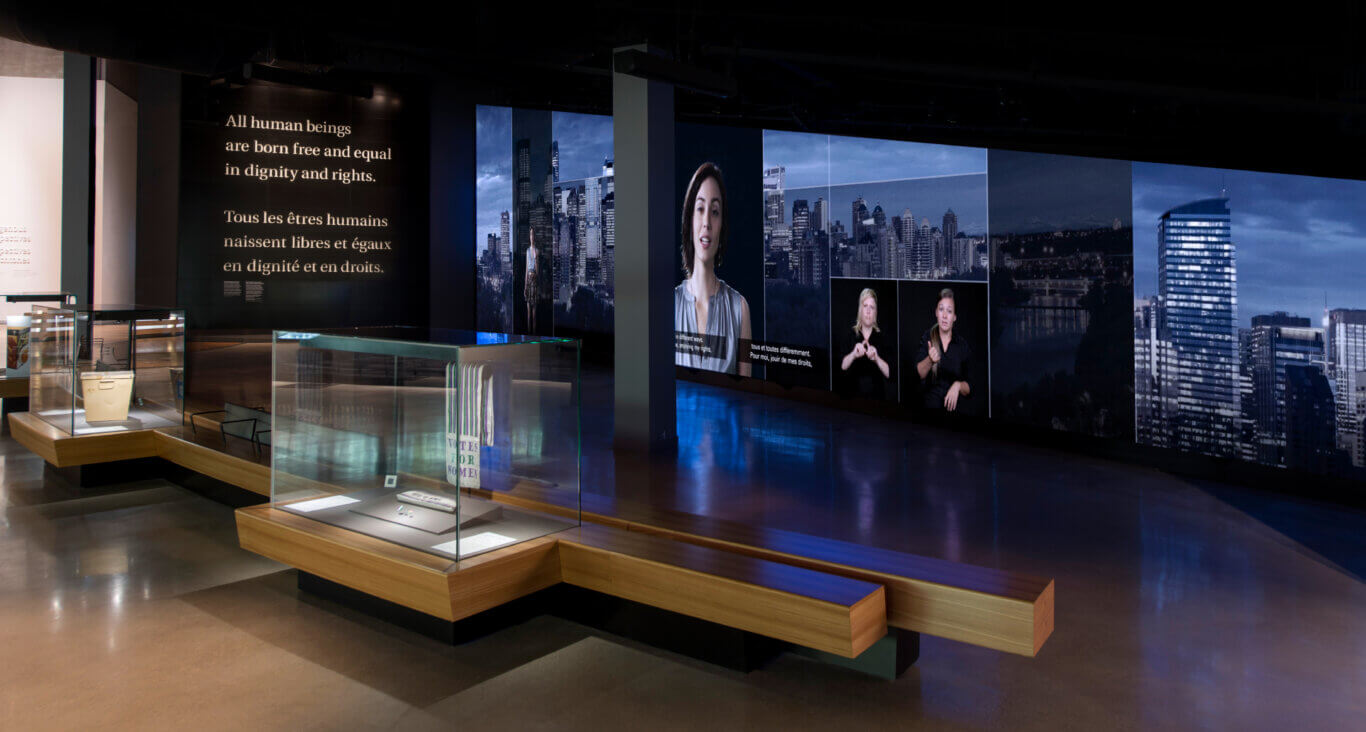
Each team may be working on a discrete scope, but their outcomes must be congruent with the work of every other team. The video may include signed interpretation, audio description, and captions from the media producer, but it also needs to sit within an accessibly developed interface, be presented in an accessible media player that adheres to WCAG, be surfaced through accessible hardware such as a gesture-enabled touch screen or tangible interface, allow for volume control and toggling of description, be housed in a kiosk with forward access and knee clearance, and exist within a barrier-free environment that manages sound effectively.
There is far more to this approach than can be summarized here, but the central point is that the entire ecosystem must be considered alongside the individual facets being developed by specialized teams. This scenario emerged at CMHR and became a formative precedent for PAC’s later work, where the approach has continued to evolve into a more mature, sophisticated inclusive design methodology.
Recognition
The Canadian Museum for Human Rights was an extremely distinctive project because of its subject matter, approach, and place in the museum sector at the time. It addressed intangible and conceptual subject matter in a museum where the artefacts were often stories, expressed through mixed and transmedia storytelling. In this model, objects were part of a suite of storytelling tactics rather than the sole artefacts around which stories were told. The project also embedded inclusive design methodology into every activity, was located in a remote region of Canada for a national museum, and took a bilingual and multicultural approach to content.
The CMHR capital project, including the inclusive design, digital, interpretive, and ecosystem-level work led by Corey Timpson with consulting contributions from Sina Bahram, was recognized with numerous accolades. These included four AAM MUSE Awards: MUSE Gold for the Enterprise Content Management System, MUSE Silver and Bronze for Games and Augmented Reality, and MUSE Gold for the mobile app, an integral component of the Universal Access Point system. Additional recognition included the Jodi Mattes Trust Award for accessible design; a Good Design Award 2015; first place from the National Association for Interpretation Media for the short film Childhood Denied: Indian Residential Schools and Their Legacy; the Premier’s Award for Design Excellence, presented by the Premier of Manitoba; Best App Award from the International Design and Communications Awards; an Applied Arts Interactive Award; a European Design Award Silver; a 2016 Gold Award from Graphis; a 2015 Merit Award from HOW Magazine; the International Association for Universal Design 2016 Gold Award; 2016 Best Scenography for a Permanent Collection Gold from the International Design and Communications Awards; and Leadership Access Awards from the City to both the Museum and Corey Timpson personally.